







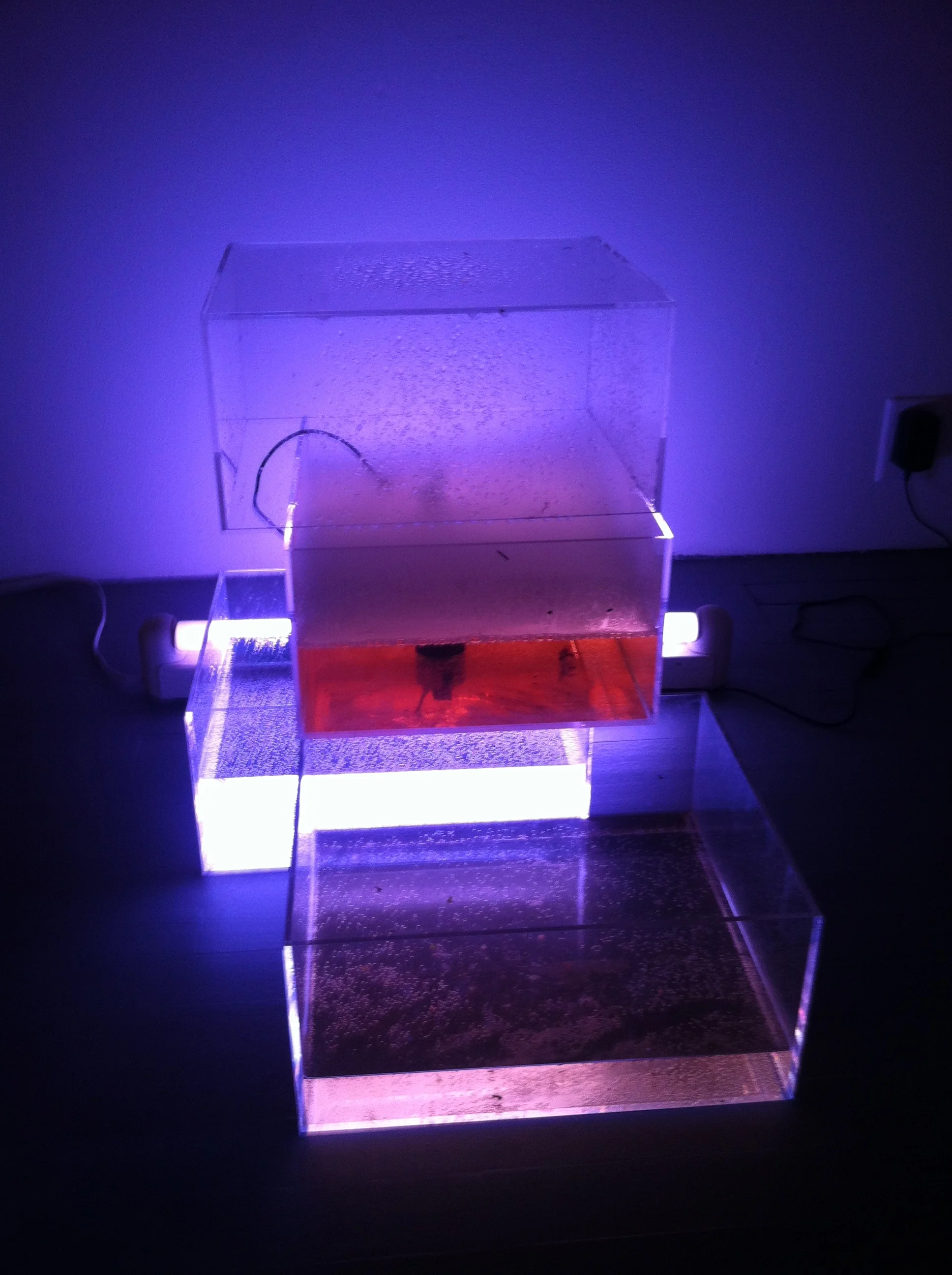


The Ancestry of Objects (2013, 2016)
Presented at Centre des arts actuels SKOL, Montréal, Live-set installation, stop-motion animation, performance, drawings, sculptural props
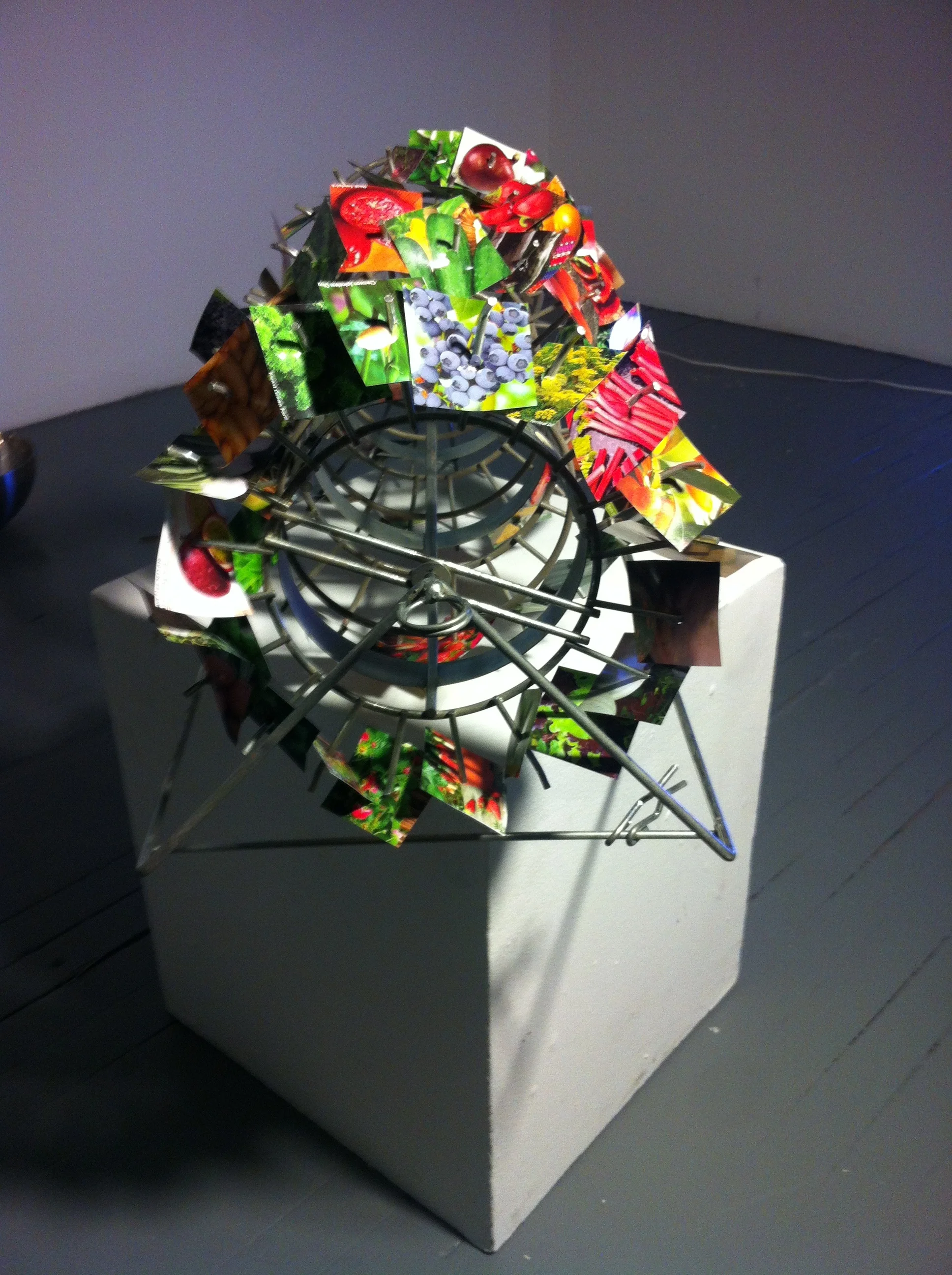
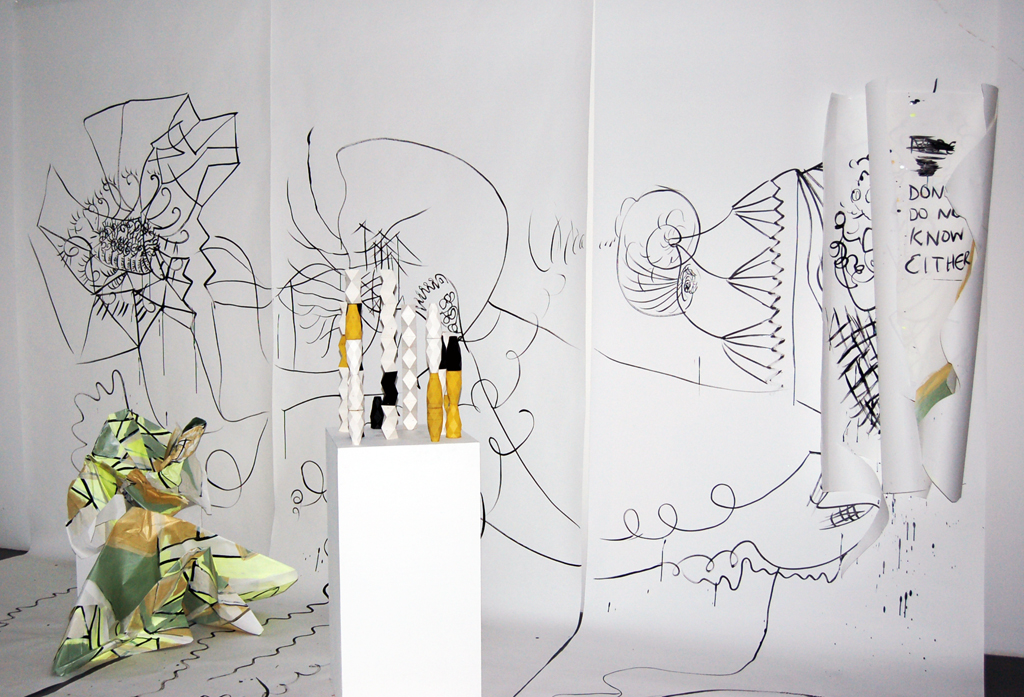
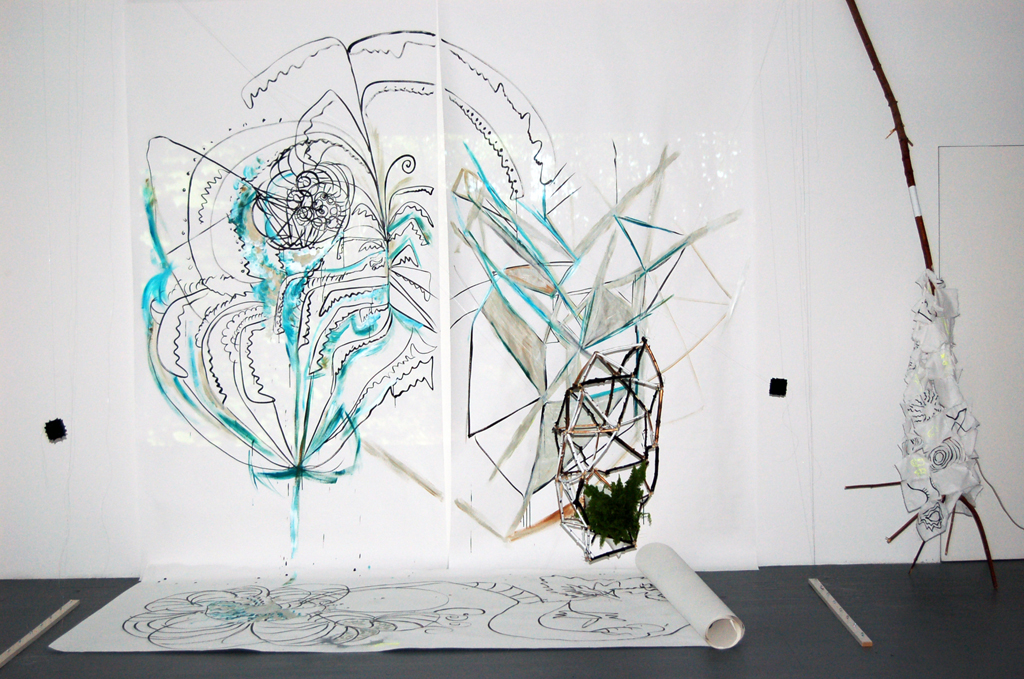
The Ancestry of Objects is a multi-iteration project that combines live-set installations, stop-motion animation, drawing, painting, and sculptural components. The work is organized into four chapters: Ontologies of the Sublime; the 3-3 Day Wars; Year of the Chimera; and Revelations and Hyperobjectivity, each presenting nonlinear narratives constructed through material transformation and performative processes.
Clay serves as the primary medium and conceptual anchor. I use basic hand-building techniques and simple studio materials to develop objects that act as provisional characters within speculative, often absurd narrative structures. These forms such as pinch pots, coils, shaped fragments, and manipulated surfaces, are animated and recombined with other studio materials, generating scenarios in which ramen noodles erase clay configurations, budgies dismantle Styrofoam formations, or patterned bodysuits intersect with improvised molecular structures. These actions foreground cycles of assembly, disruption, and reconfiguration.
My approach is process-driven and improvisational. Materials are continuously manipulated, rearranged, and staged, allowing the installation or animation to evolve in real time. Exhibition spaces are treated as active sites of reconfiguration: murals shift into sculptural forms, common objects are redeployed as props, and organic materials become temporary architectural elements. Through these transformations, the work examines how materials enact their own temporalities; shifting between construction, decay, and renewal.
Conceptually, the project questions fixed narrative structures and the authority of coherent storylines. The deliberately illogical sequences and improbable protagonists destabilize interpretive certainty and highlight how perception is shaped by internalized narrative frameworks. By breaking apart familiar narrative logics, the work opens space for alternative configurations and material-semiotic relations.
The Ancestry of Objects aligns with my broader research into ecological thinking, interdependence, and the fluid boundaries between natural and constructed systems. As materials merge, dissolve, and reappear, they gesture toward interconnected processes that shape both biological and anthropogenic worlds. Through ongoing reworking and recomposition, the project invites viewers to consider how meaning, form, and relation are continuously produced through interaction rather than through fixed or hierarchical structures.
{division.growth.assemble.vocalization}
Clay animation / stop-motion film
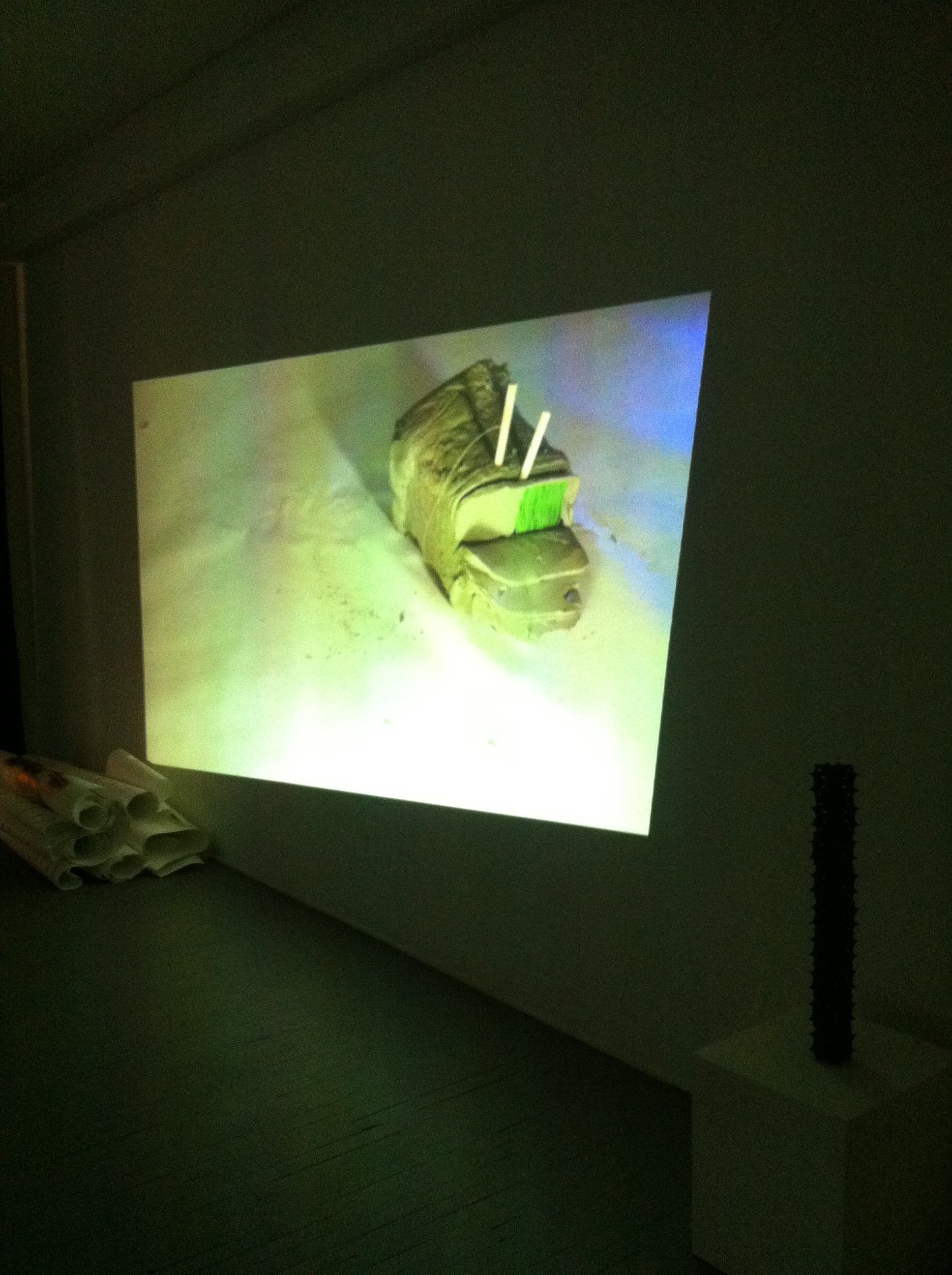
{division.growth.assemble.vocalization} unfolds as a speculative cosmogony born from a block of clay, an elemental material that becomes a stage for emergent beings, shifting ontologies, and small-scale ecological dramas. Working through simple hand-building methods, pinch pots, coils, and rudimentary sculptural gestures, the film traces the formation of three early species: the vessels, the horizontalists, and the malleables.
The vessels develop a rudimentary language of utterances—umm, ahh, neee, psss—a proto-phonetic chorus that alternates between boredom and delight, sometimes tormenting the softer, ambiguous malleables. The horizontalists extend themselves across the terrain, joining into serpentine architectures. Meanwhile, the malleables remain somewhere between bodies and objects, selfhoods shaped by proximity and relation.
Across epochs measured in seconds, the work charts their transformations: vessels become architectural; horizontalists coil into planetary lines; the malleables demineralize and disperse, becoming airborne particulate agents awaiting their moment of reconstitution. These evolutions unfold alongside a world where synthetic, organic, and absurd phenomena coalesce; birds with quantum magnets for eyes dismantle Styrofoam glaciers; planetary networks distribute flesh and matter; hybrid composites circulate as both fodder and infrastructure.
The stop-motion sequences translate this cosmology into tactile scenes:
— Clay objects stand in for the detritus of a studio desk, an HD tape, chapstick, ink, pens, animated into precarious societies.
— A procession of ramen noodles sweeps across the landscape, erasing what came before.
— Cut-out budgies from a pet-shop manual take flight, destroying a fragile styro-glacier.
— A molecular armature sprouts from cubes of Swiss cheese and cherry tomatoes, locked in an improbable battle with a zebra-striped bodysuit.
— Ramen-printed paper towers, miniature architectures, move through the terrain, attempting to tidy the aftermath.
Each sequence behaves as a miniature ontology in motion: matter becoming form, form becoming story, story becoming ecology.