
The Temporary Archive of Ambiguous Architecture III (2015)
Installation for The Age of Catastrophe, Video Pool, Winnipeg
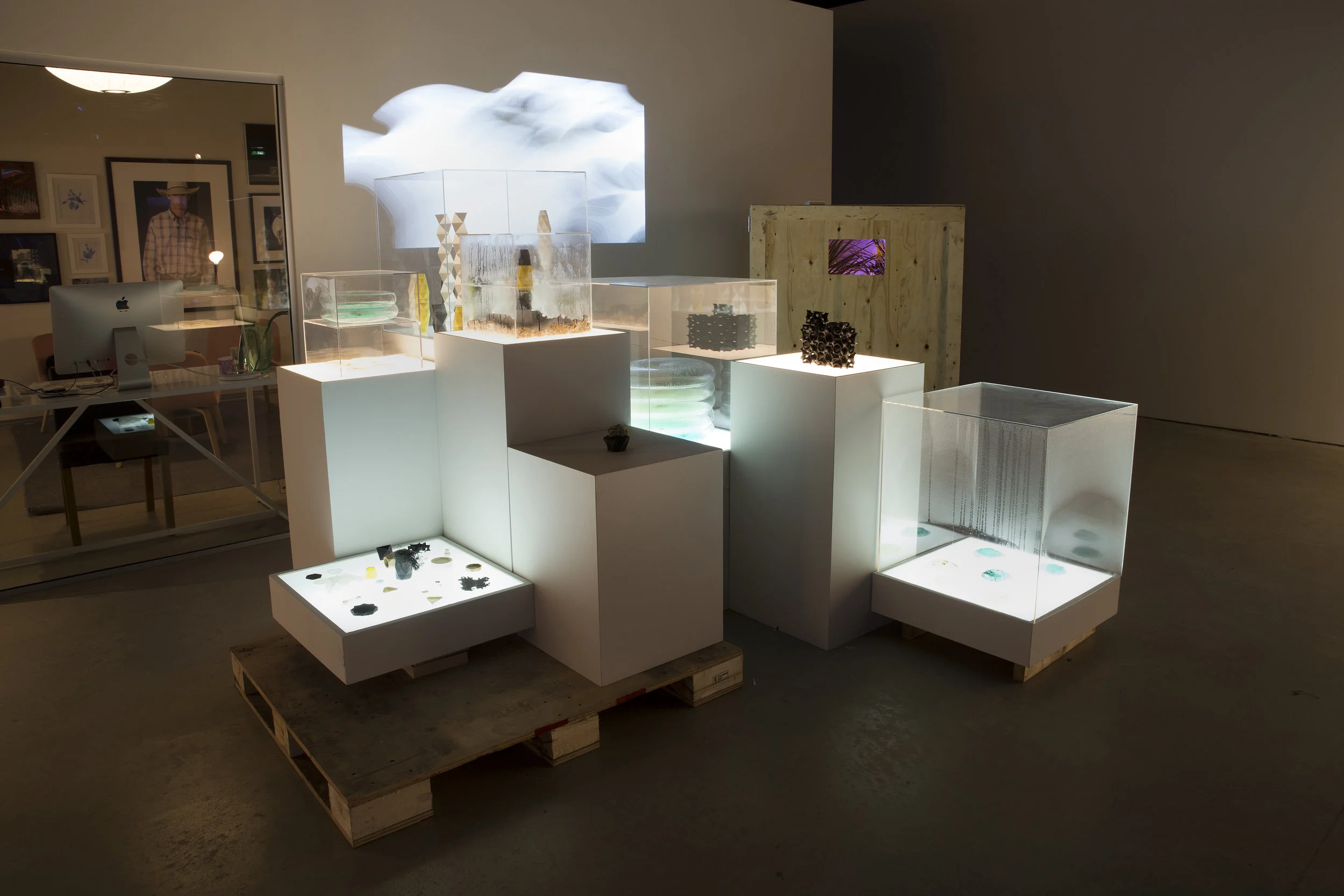
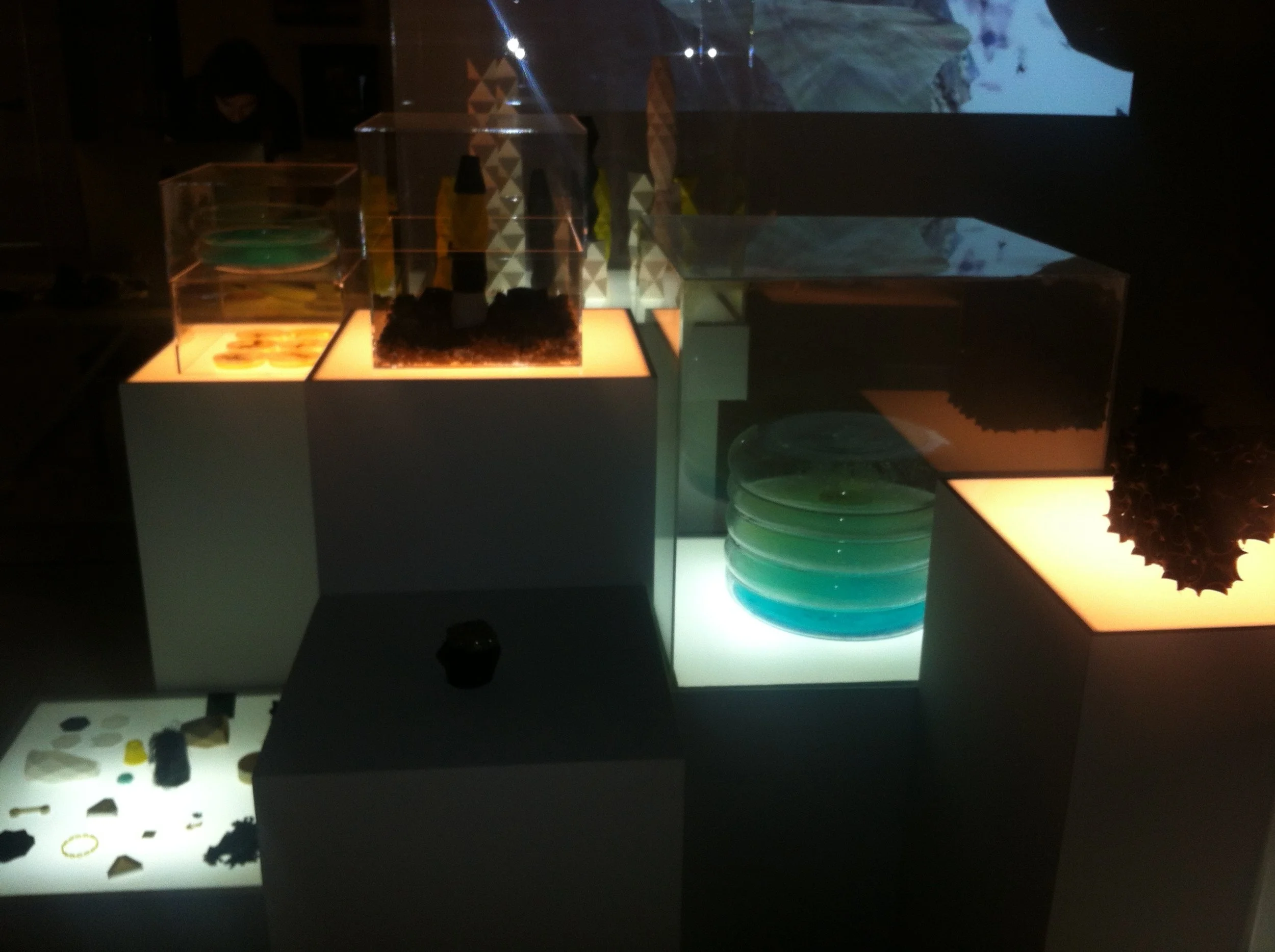
The Temporary Archive of Ambiguous Architecture (2012–2015) expands the very notion of “archive” into something alive, as an ephemeral, ever-changing system rather than a static repository of information. In this iteration, the installation explored how emergent growth, decay, and unpredictable material behaviours could become forms of knowledge transmission.
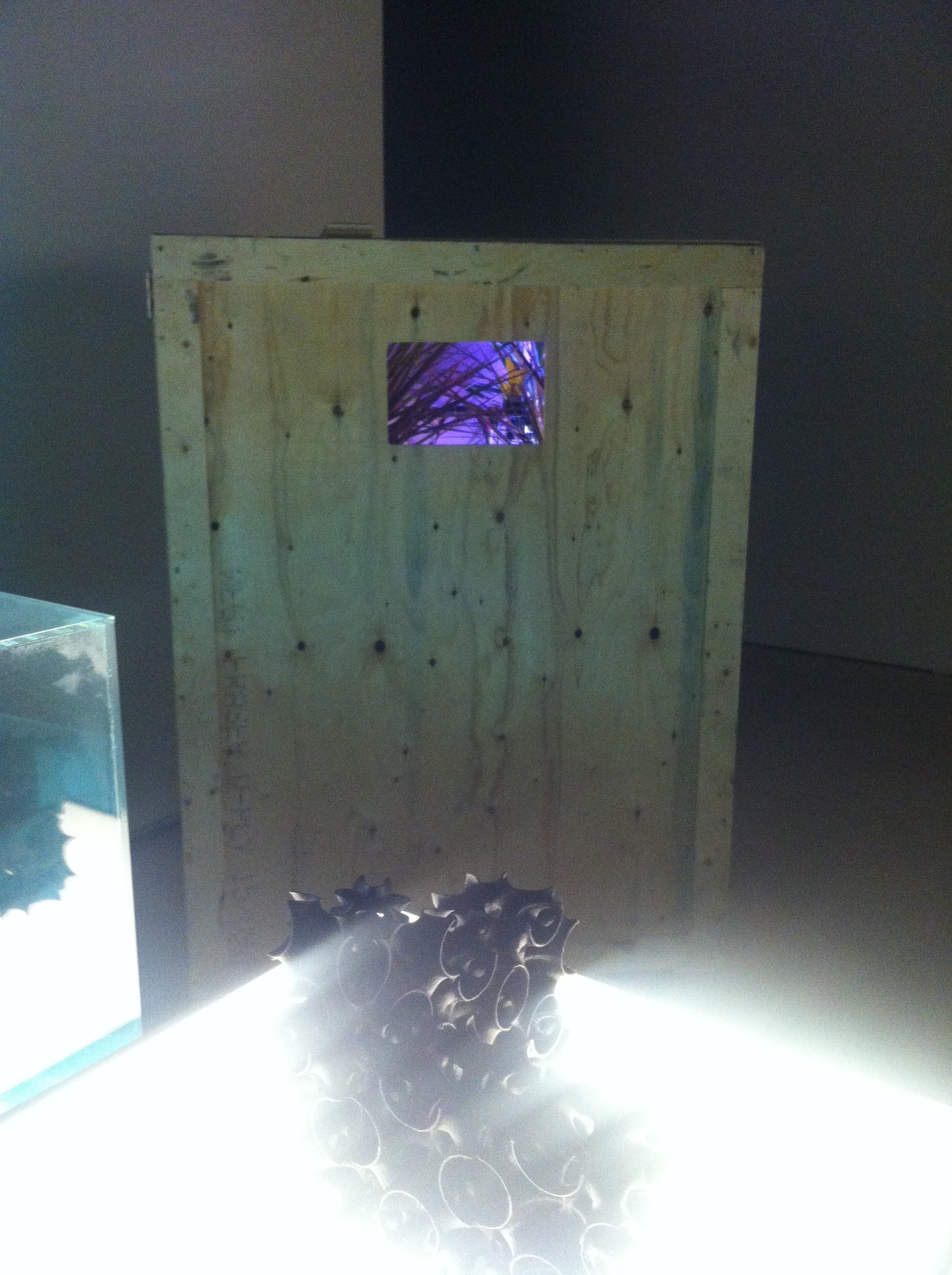
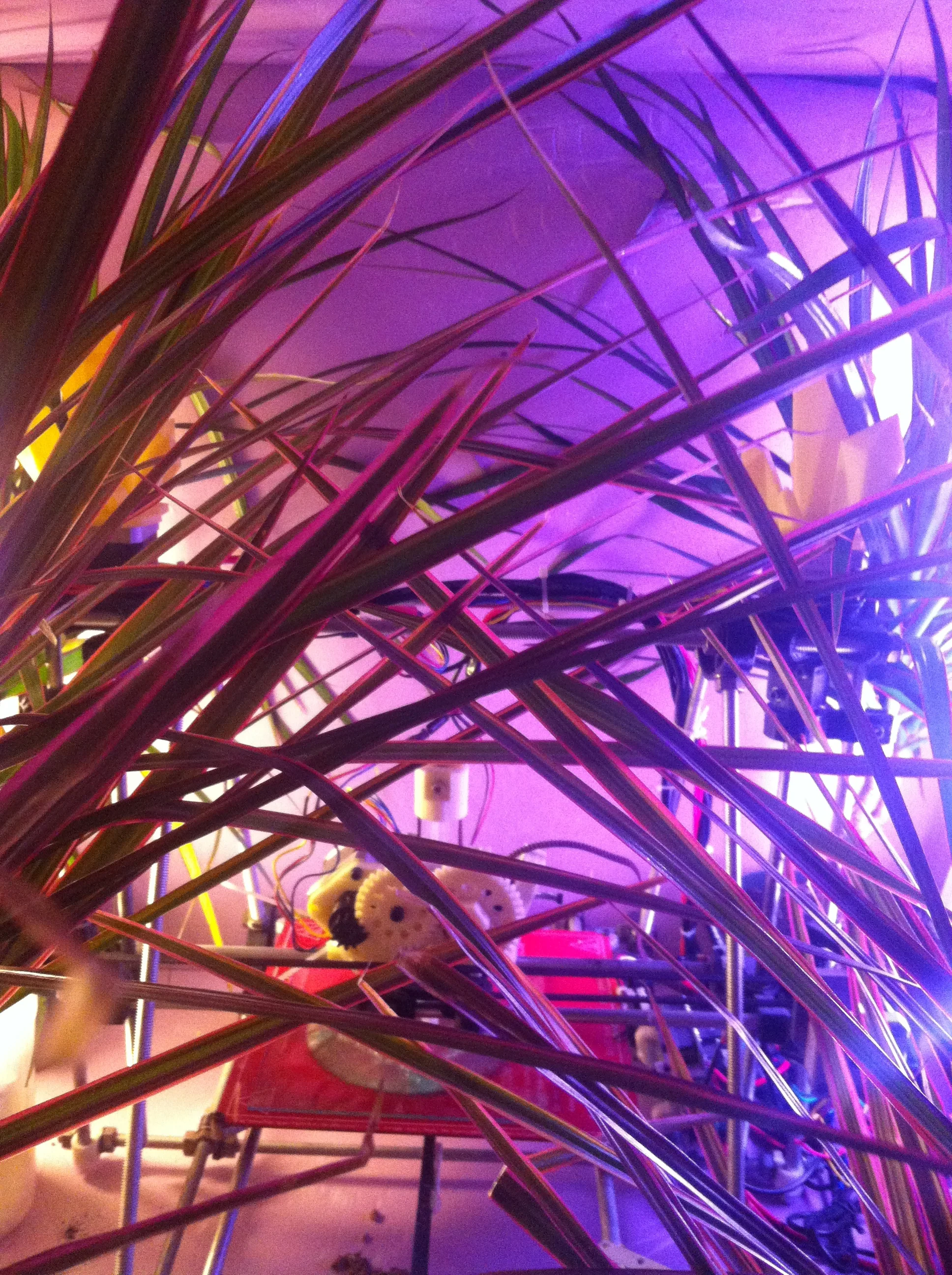
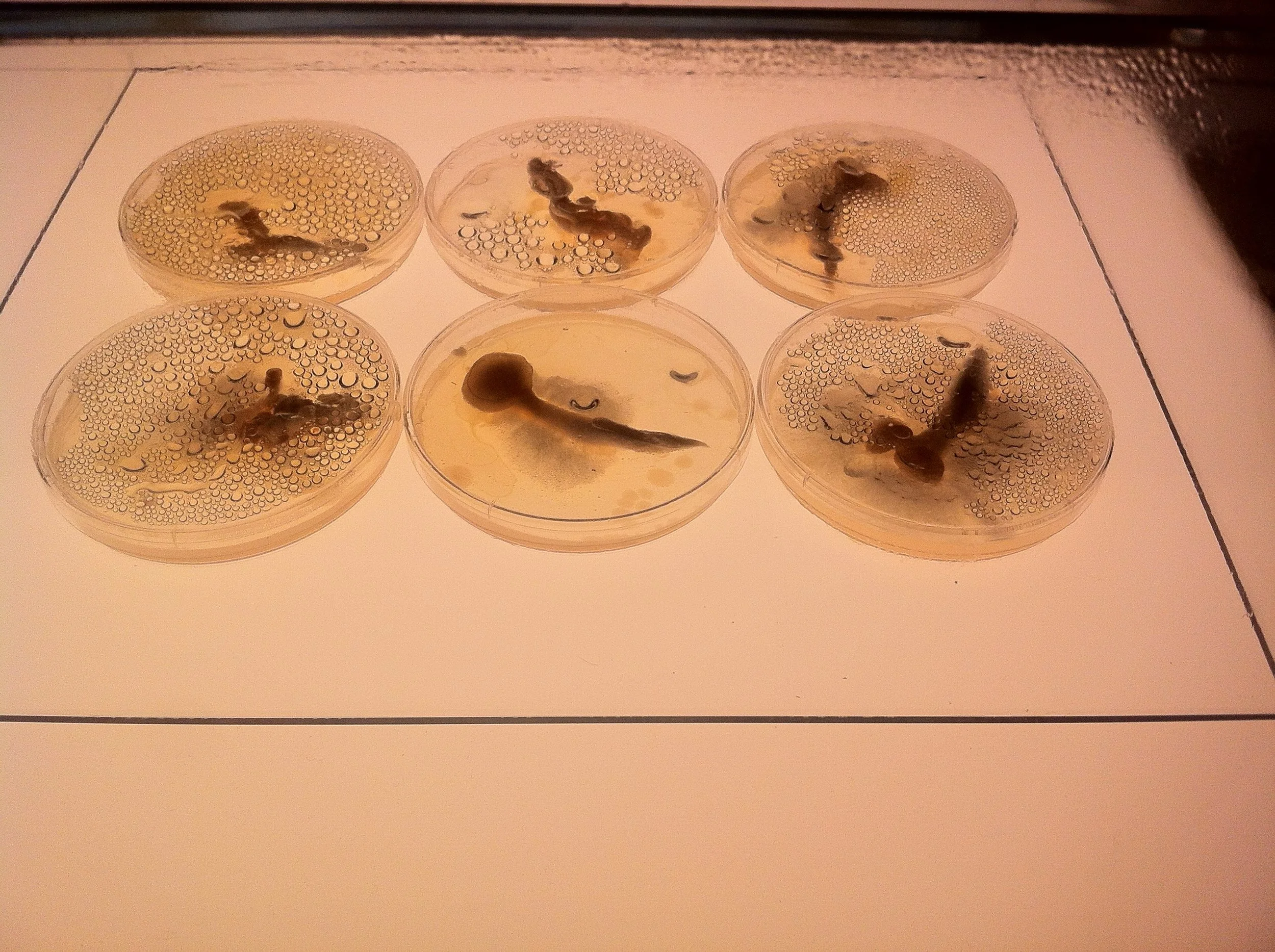
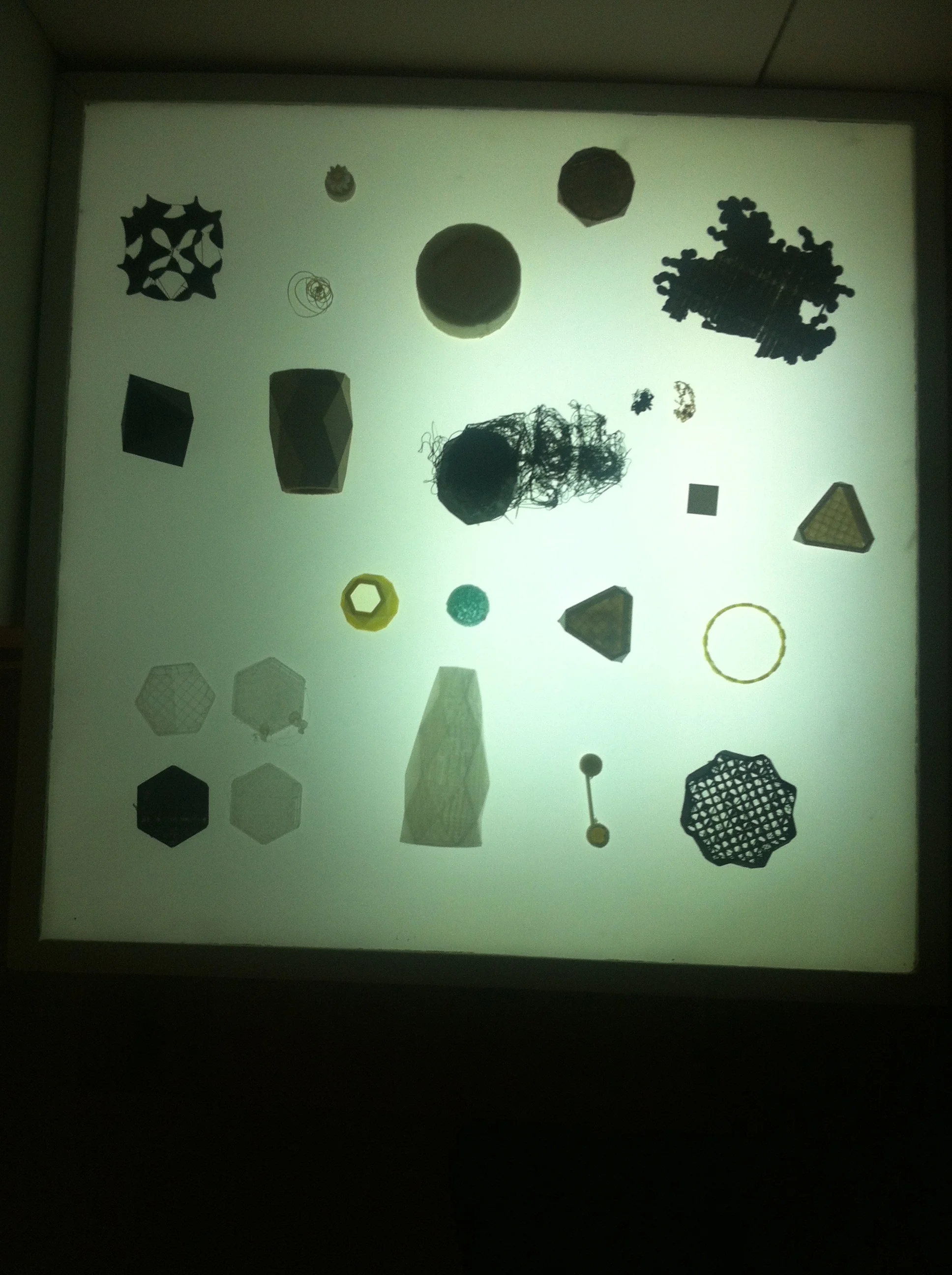
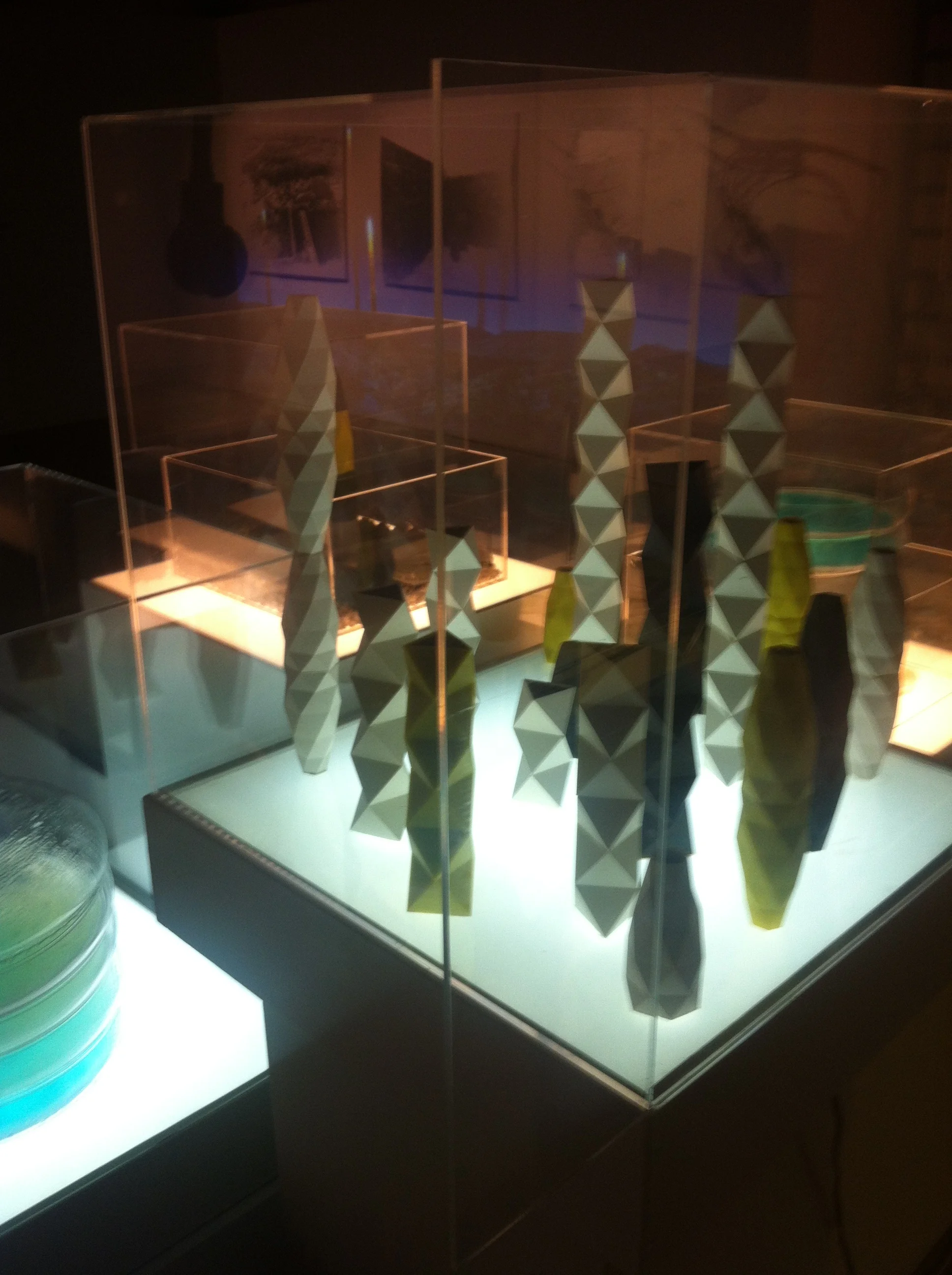
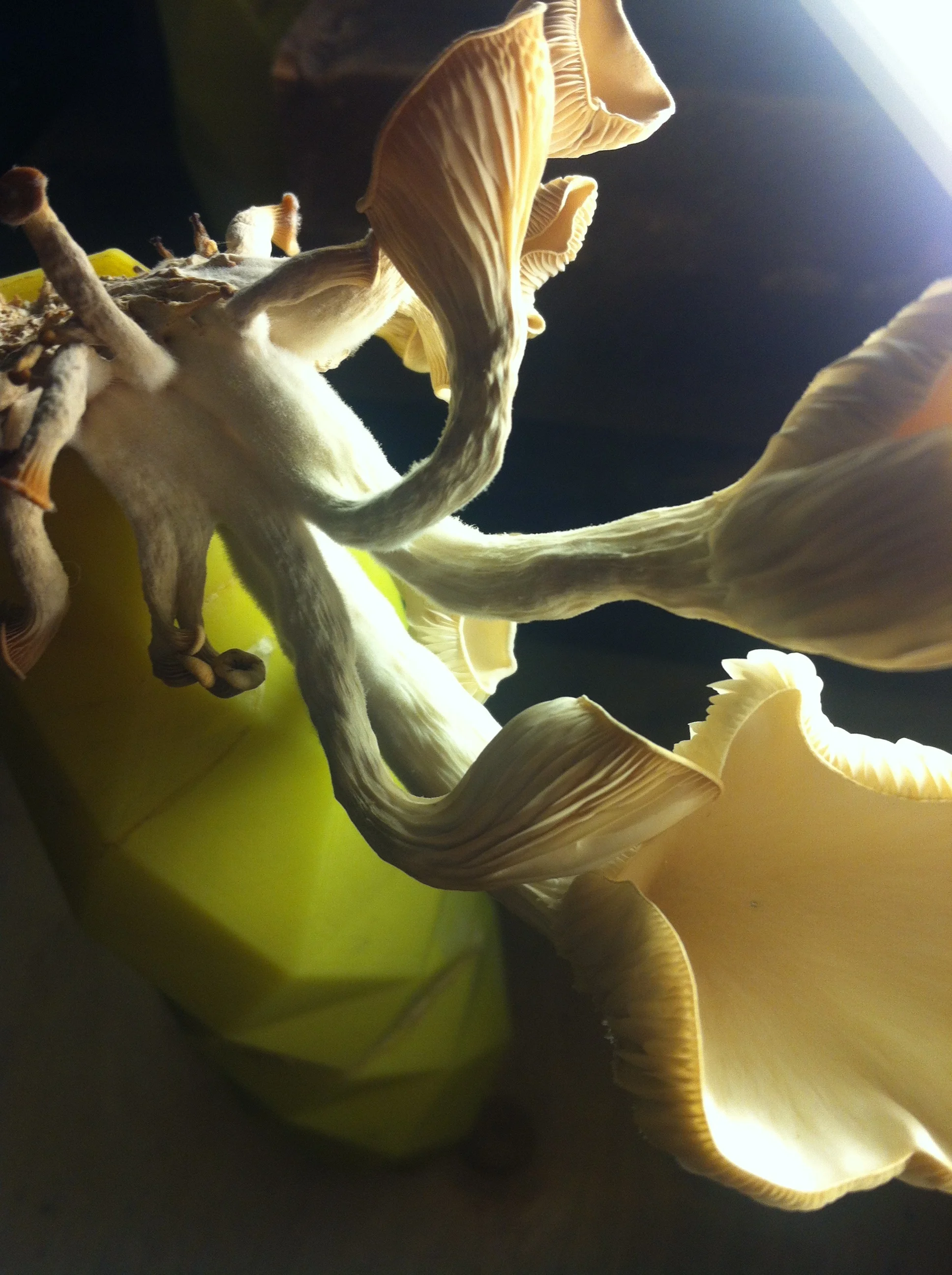
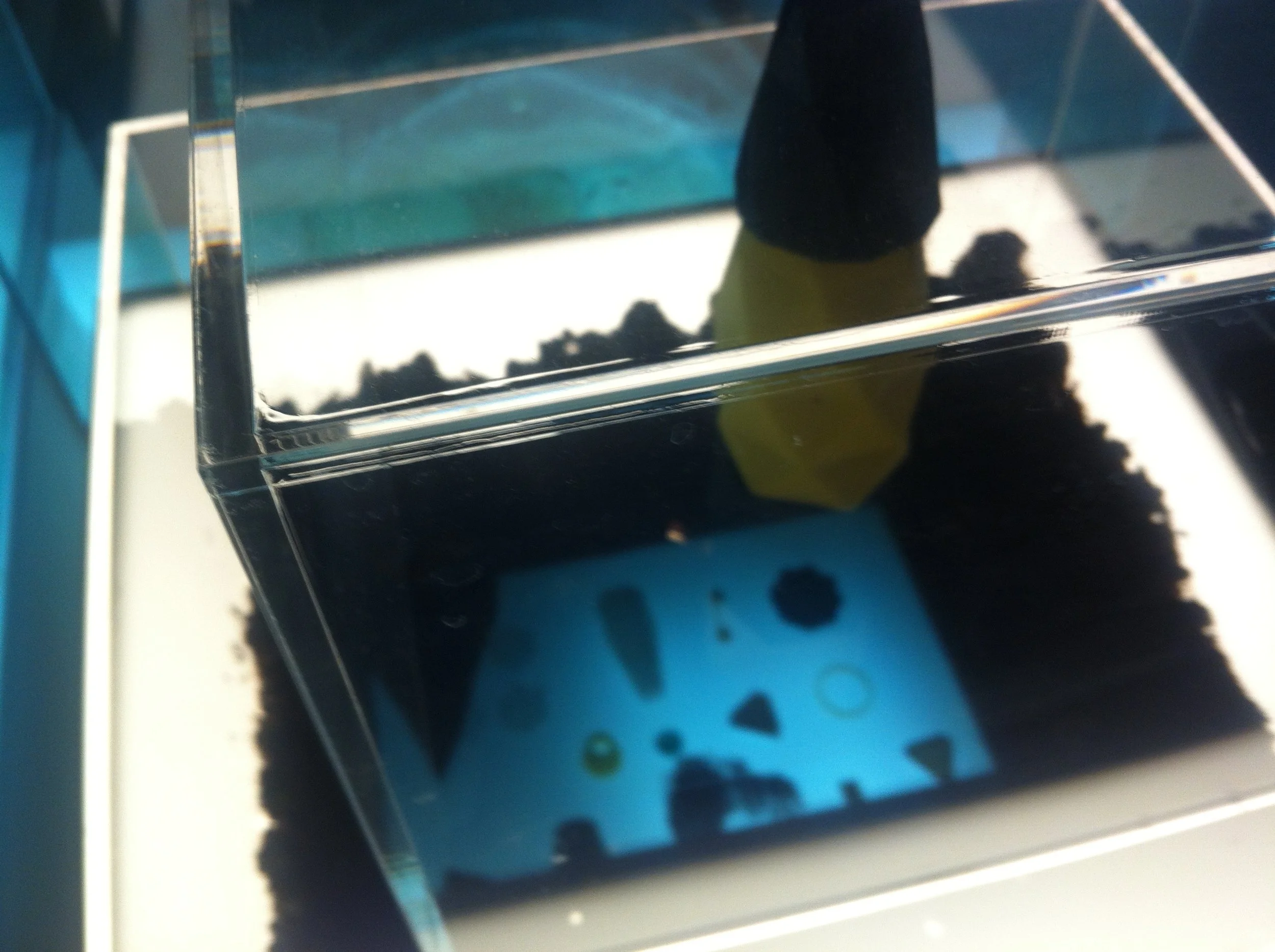
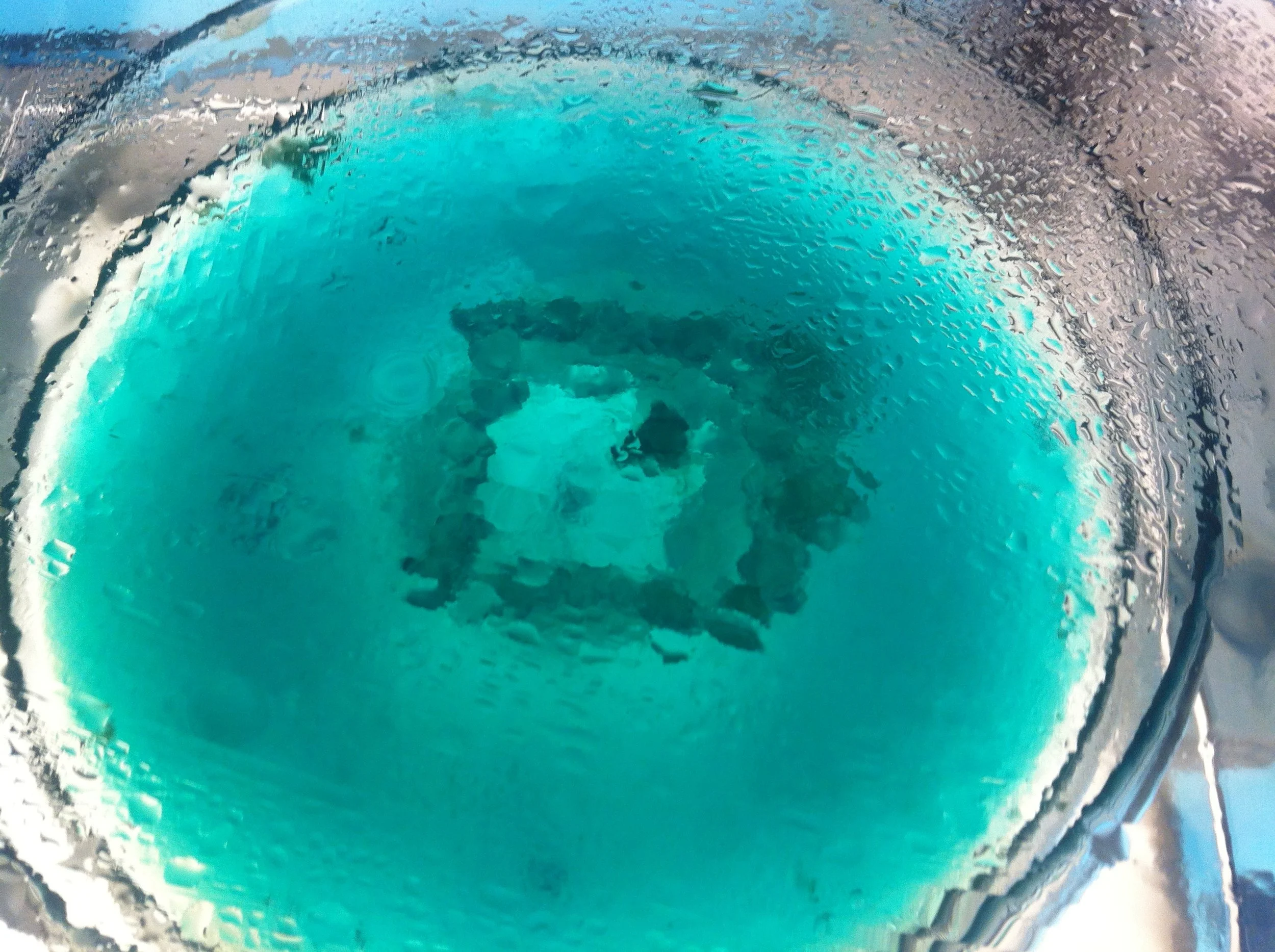
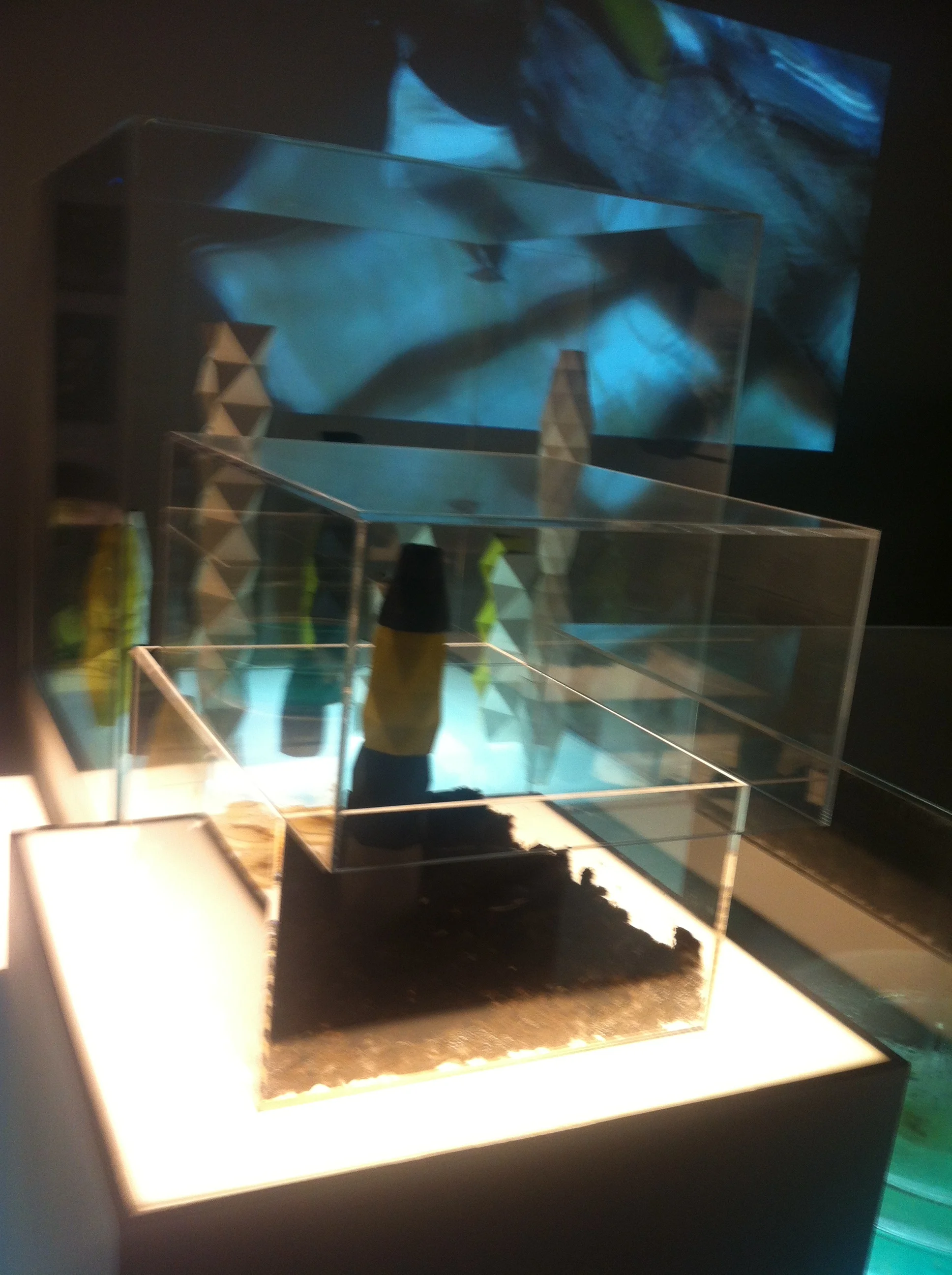
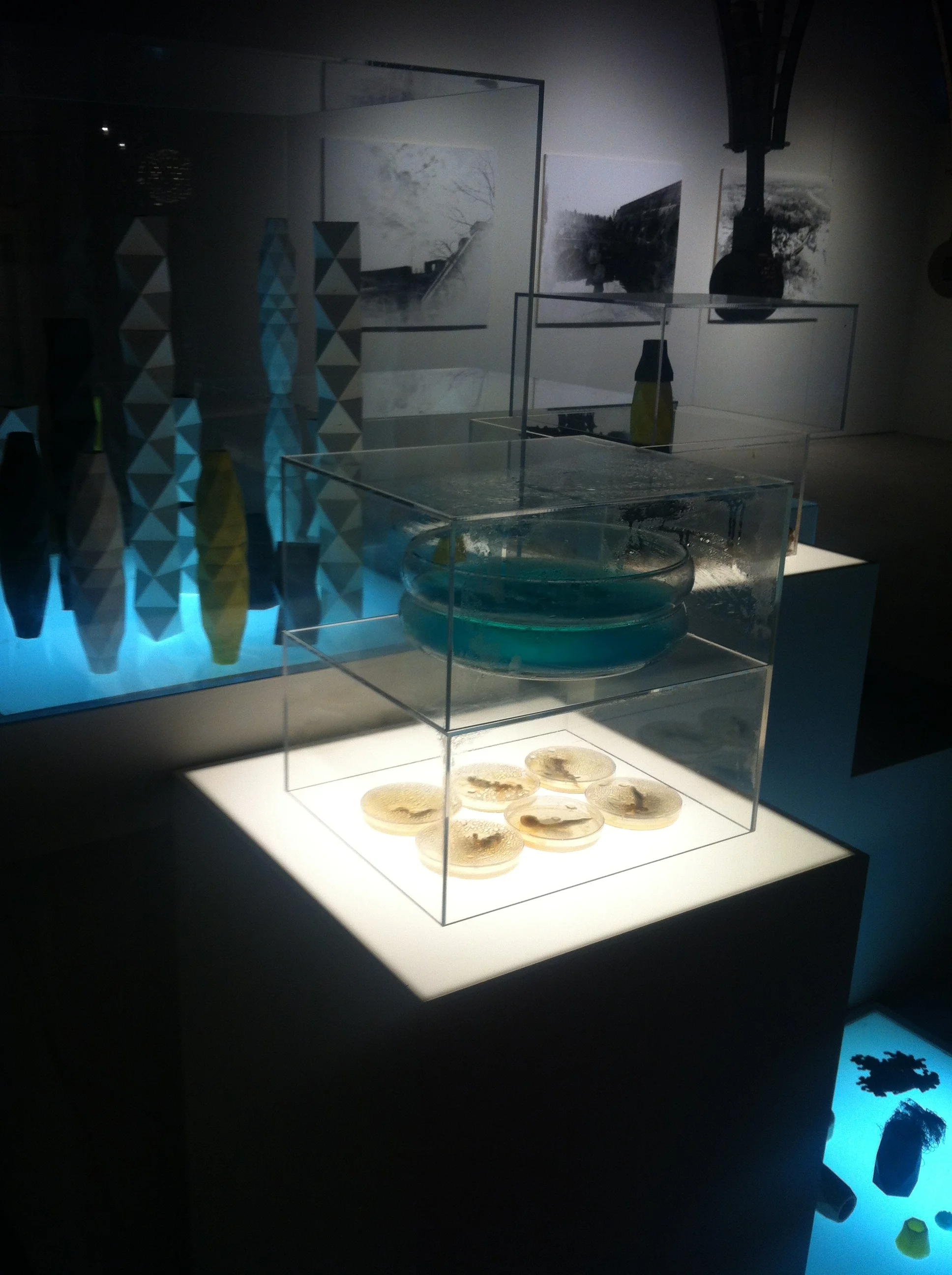
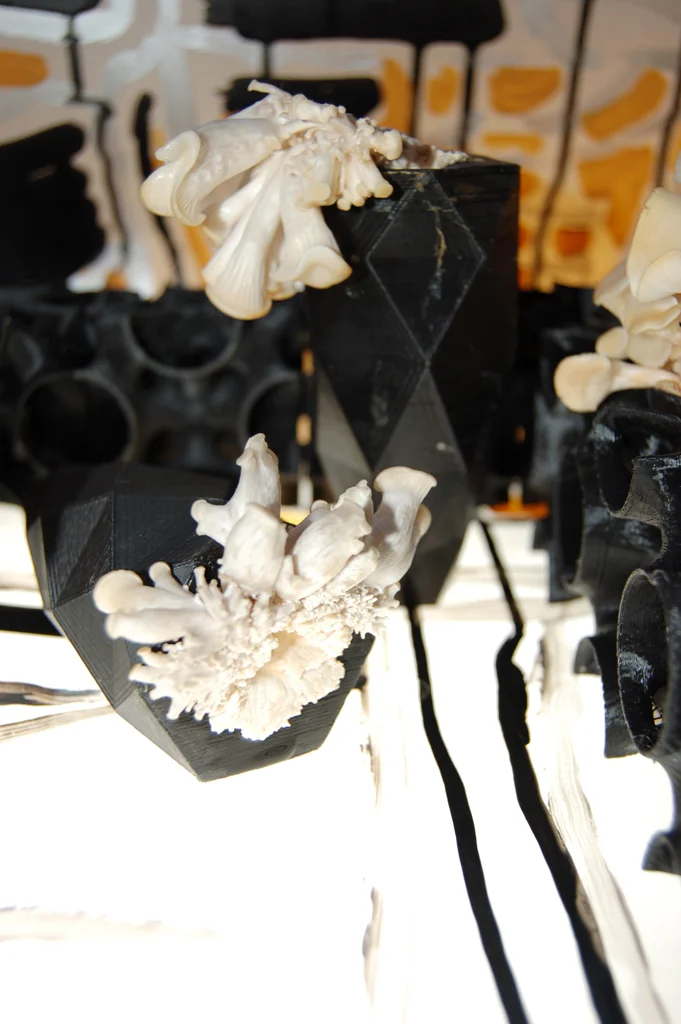
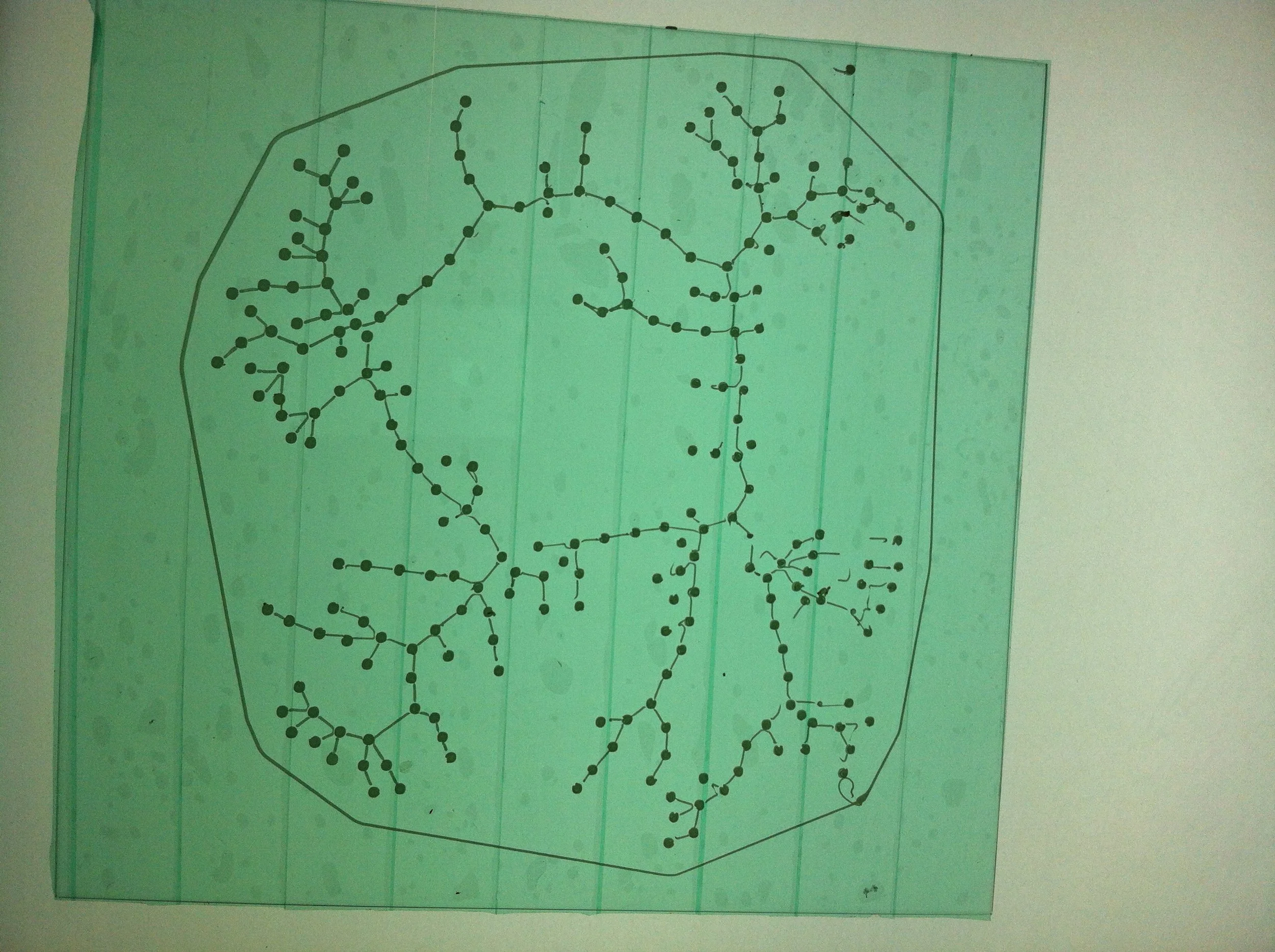
At its core was a set of interactive, generative compositions built from 3D-printed vessels, fungi-spore-inoculated agar–agar forms, and a custom microcontroller system. A piezo sensor listened to vibrations and movements within the gallery, echoing how mycelial networks sense activity underground. Whenever visitors moved through the space, the sensor was agitated, triggering a modified RepRap Prusa 3D printer to extrude new lines of nutrient-rich gel from a syringe. These printed strands, laid across agar-agar jelly shapes, held fungal spores that began to grow, bloom, and decompose, altering the spatial and architectural logics initially imposed by the machine.
The installation became an evolving negotiation between algorithmic order and biological disorder. The printer followed G-Code instructions, mapping geometric forms across the x-, y-, and z-axes with mechanical precision. Yet the spores, once activated, responded with their own agency; digesting edges, softening structures, and generating unexpected architectures. Each micro-environment pushed against the tidy stereolithographic logic of 3D printing, transforming the archive into a living record of interaction, decay, and entanglement.
The Temporary Archive of Ambiguous Architecture III invited viewers to witness an “archive” that could not be preserved, only encountered as an installation that recorded the presence of bodies, vibrations, and time through growth, collapse, and continual reconfiguration.
The video projection was documentation of my experiments with early 3D scanning and animation: Still…Life, 2012. I used Autodesk’s 123D Catch and an IPhone4 to capture the STL images and then edited/animated them in Blender.