


Culinary Cultures of the Kinder/Garden, 2010
Latitude 53, Visualeyez Performance Art Festival, Edmonton, AB
Collaborative work with Alison Reiko Loader
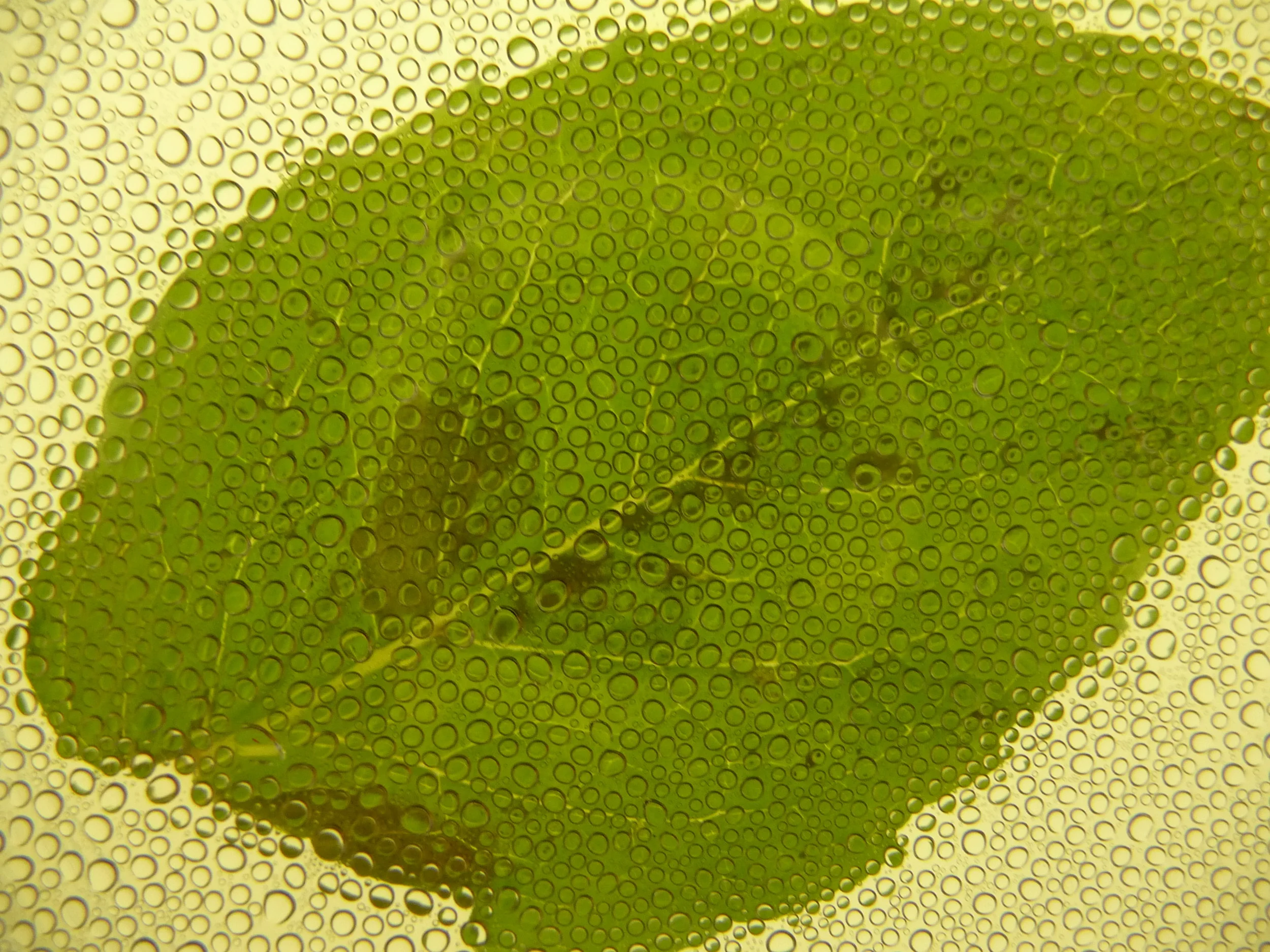
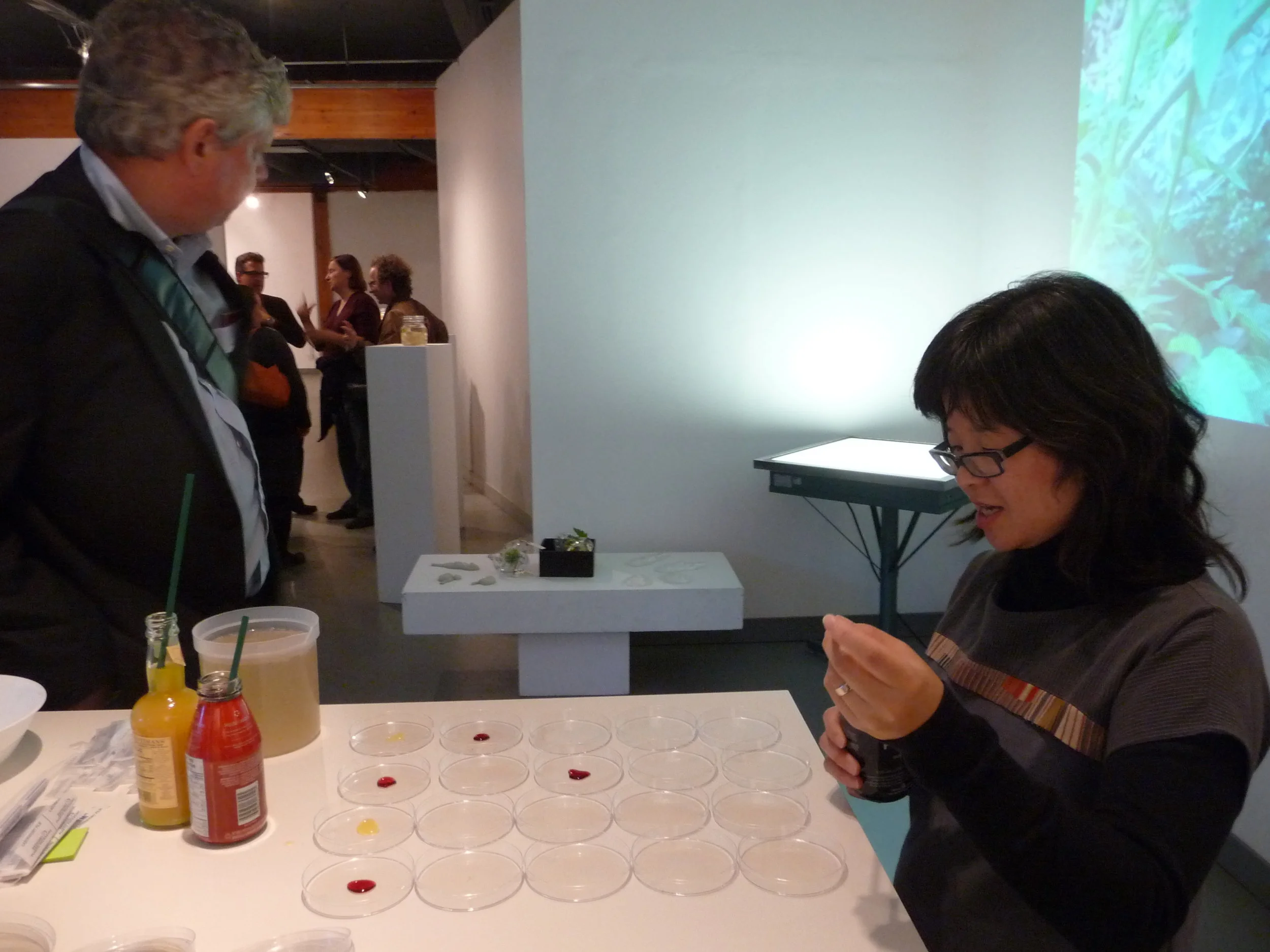
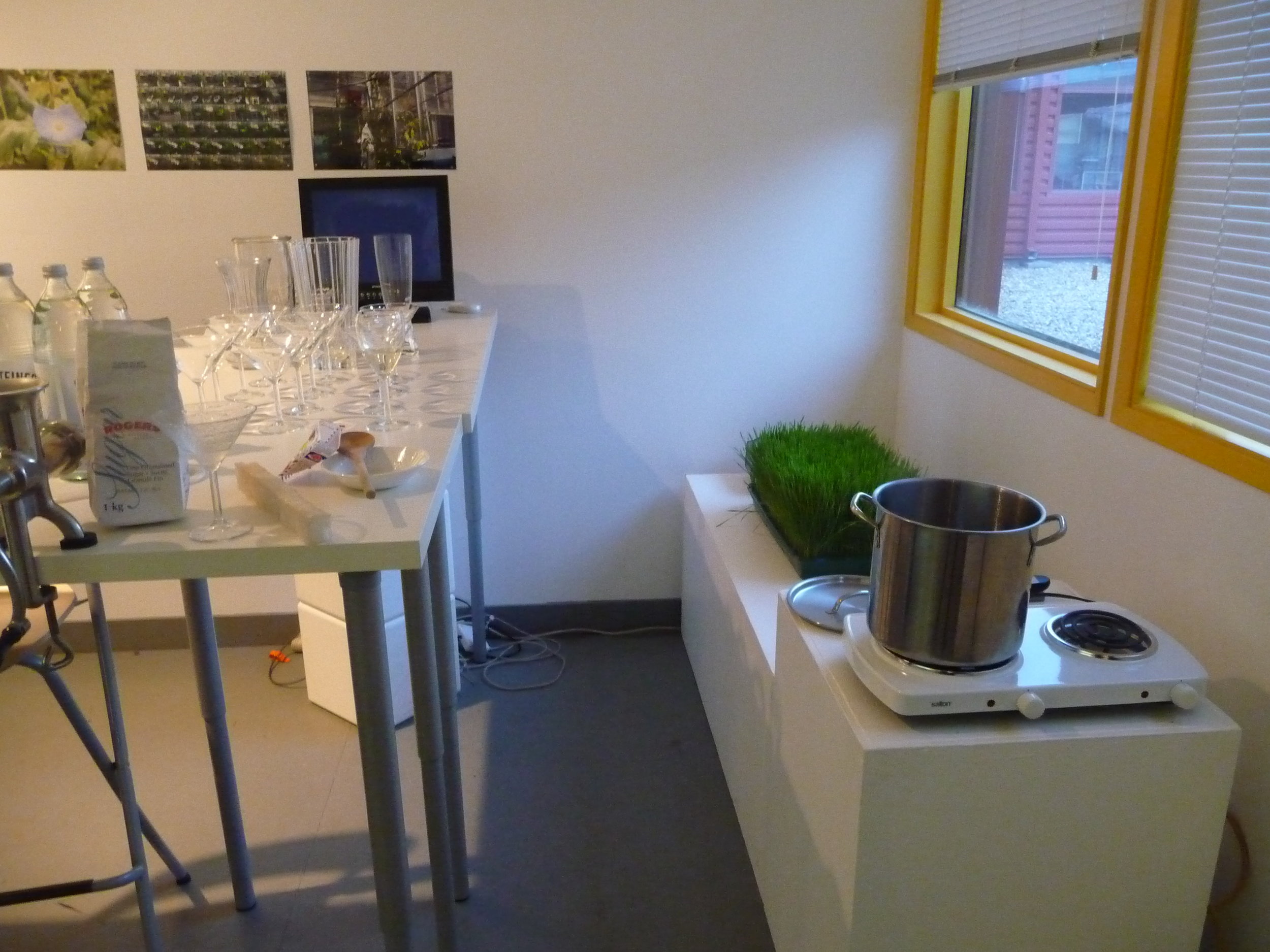
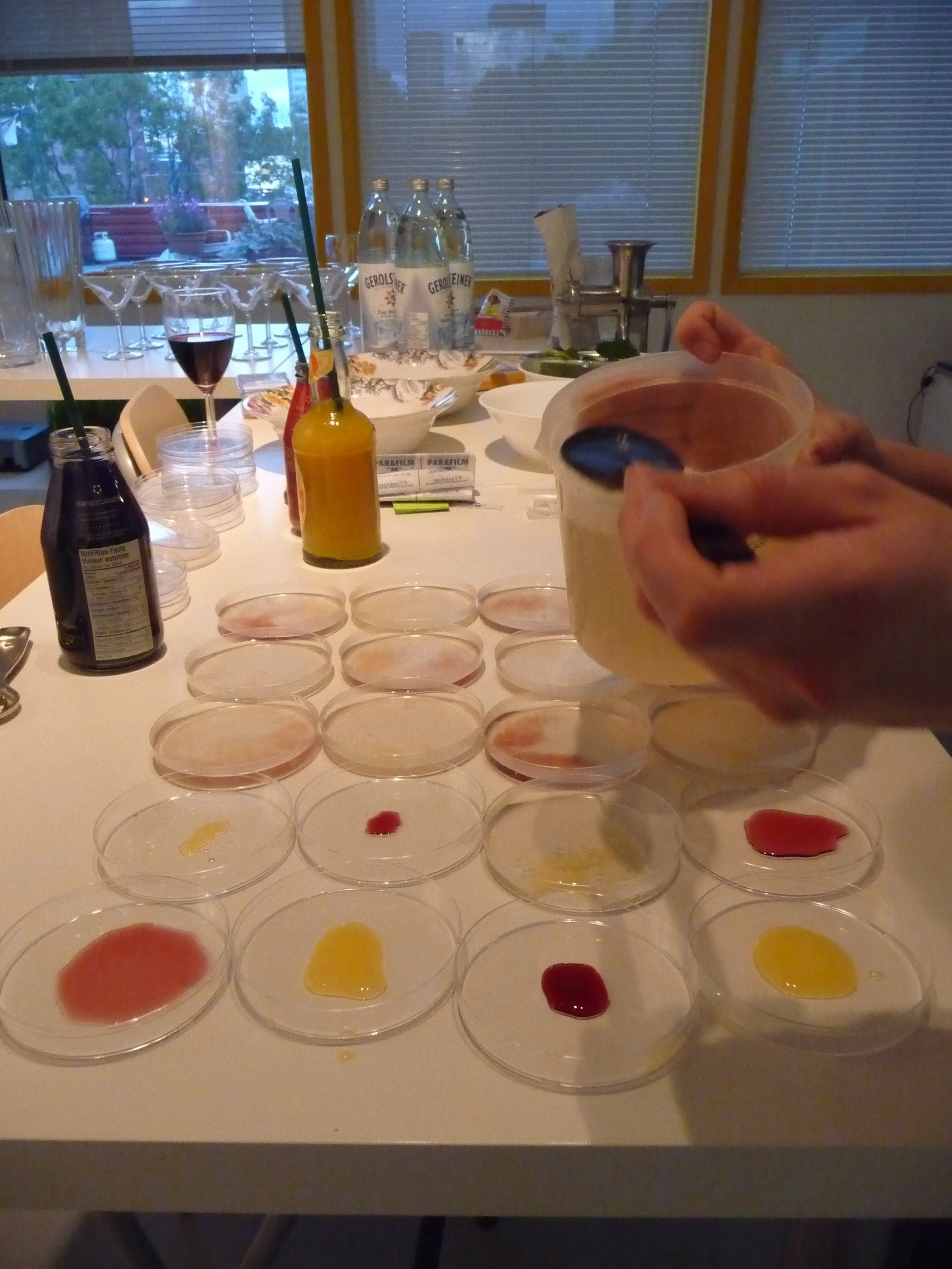
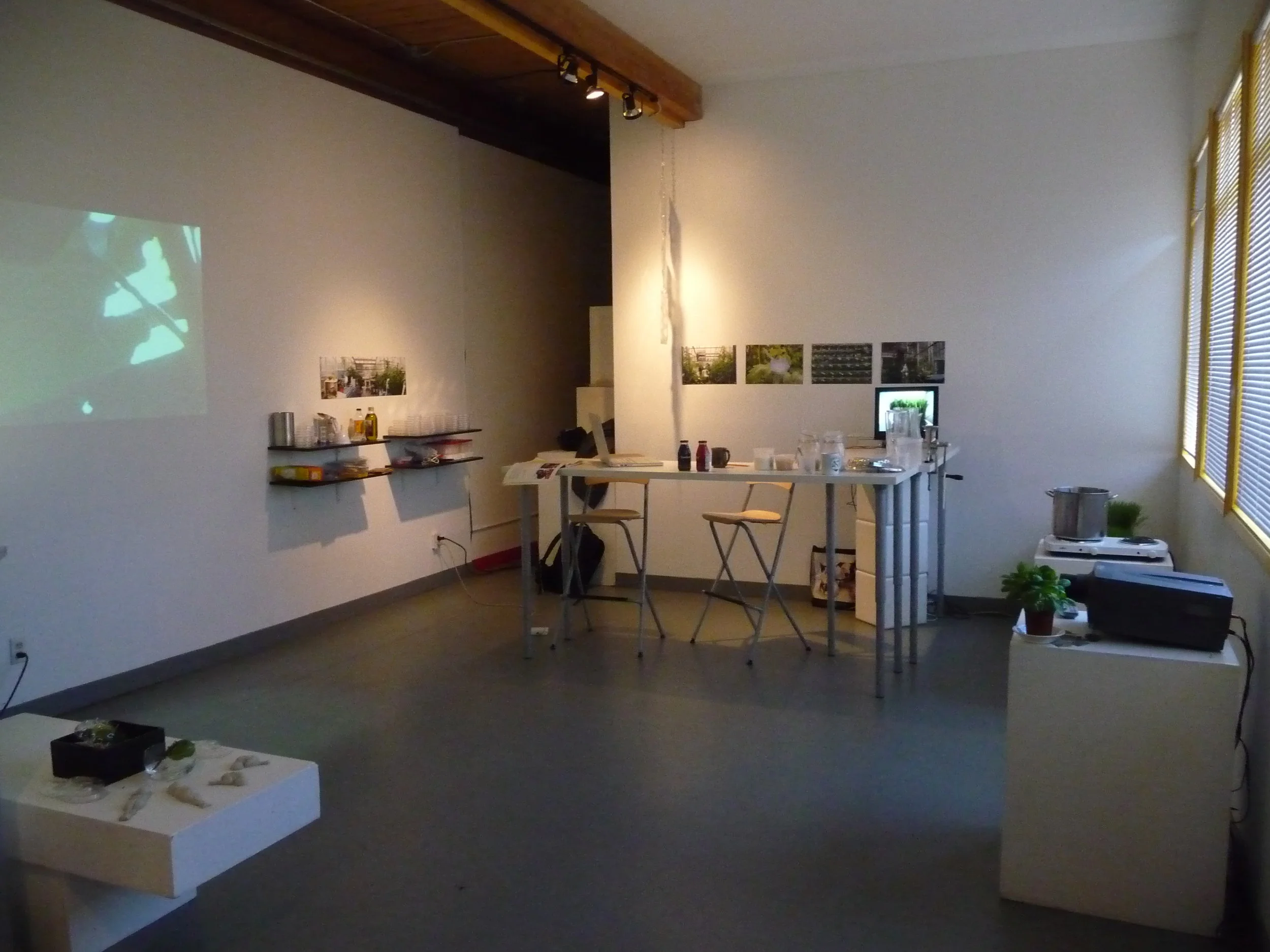
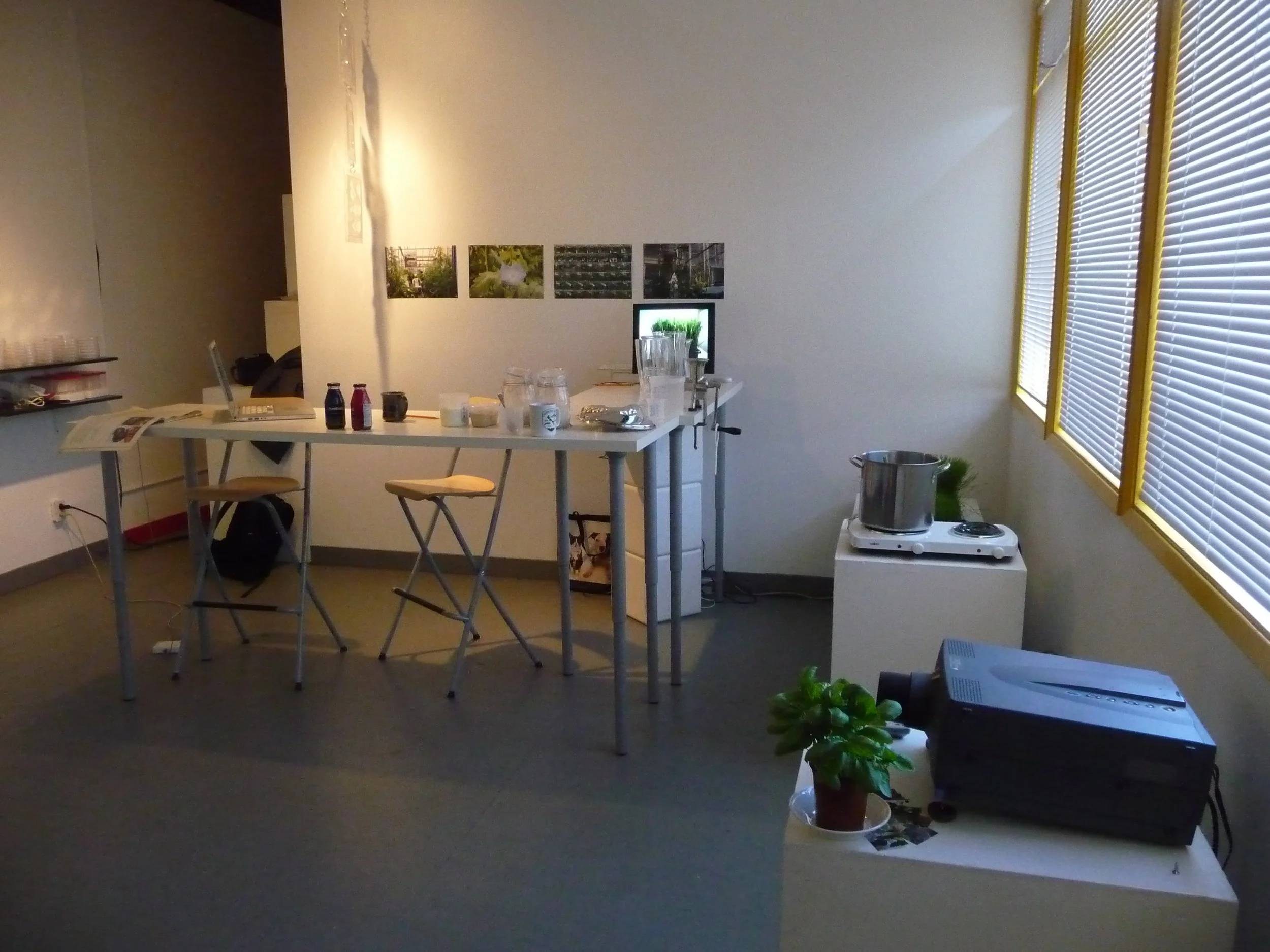
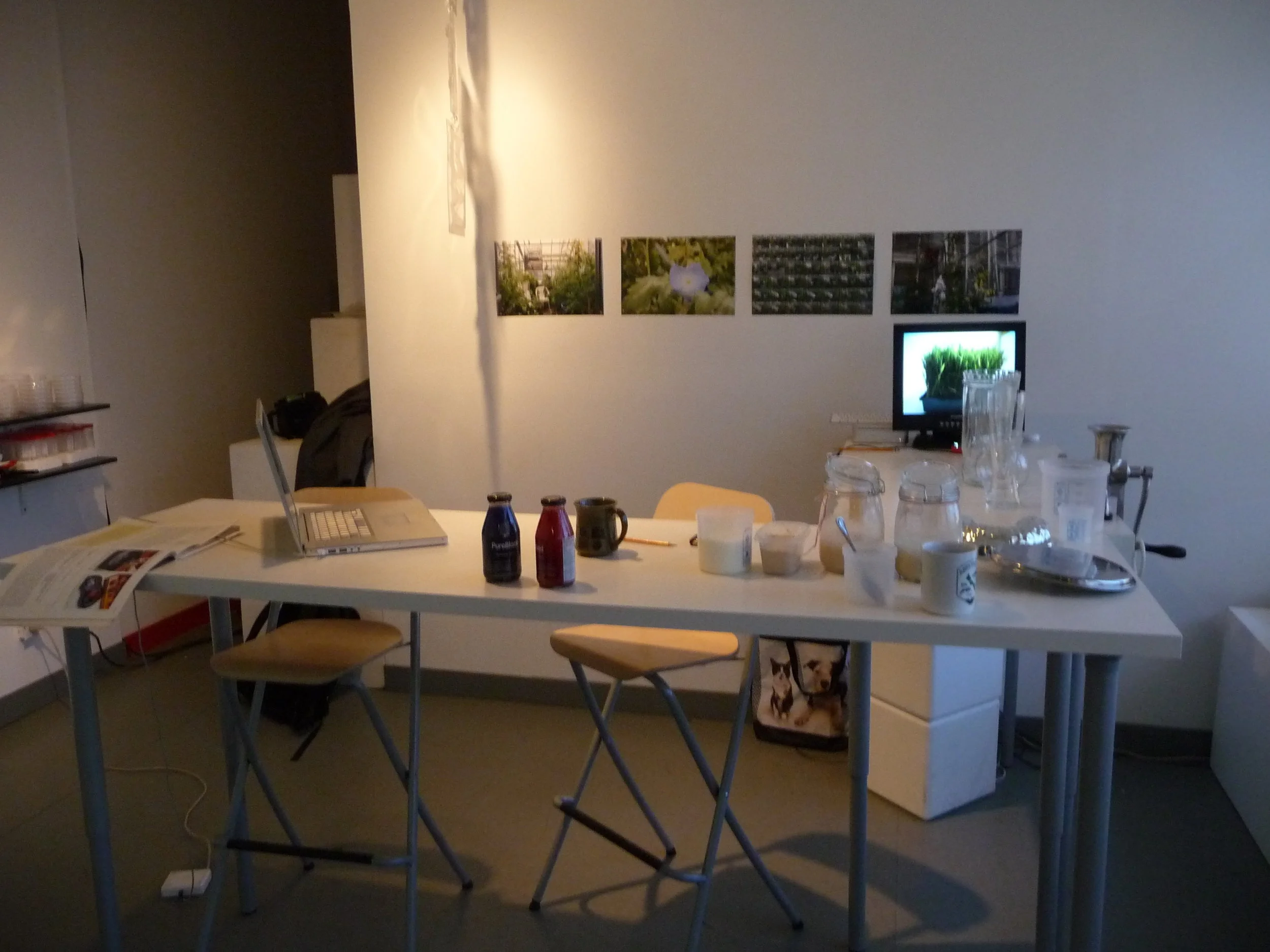
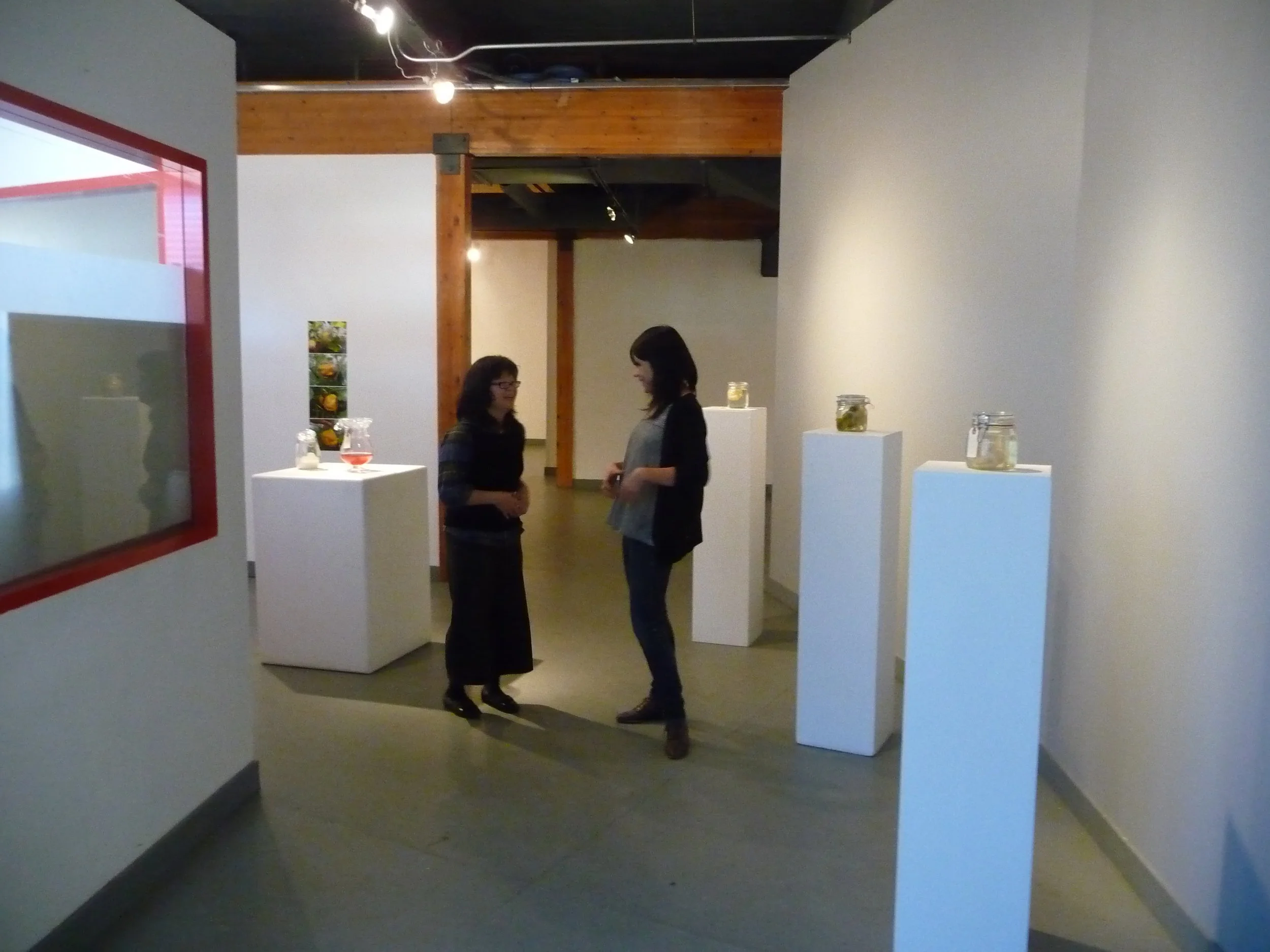
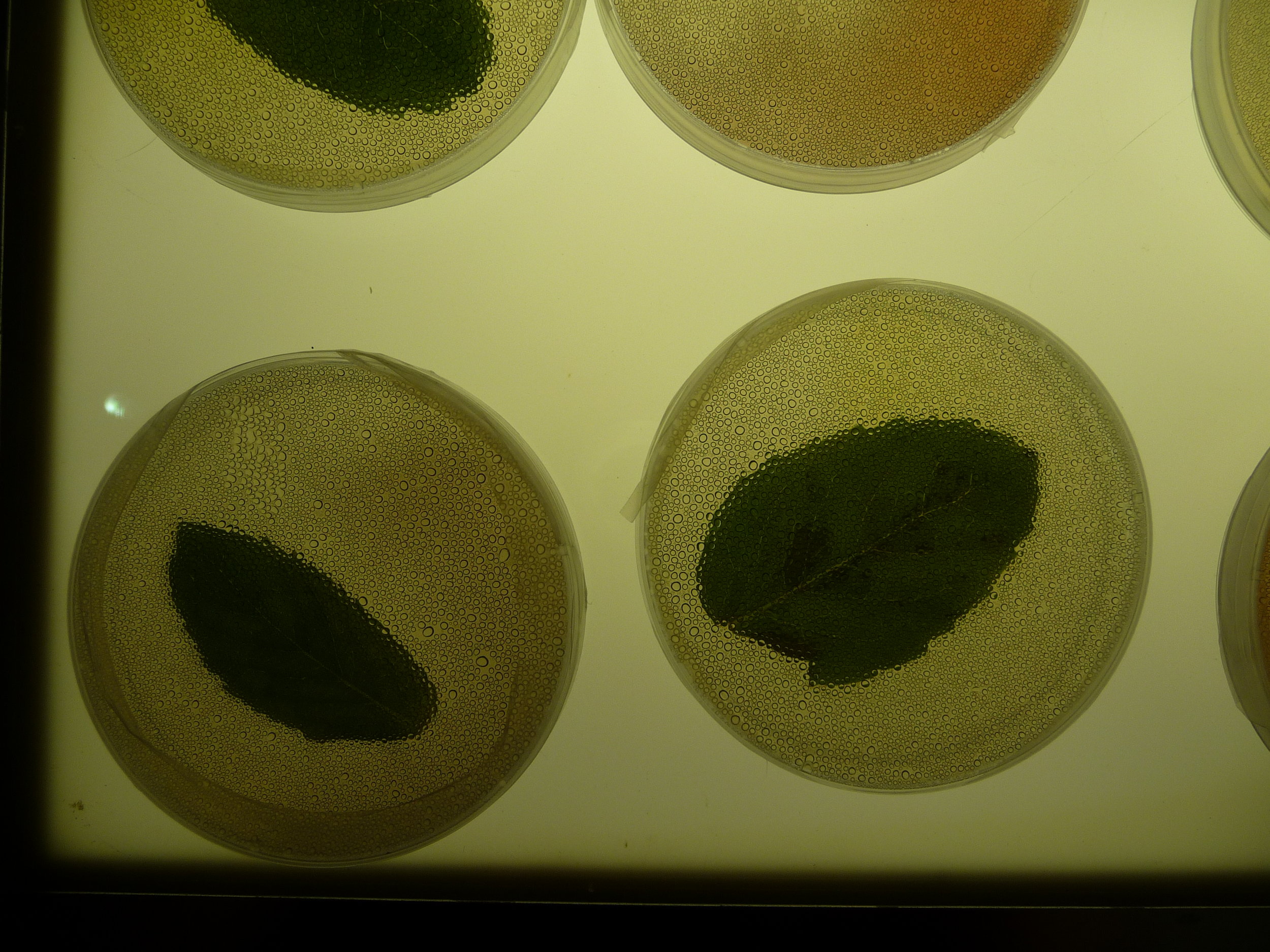
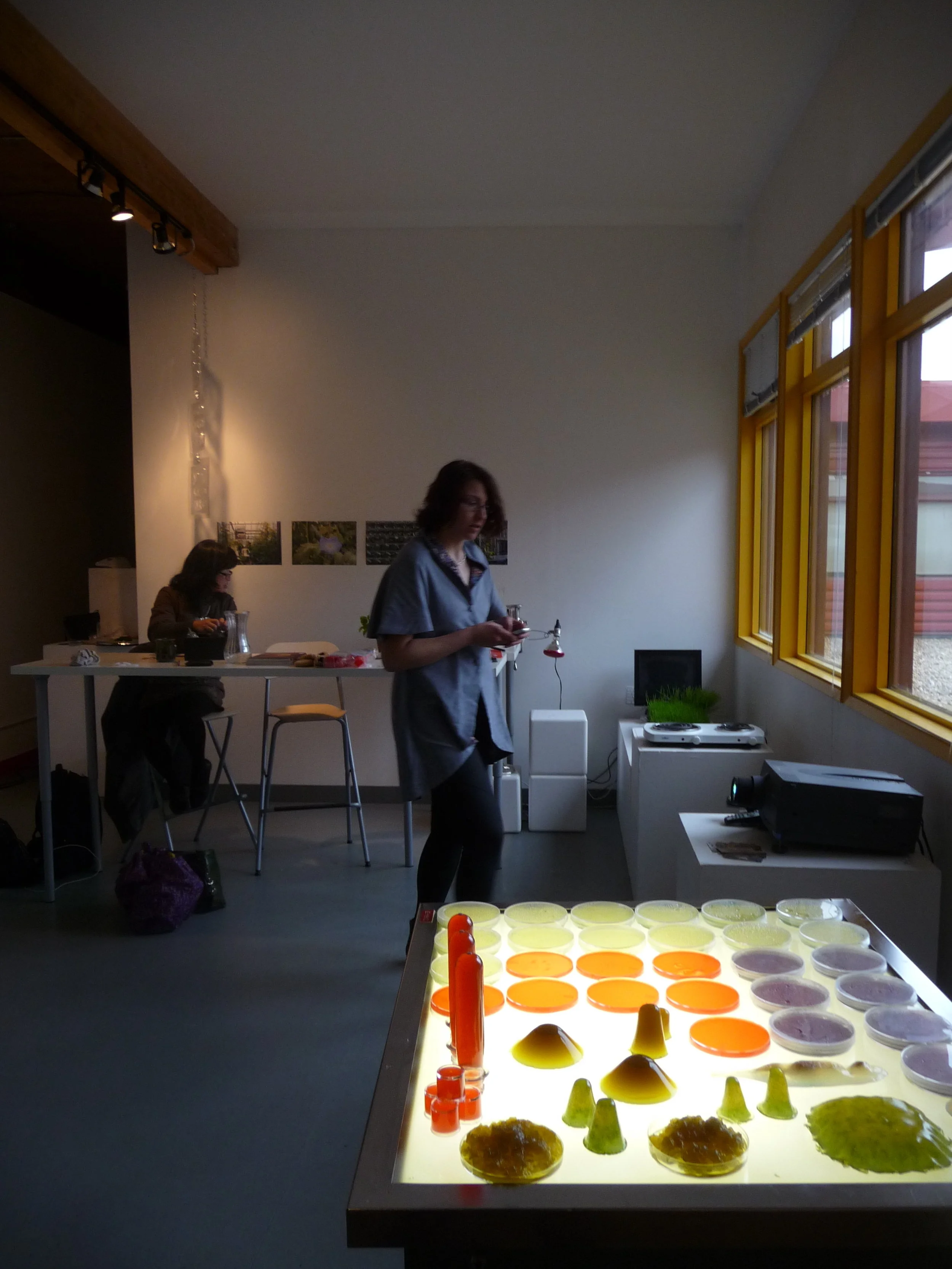
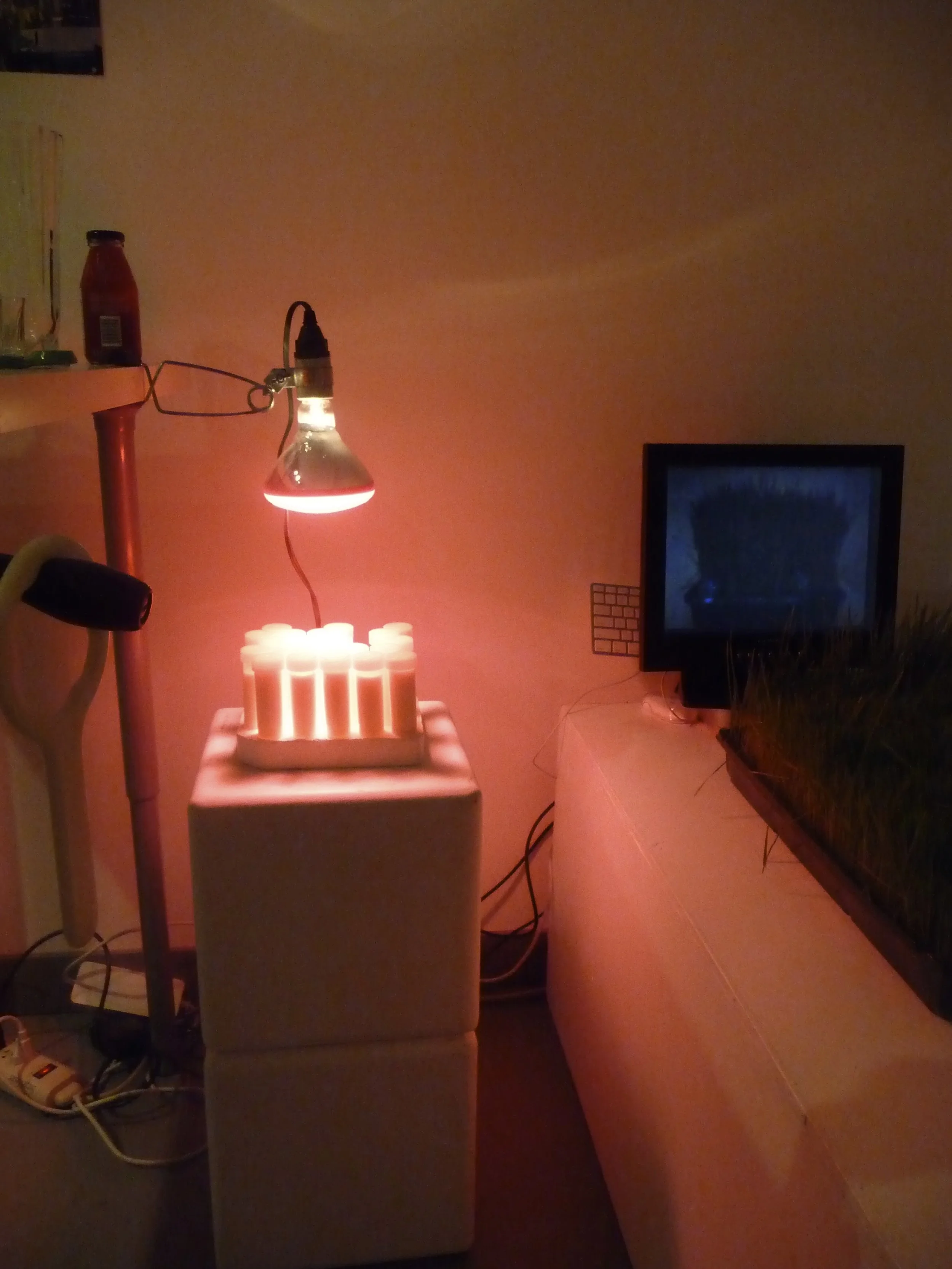
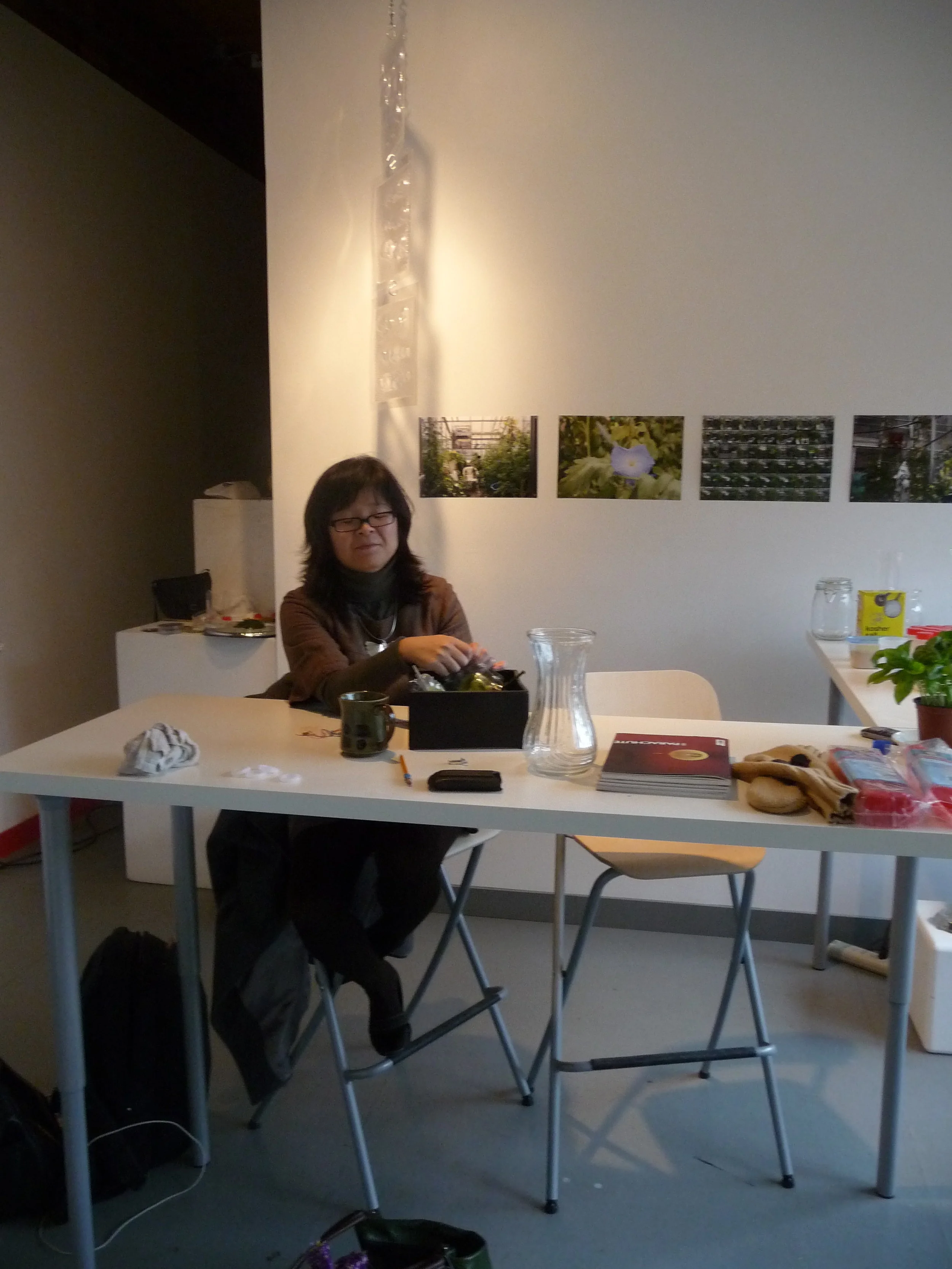
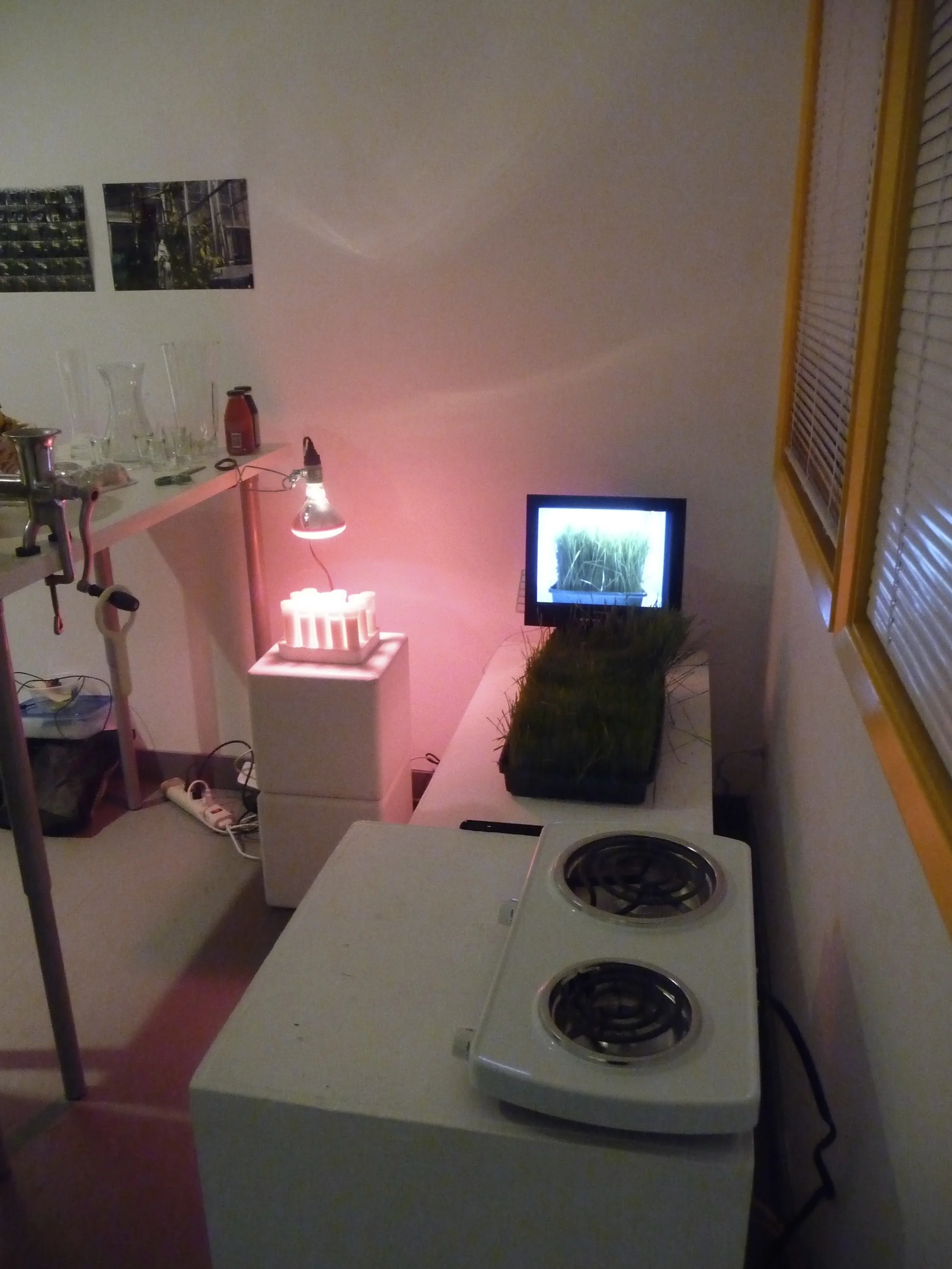
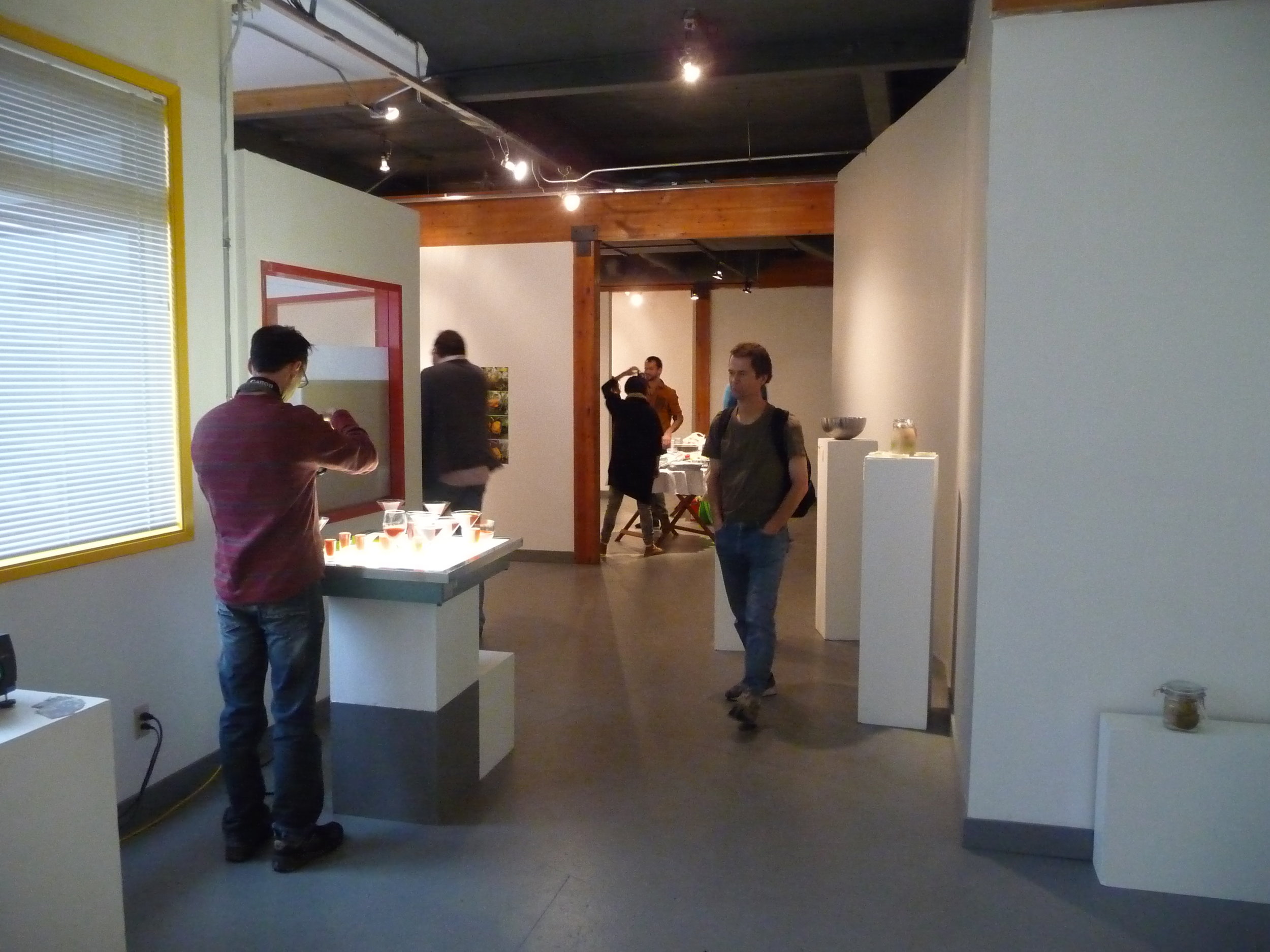
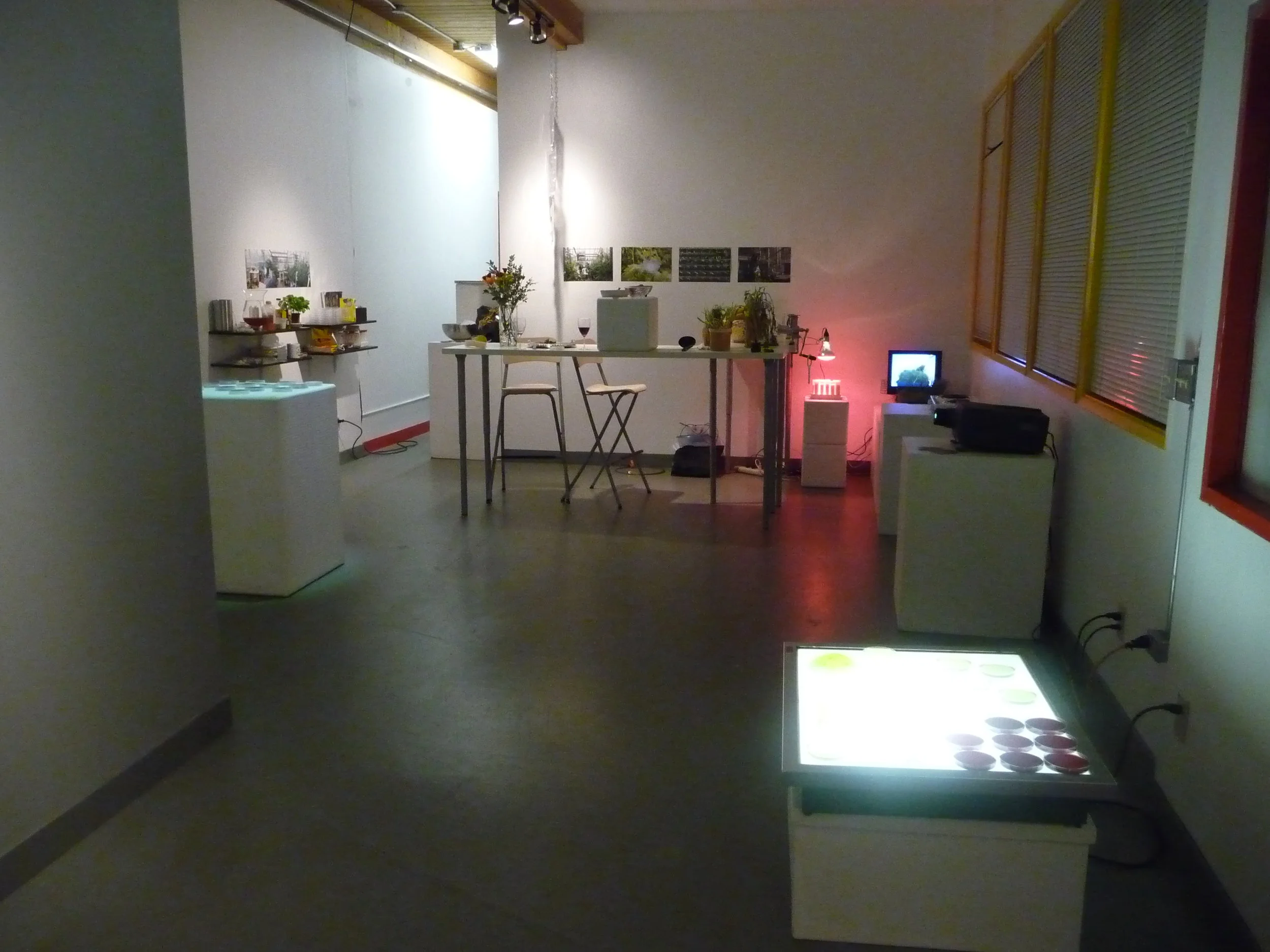
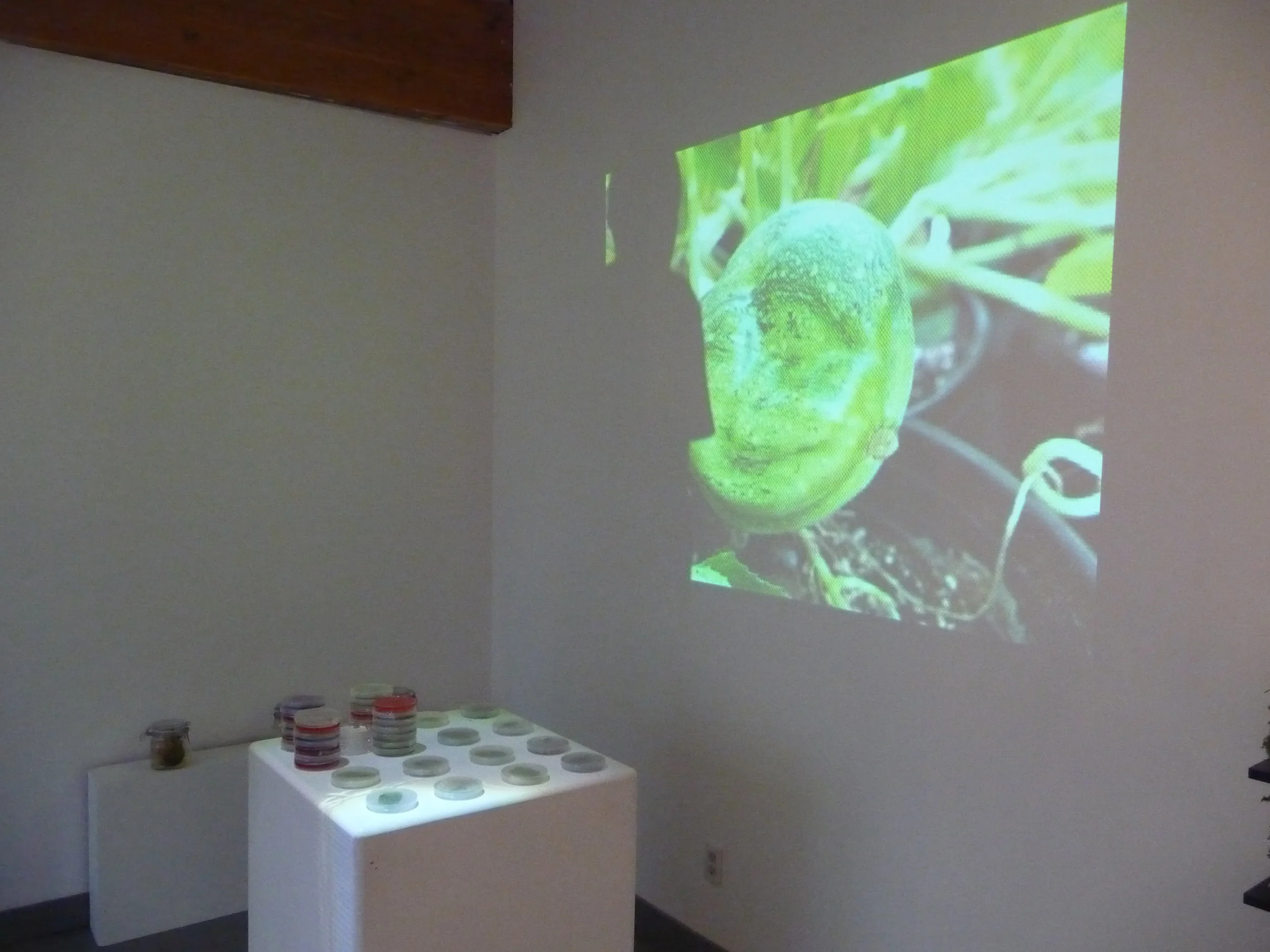
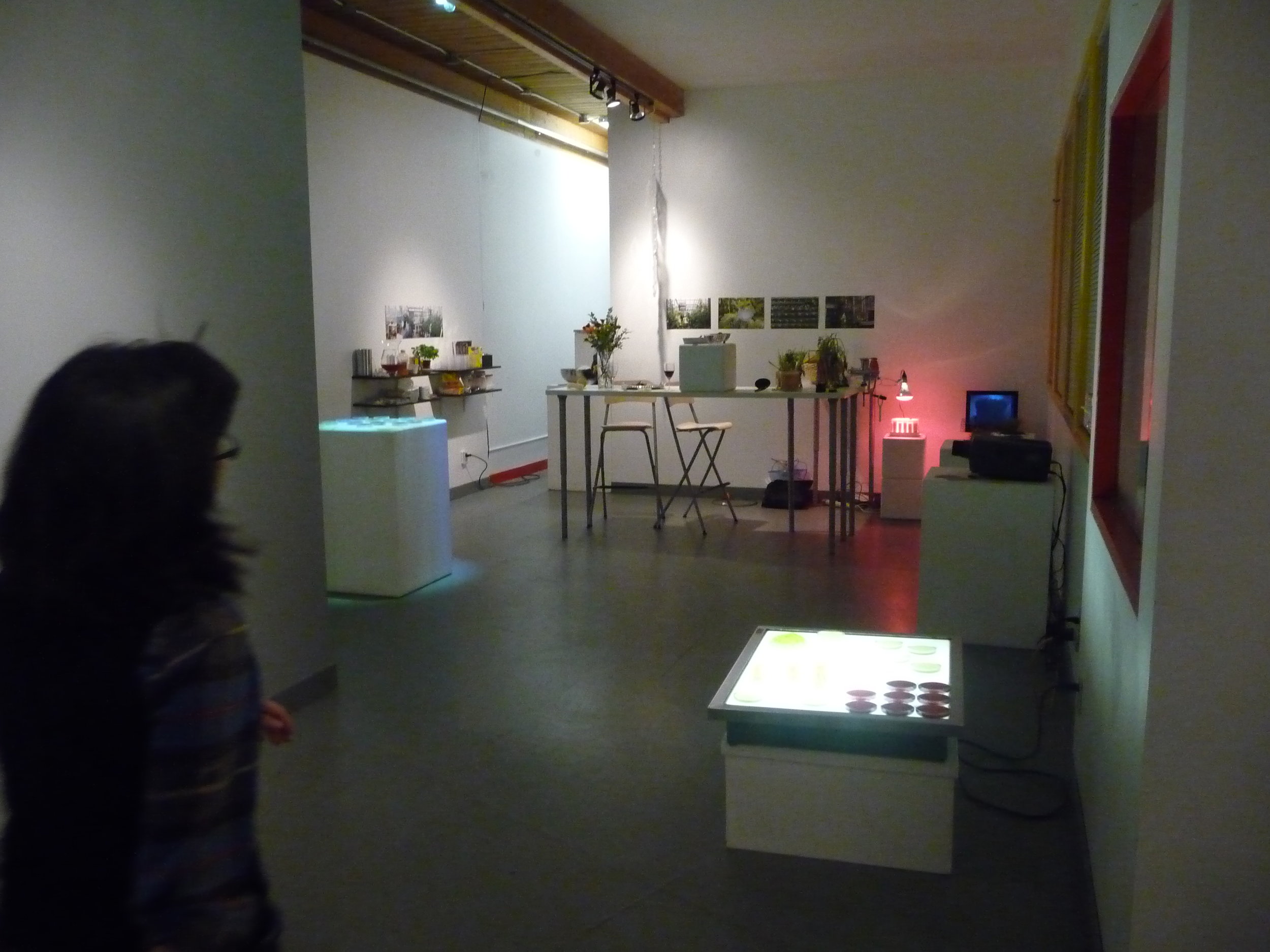
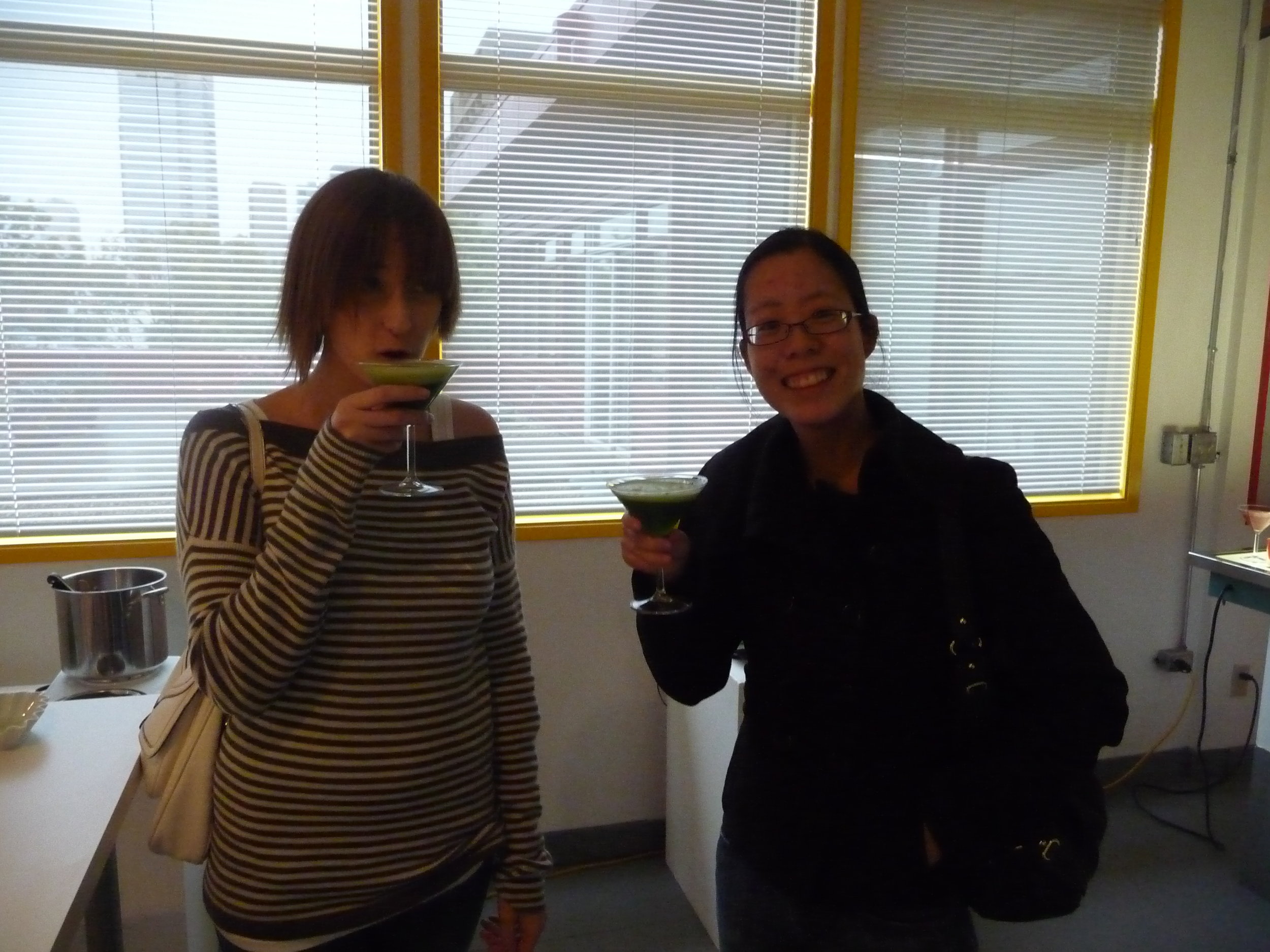
Culinary Cultures of the Kinder/Garden was a collaborative, process-based performance installation developed with Alison Reiko Loader for the Visualeyez Performance Art Festival at Latitude 53 in 2010. The project unfolded as a living, durational environment in which daily improvised actions emerged through encounters with edible plants, microbial cultures, and other animate materials; what we referred to as living cultures.
Rather than presenting a fixed performance, the work operated as an open system: part garden, part kitchen, part laboratory, part social space. Performative gestures arose slowly and informally through acts of tending, tasting, fermenting, harvesting, and care. These actions foregrounded domestic and culinary labour as sites of knowledge production, relational ethics, and embodied learning, drawing attention to the overlooked intelligence of everyday practices traditionally associated with nourishment and maintenance.
The Kinder/Garden functioned as a pedagogical and affective space, inviting audiences to witness and participate in processes of growth, decay, transformation, and sustenance. By working with fermentation, soil, plants, and time-based change, the project blurred distinctions between human and nonhuman agency, art and life, cultivation and consumption. The work engaged questions central to ecofeminist and posthuman thought: How do we learn with living systems rather than about them? What forms of care emerge when artistic practice is rooted in reciprocity and attentiveness rather than control?
Culinary Cultures of the Kinder/Garden proposed performance as a slow, relational practice, one that resists spectacle in favour of durational presence, shared vulnerability, and multispecies collaboration. The project emphasized learning through proximity and patience, offering the garden and kitchen as parallel sites for collective knowledge, cultural memory, and speculative futures grounded in care.