




Doughbie, 2010
Participatory performance with living cultures
For Visualeyez – Performing with Edibles
Collaboration with Alison Reiko Loader
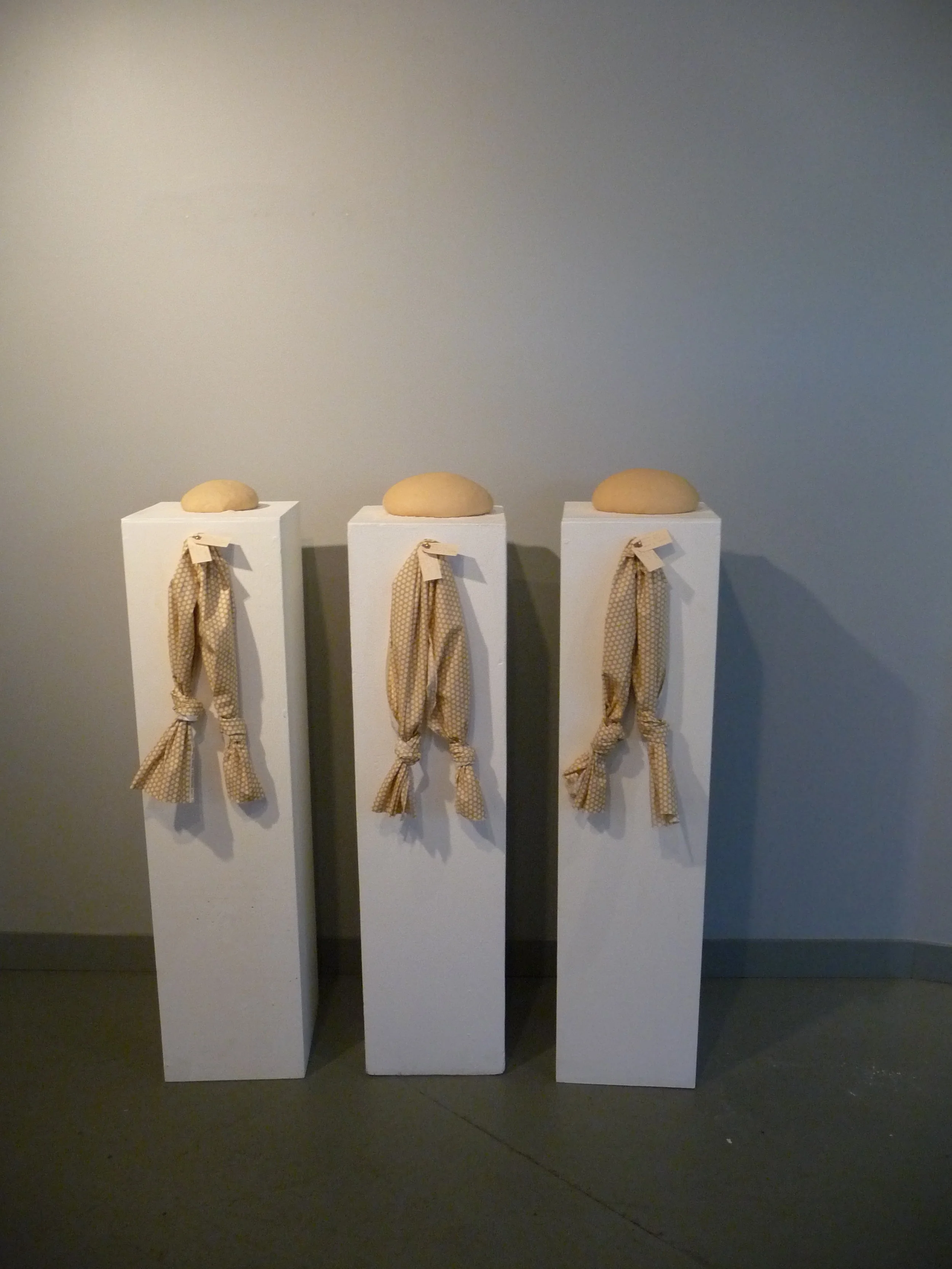
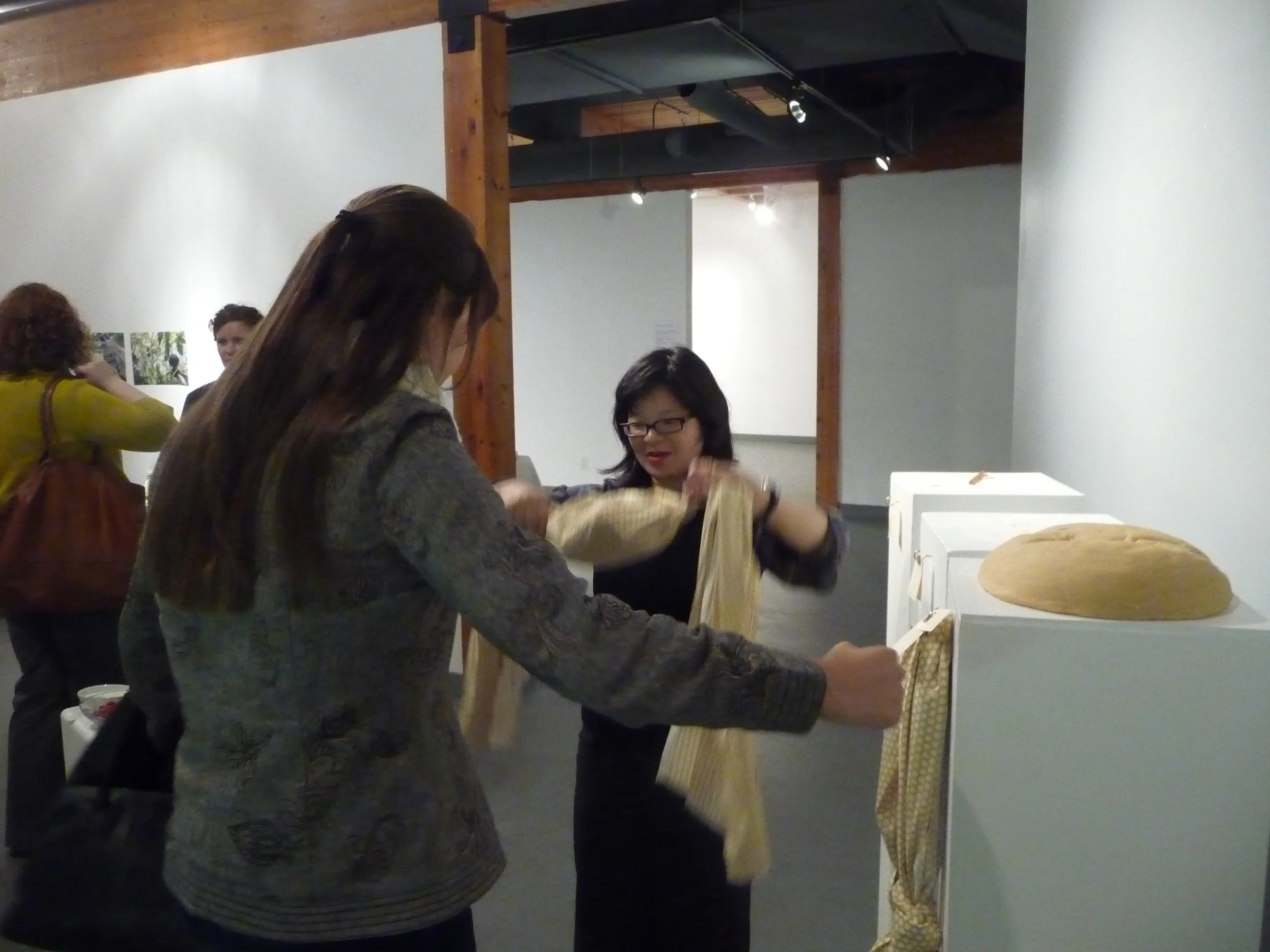
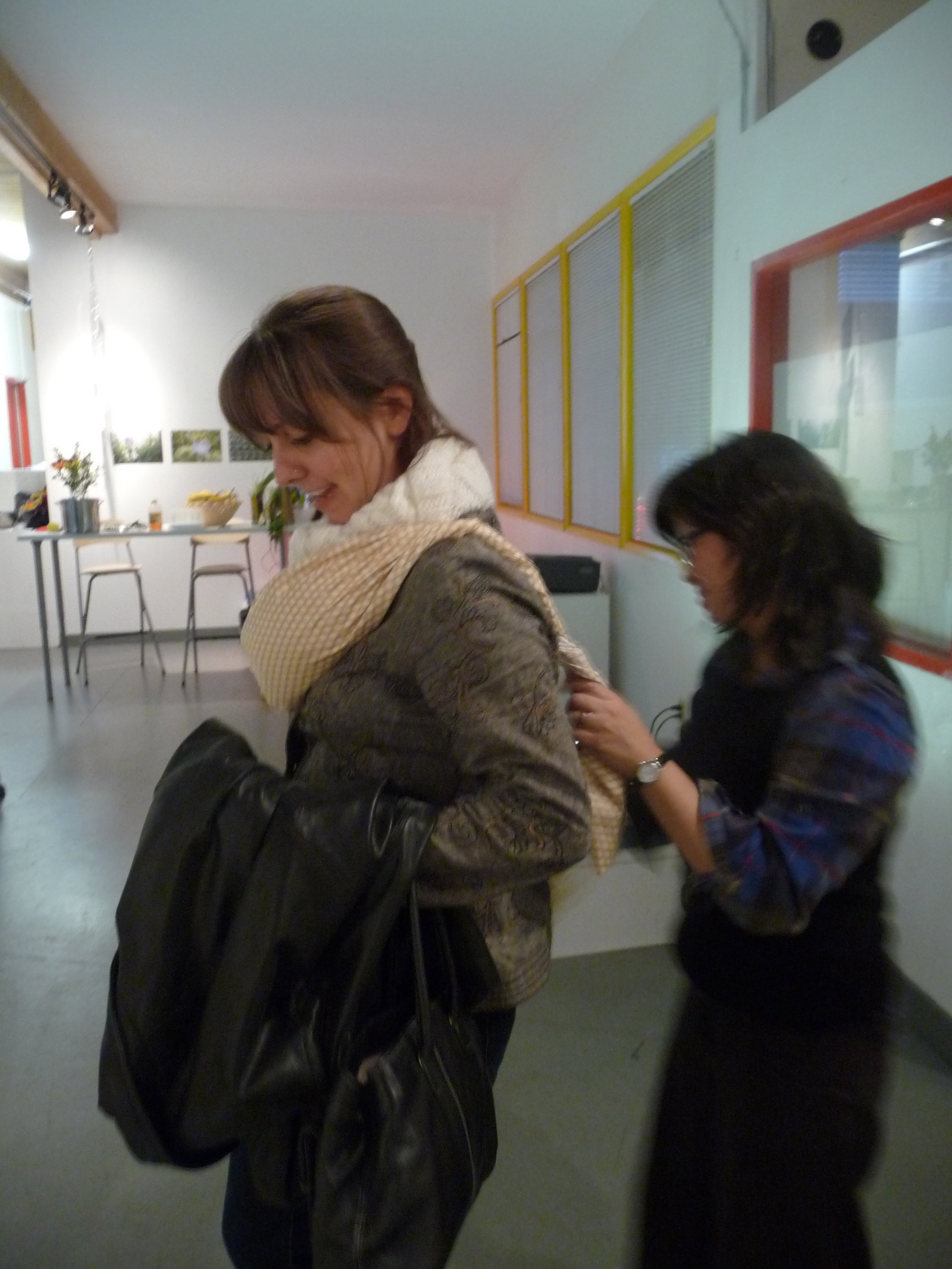
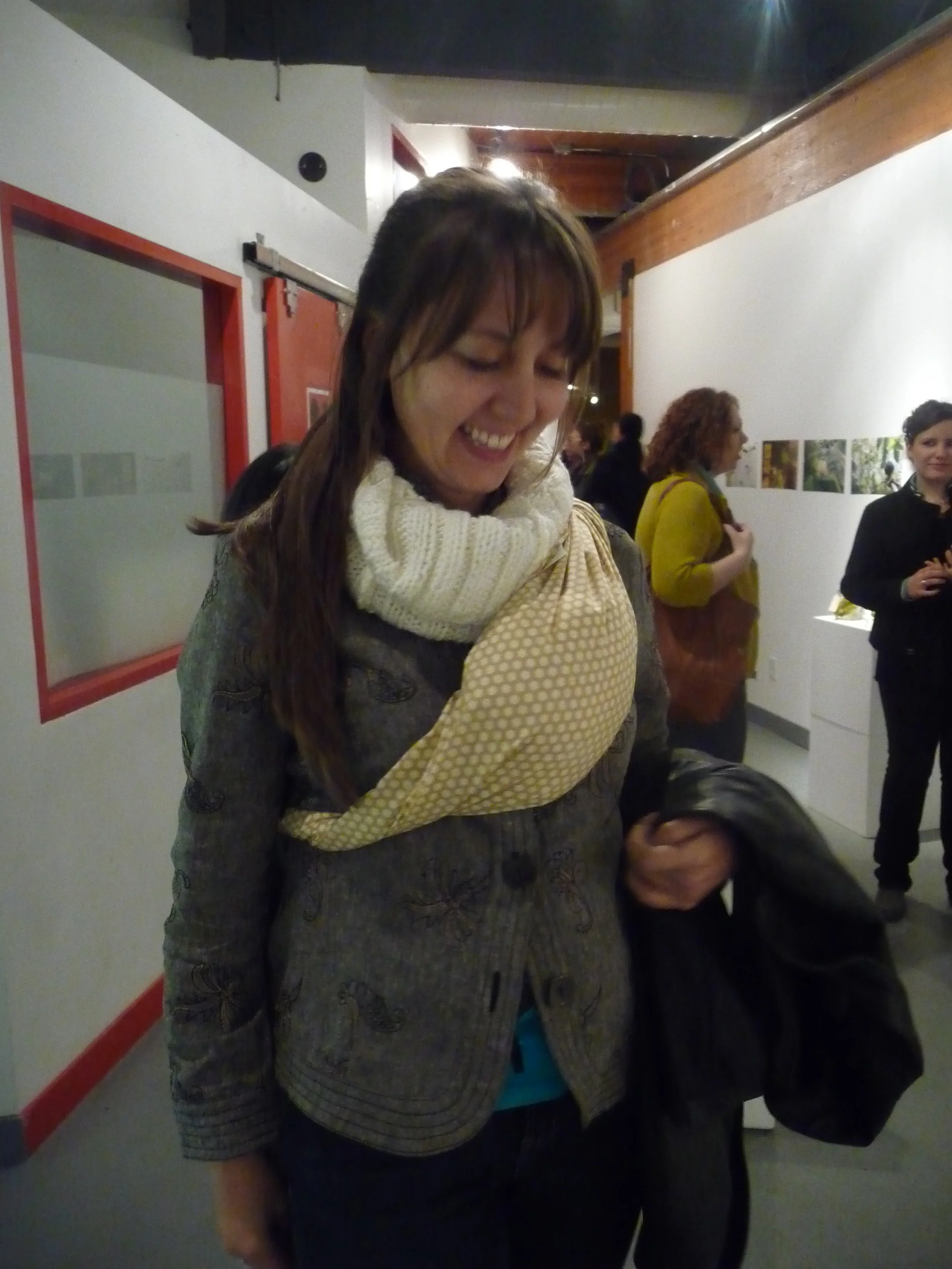
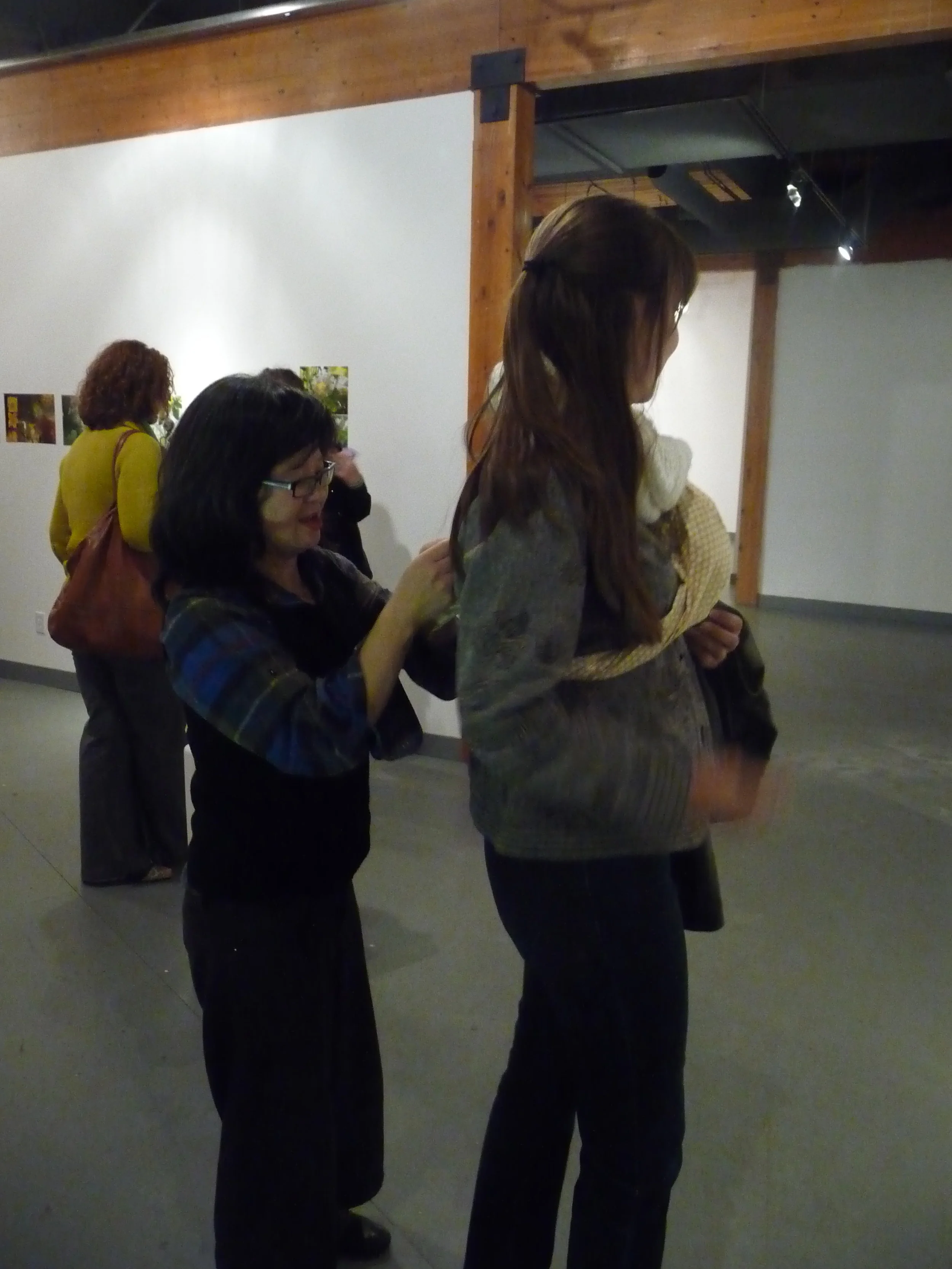
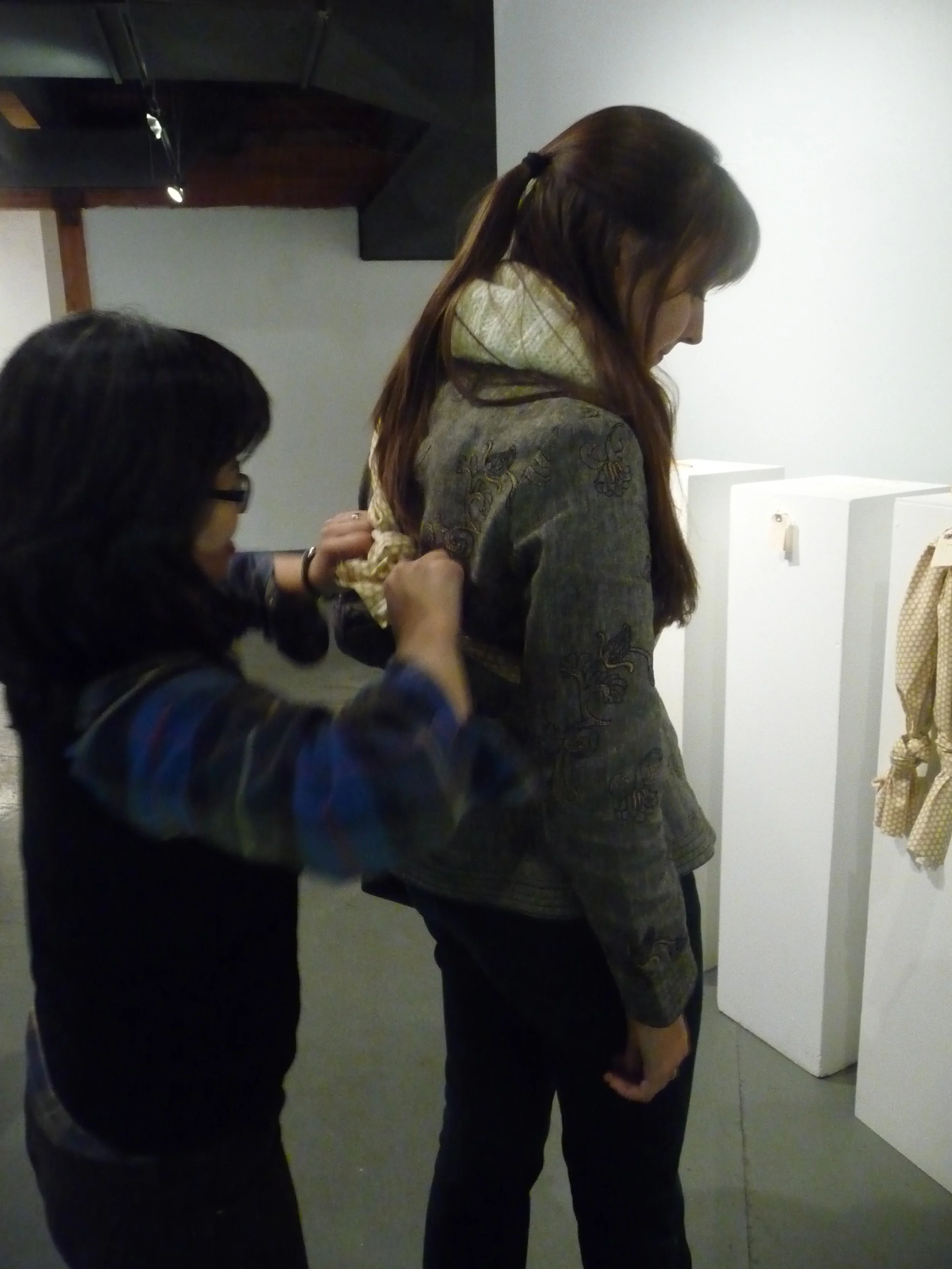
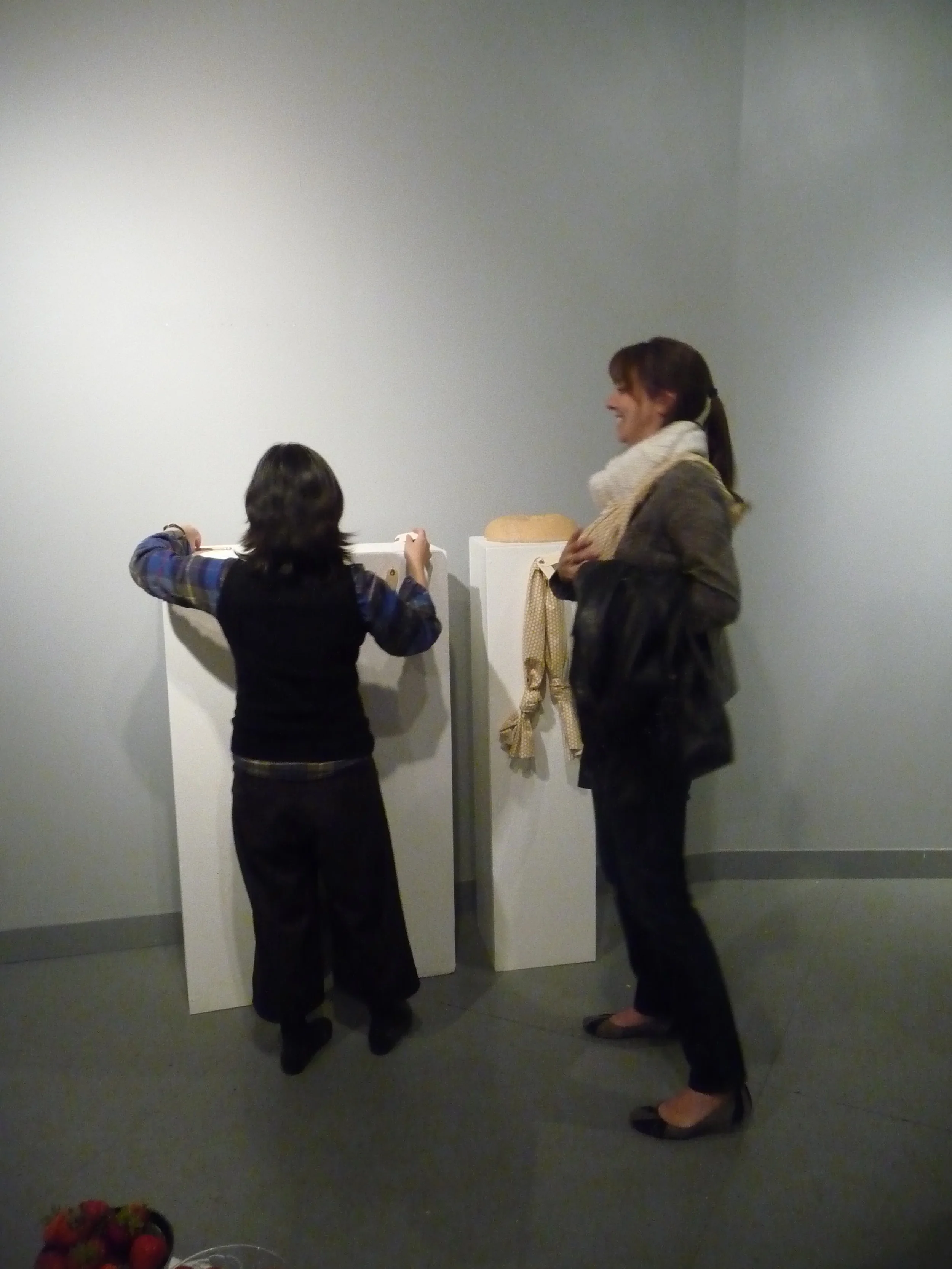
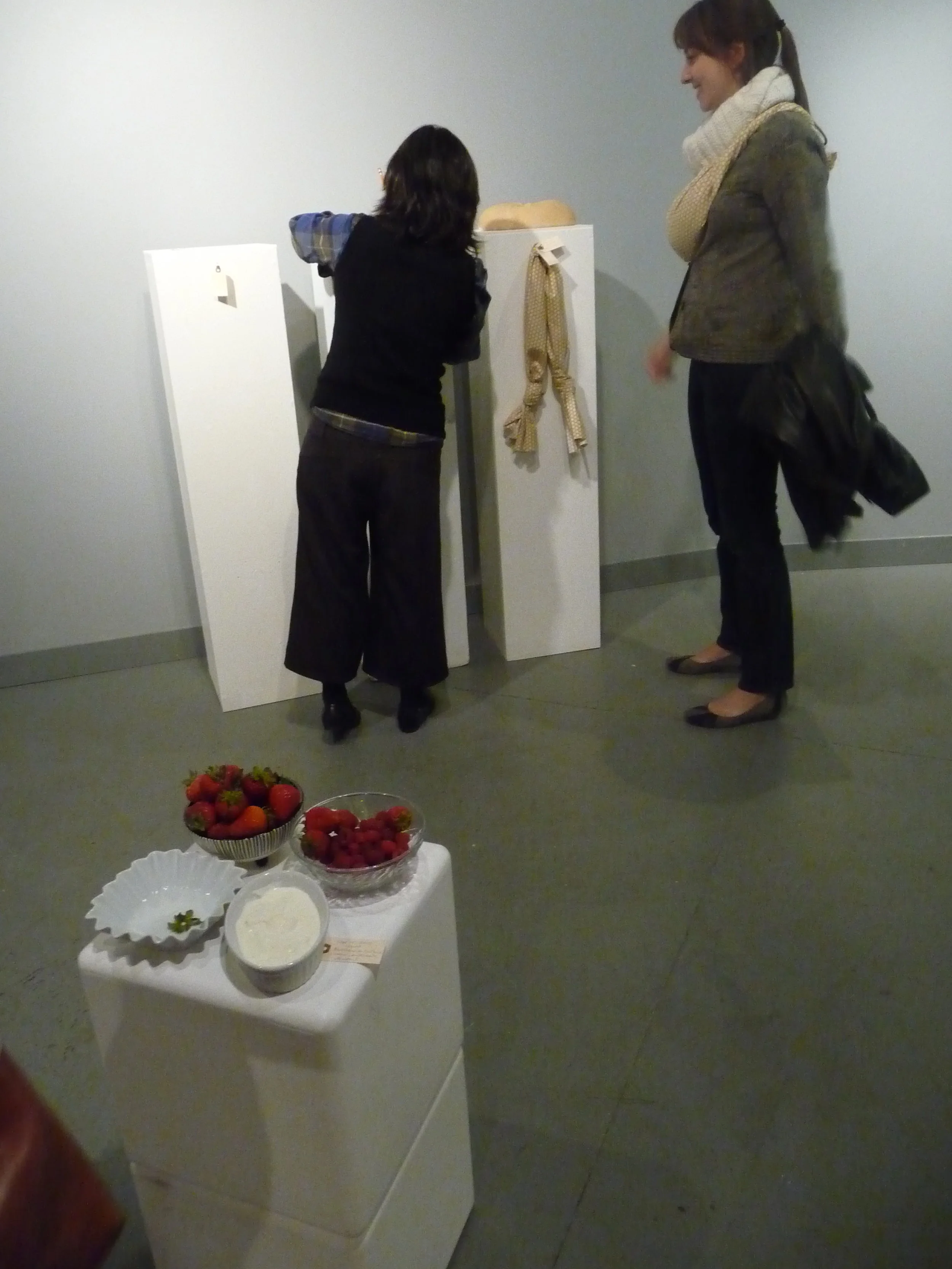
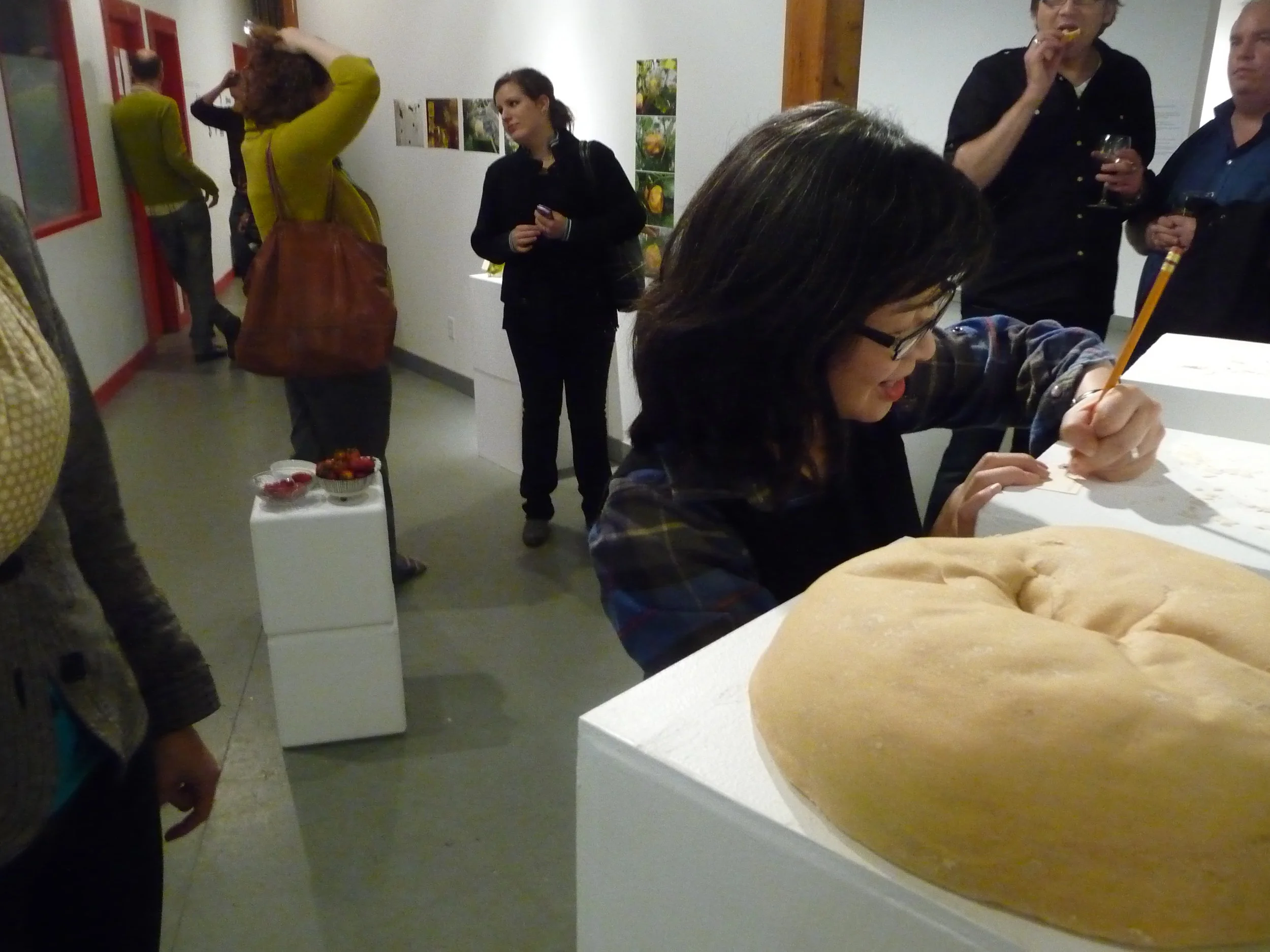
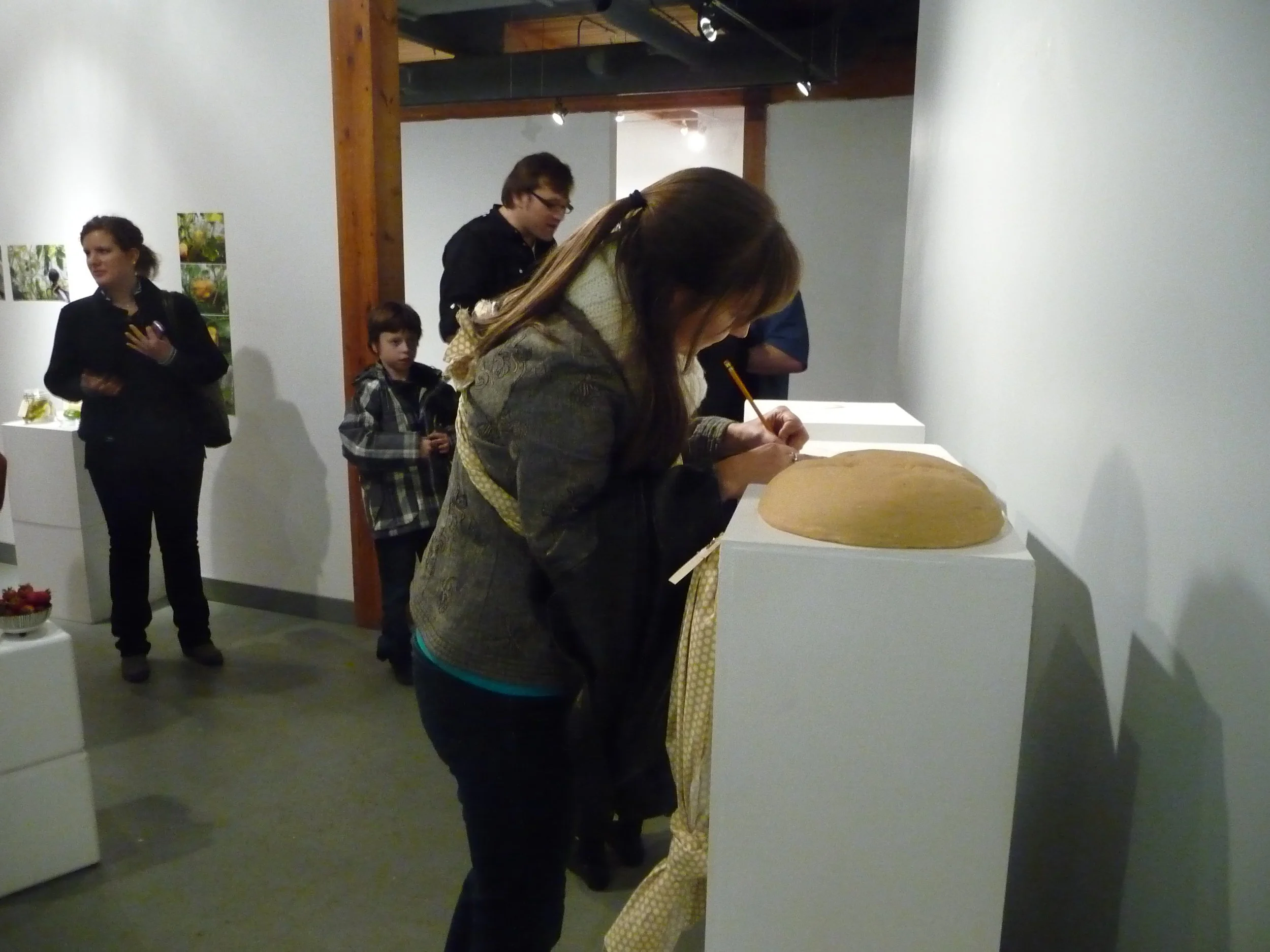
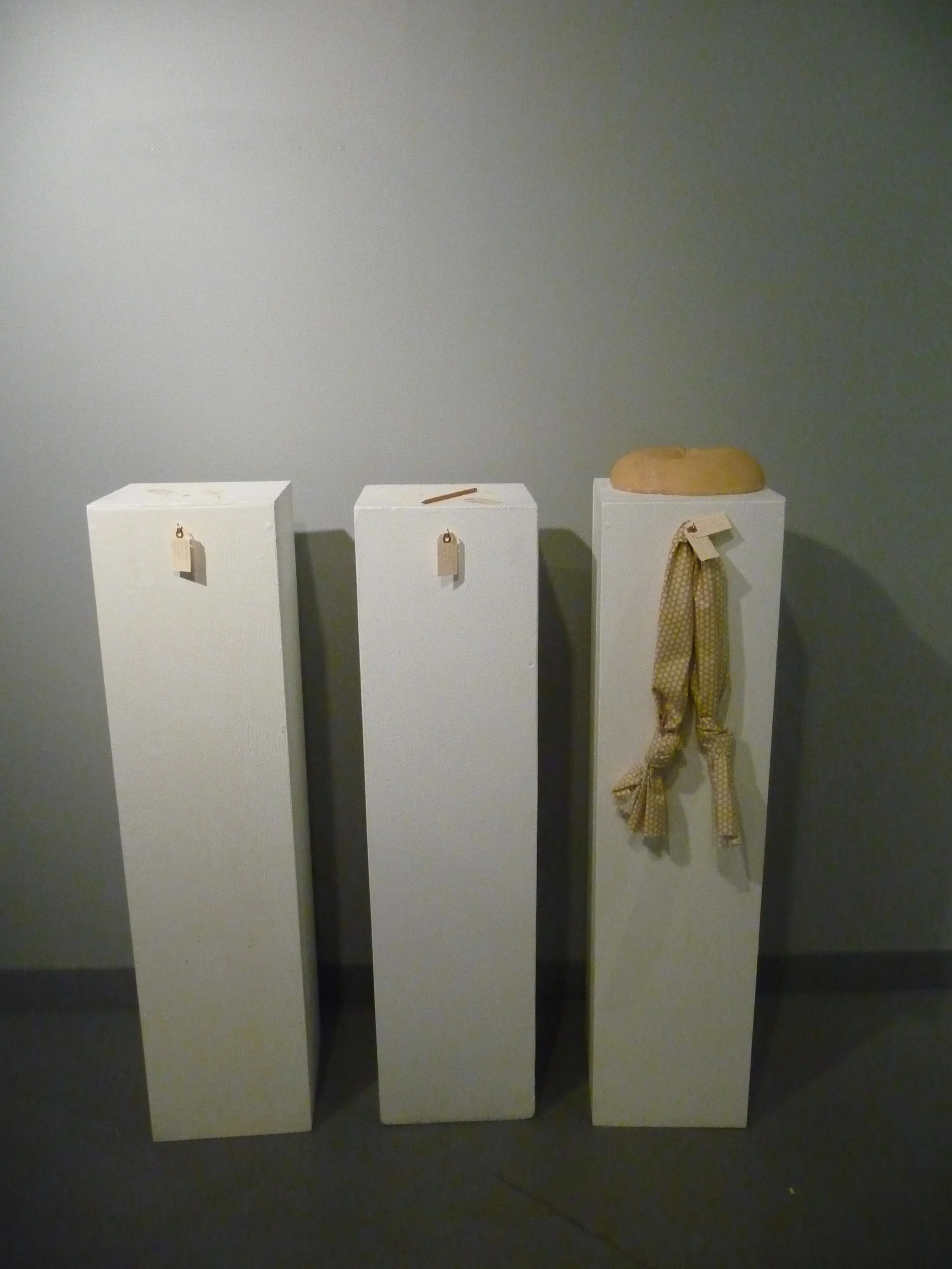
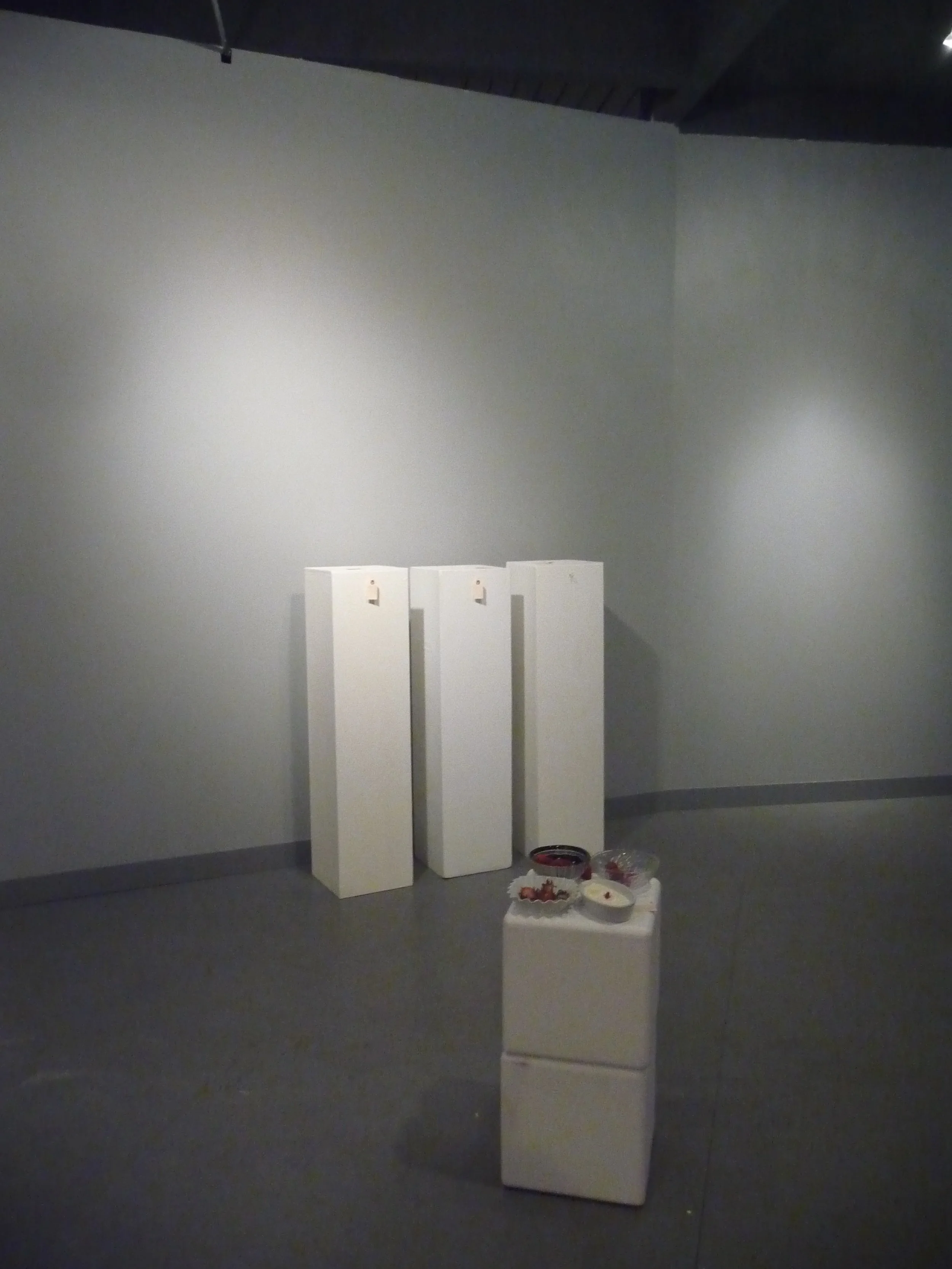
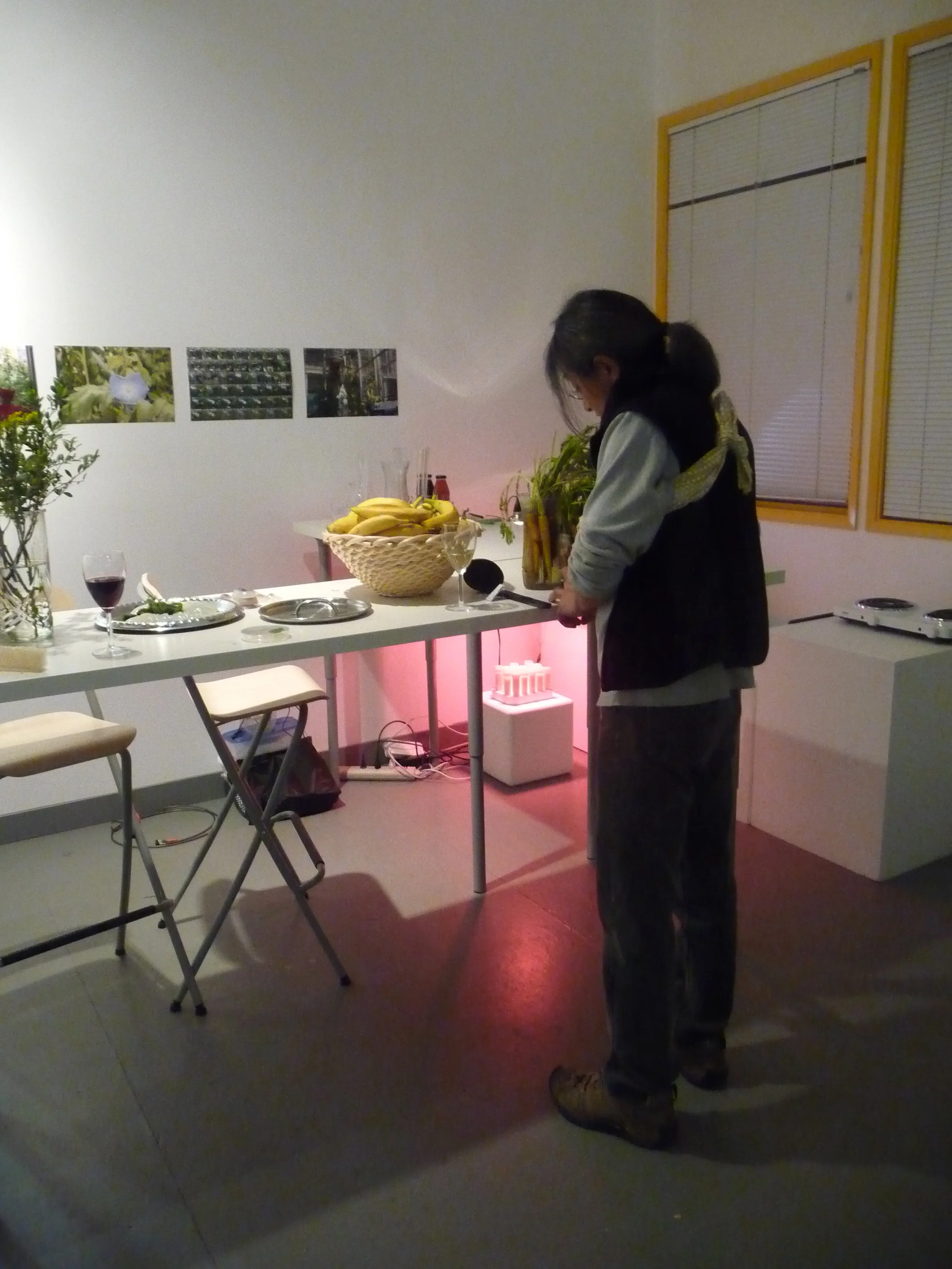
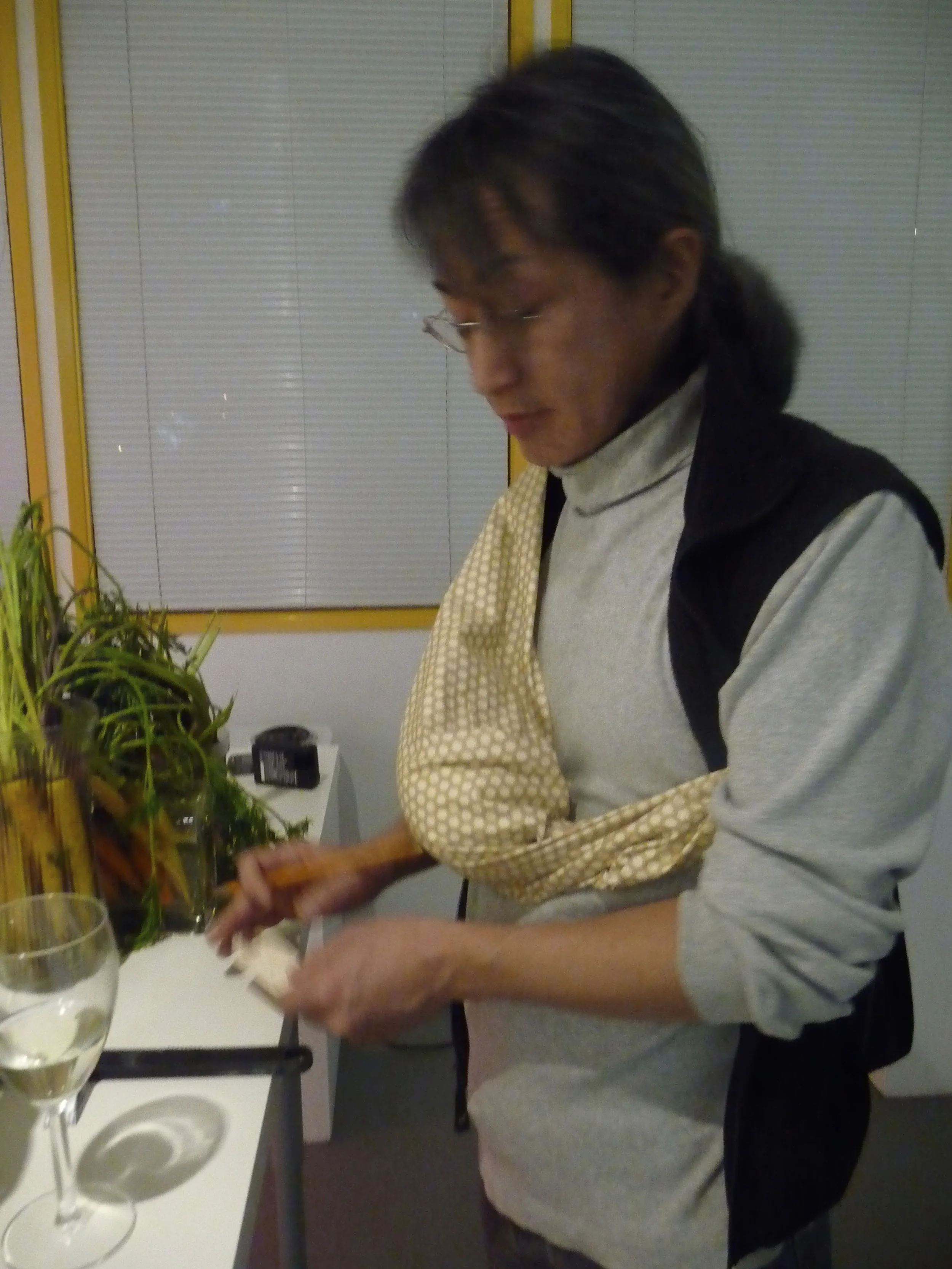
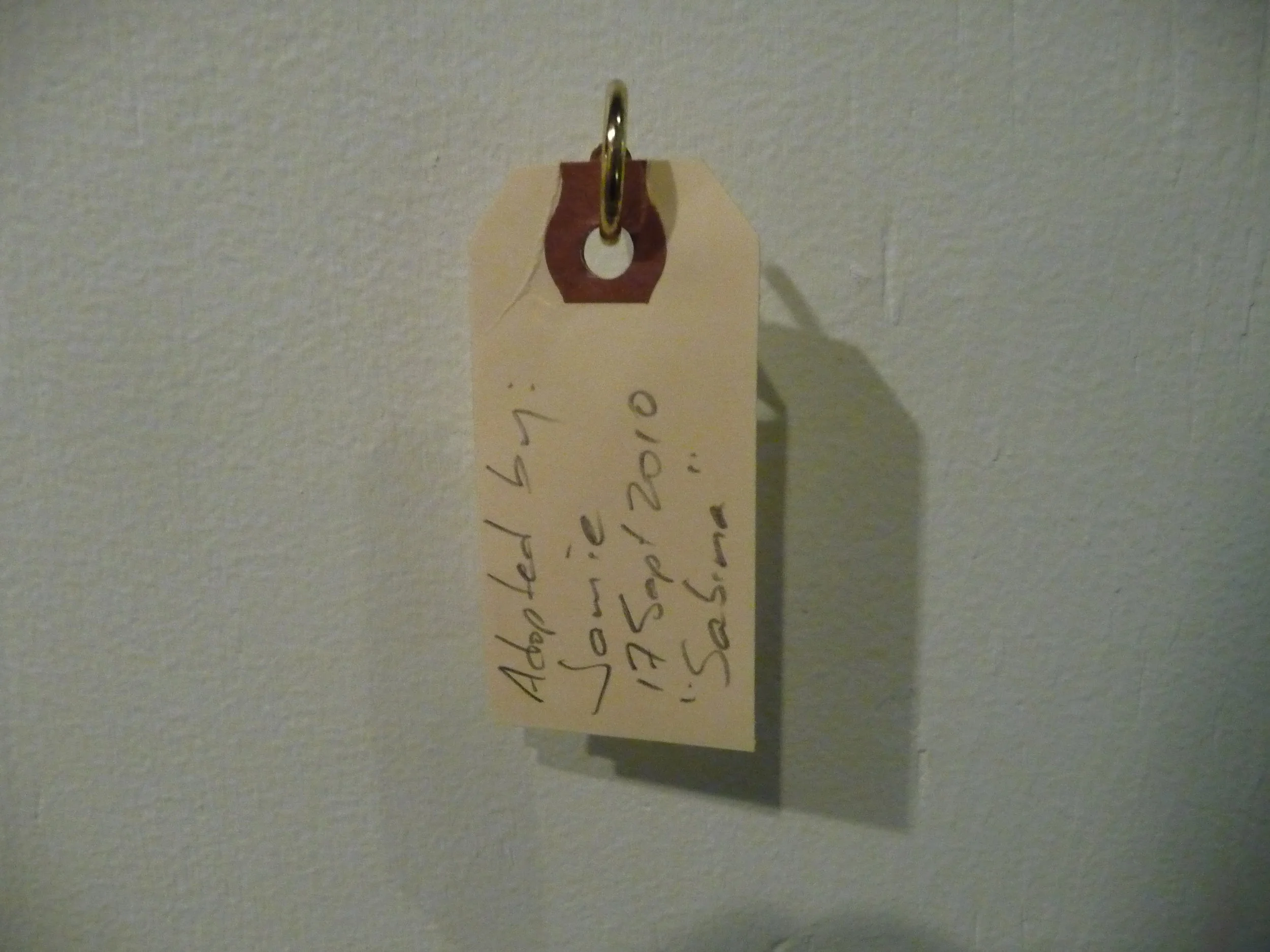
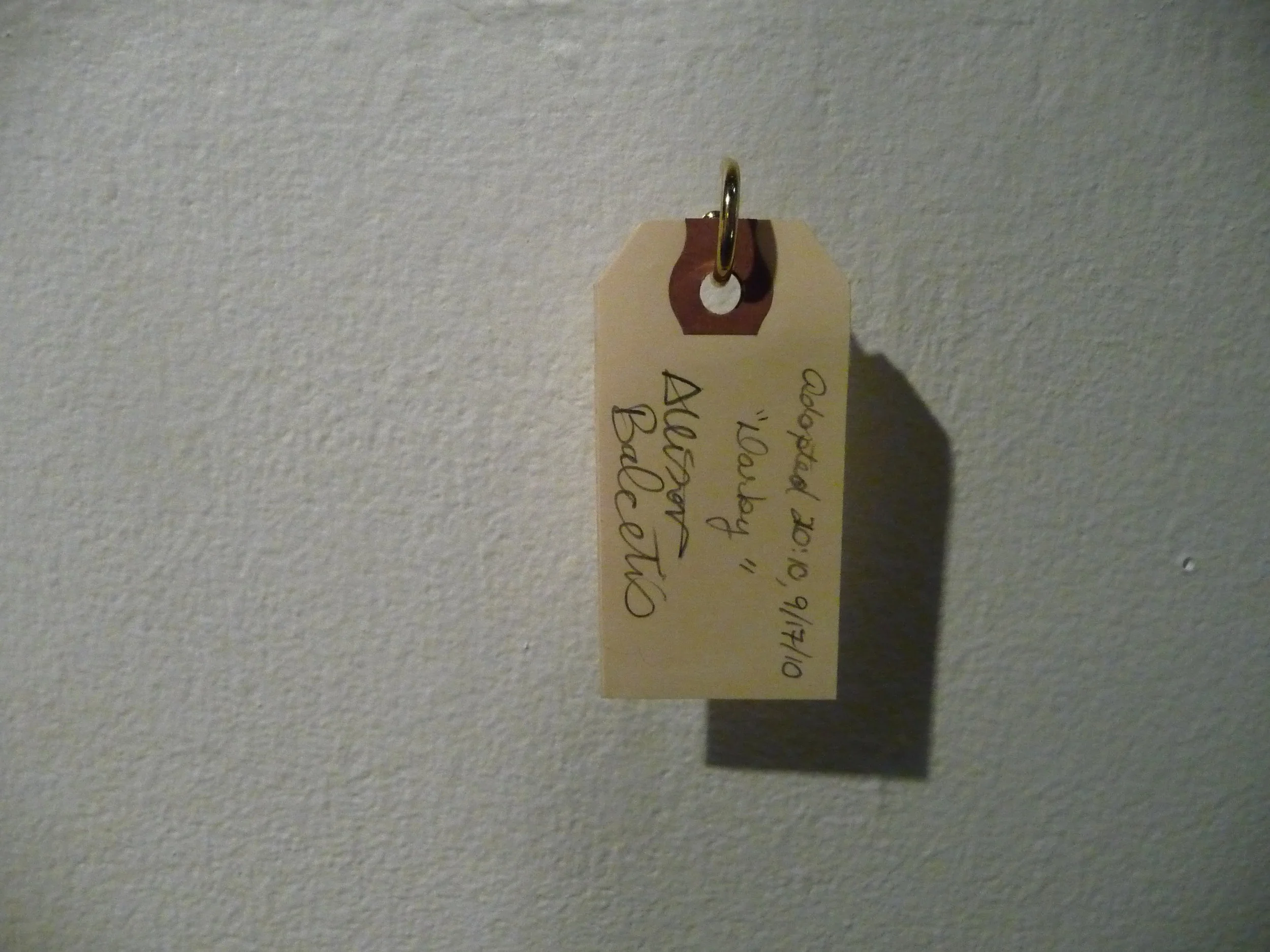
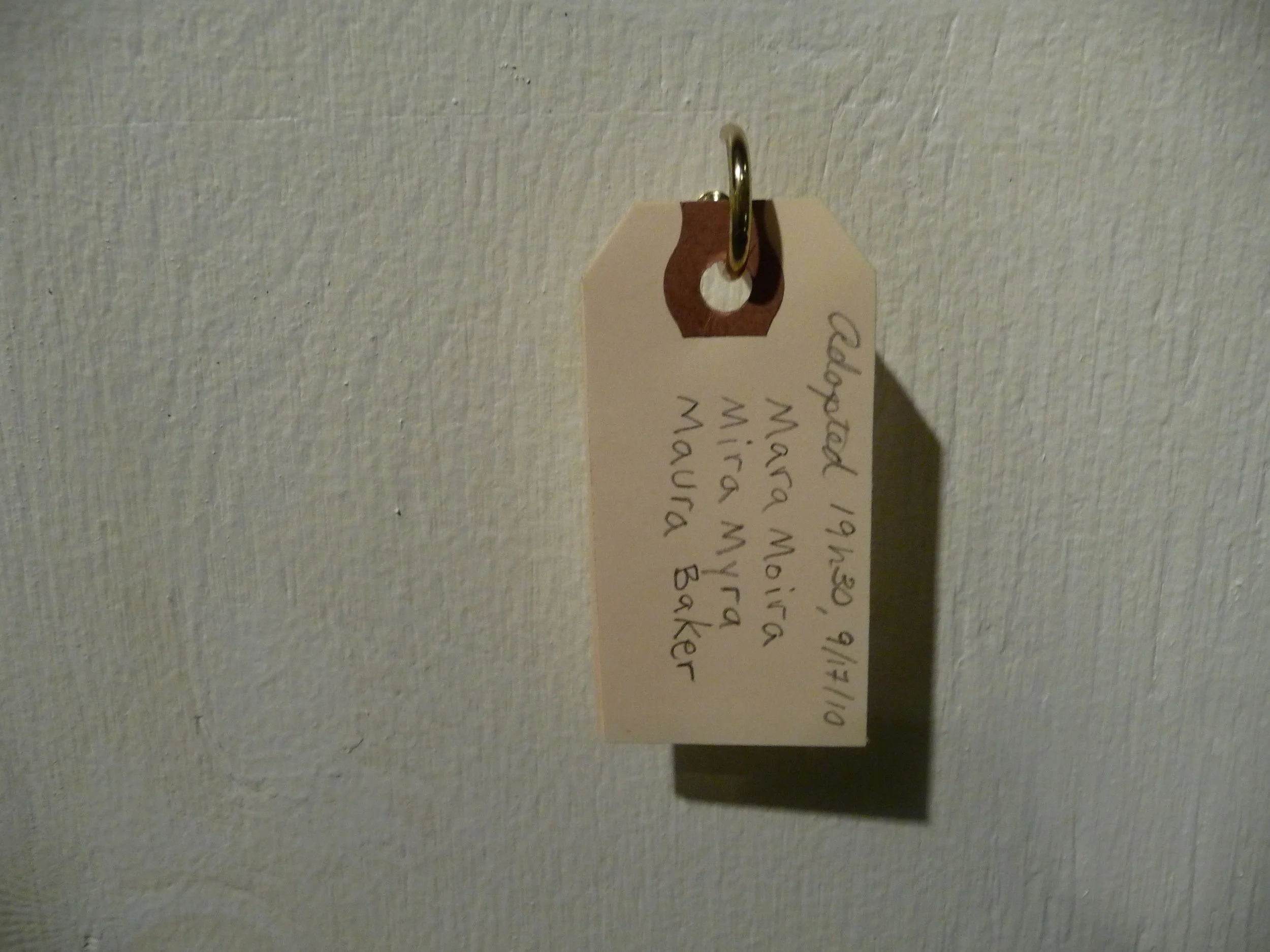
Doughbie (2010) is a participatory performance work centered on care, cultivation, and interspecies intimacy through living bread dough. The project took the form of a series of adoptable “doughbies” active yeast cultures placed on plinths, each accompanied by a wearable fabric sling. Visitors were invited to adopt a doughbie by naming it and leaving its name tag behind, marking the transfer of responsibility from exhibition space to participant.
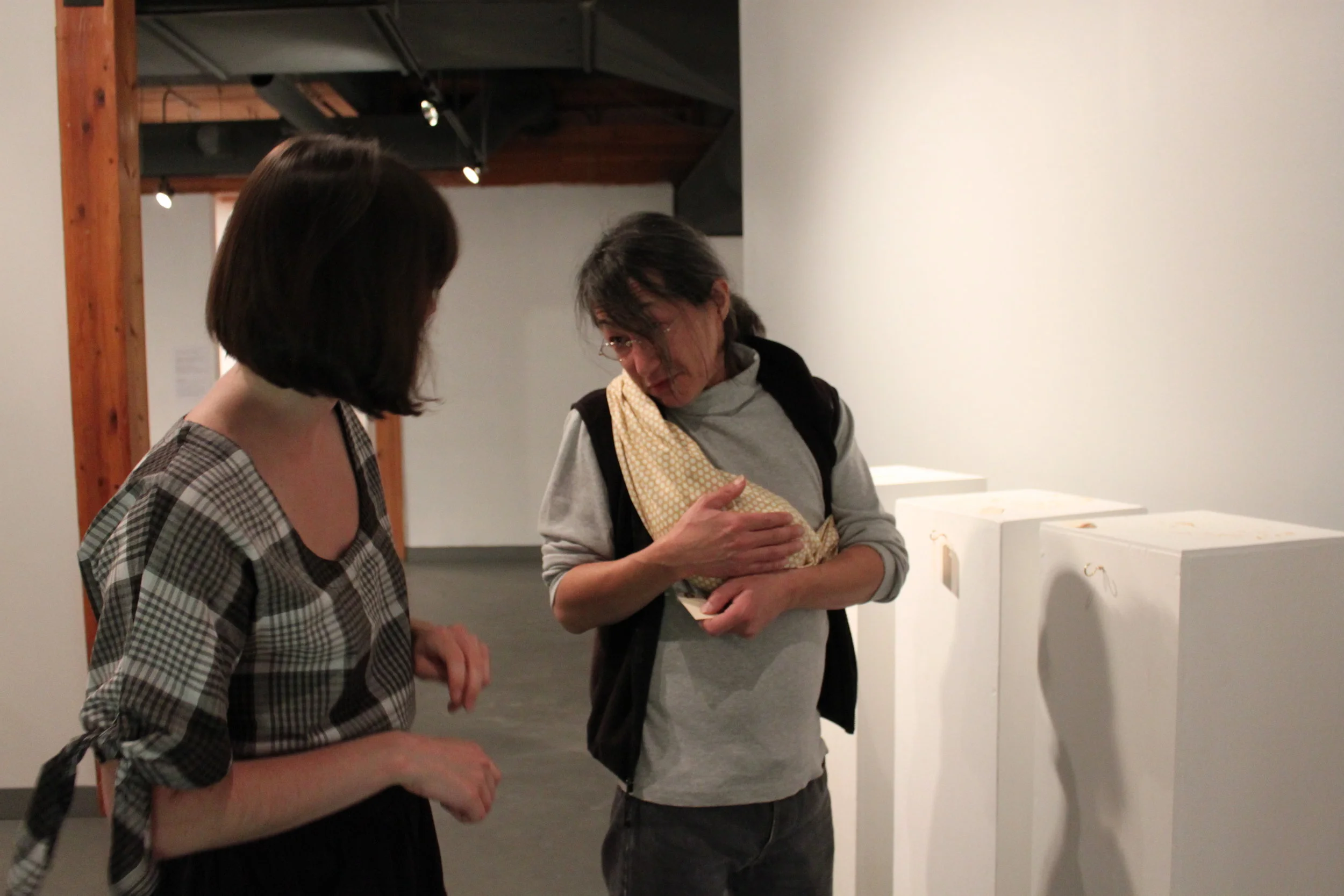
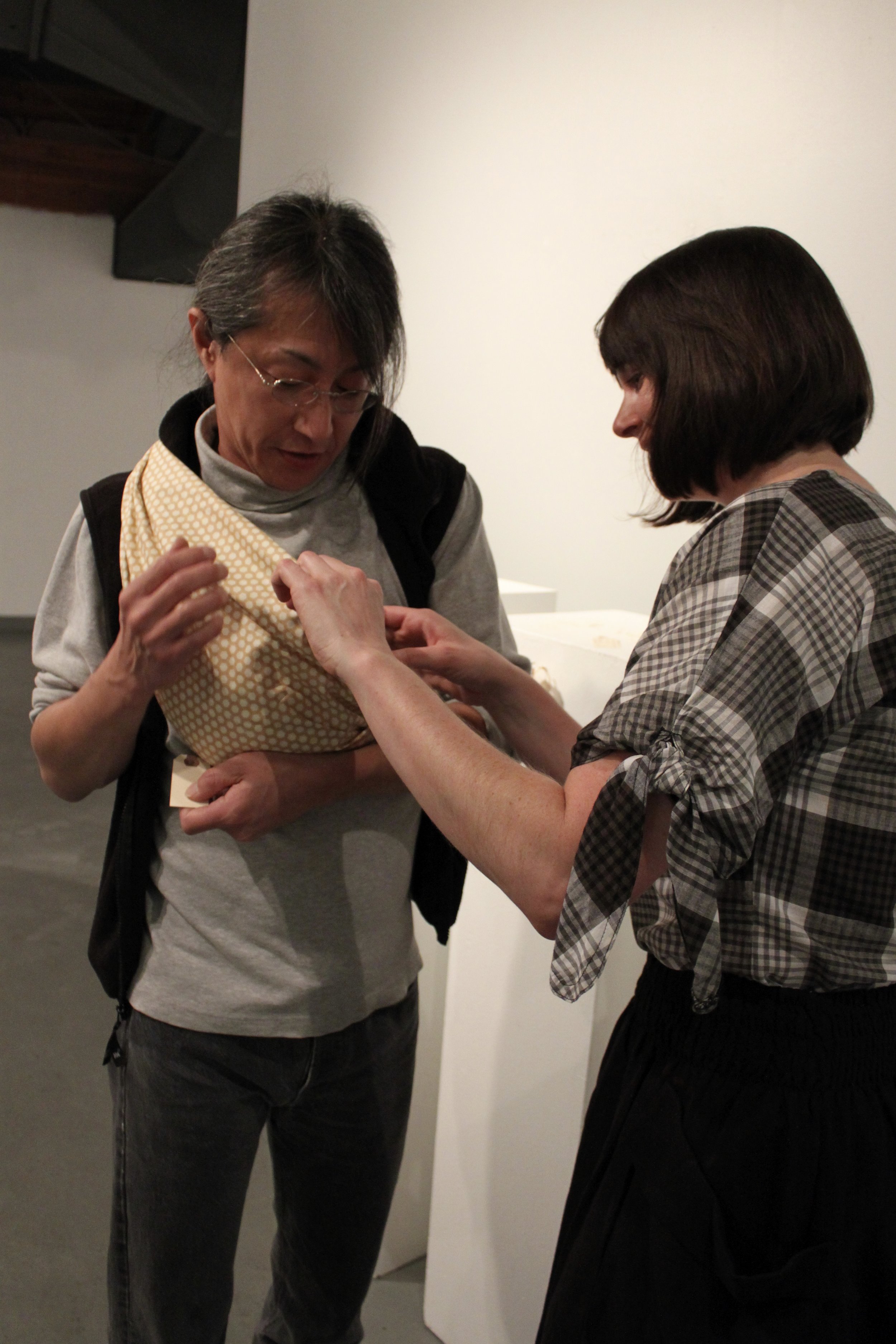
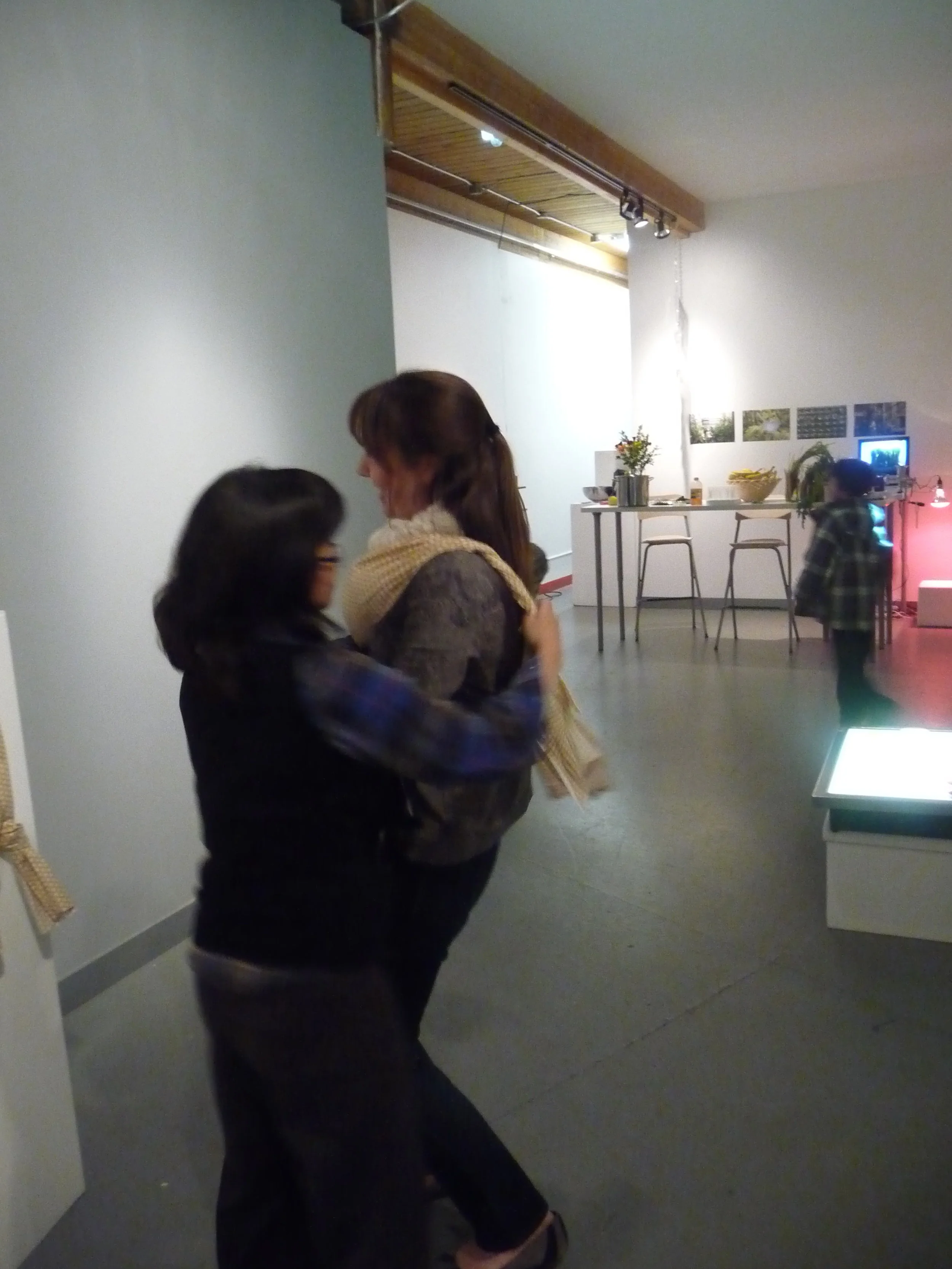
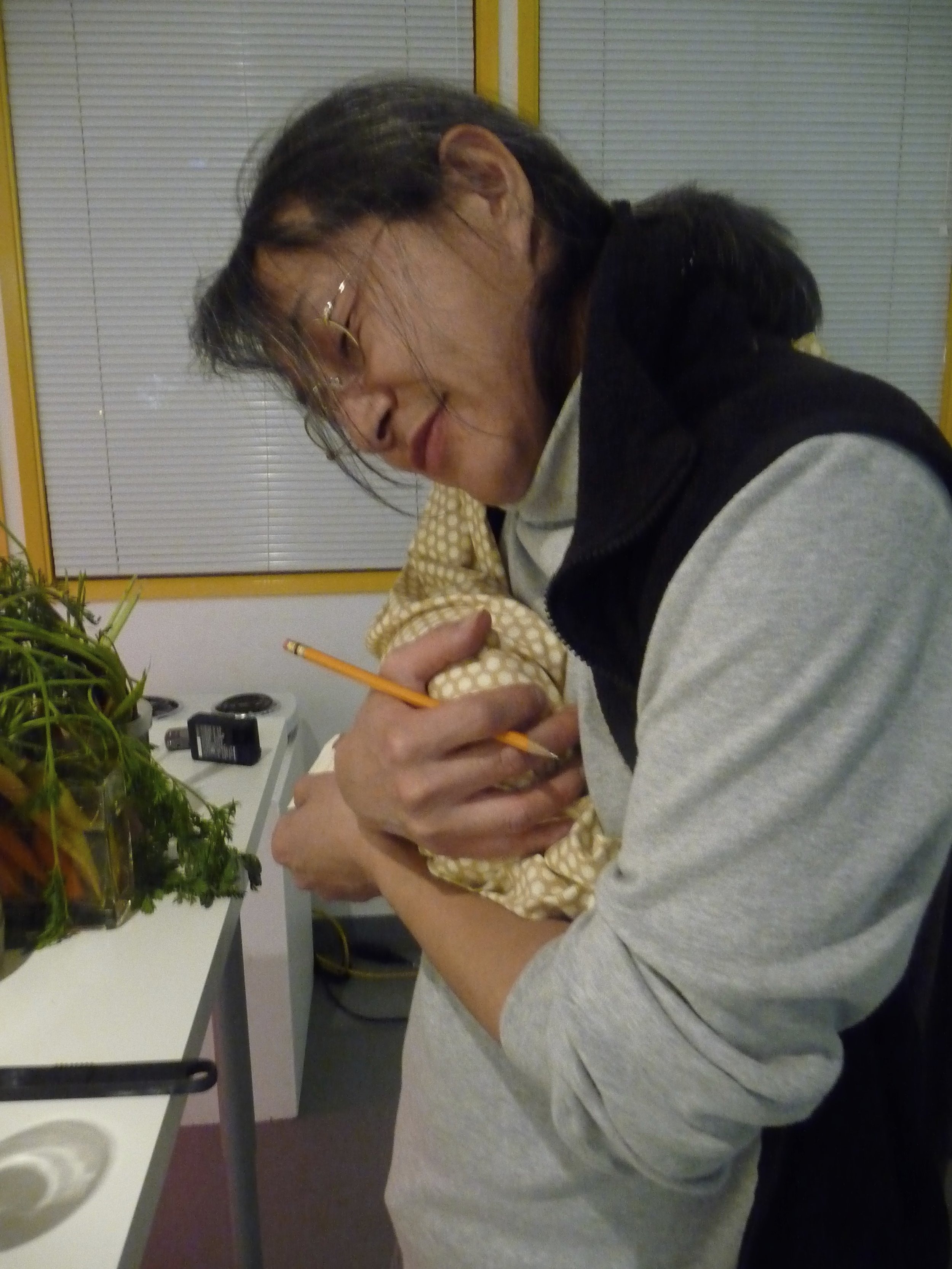
Once adopted, the doughbie was carried close to the body throughout the day. Body heat activated the yeast cultures, allowing the dough to rise and fall in response to the movements, rhythms, and warmth of its human carrier. In this way, the human body became a mobile incubator, and care was enacted through proximity, duration, and attentiveness rather than instruction or control.
In the evening, adopters were invited to divide their doughbie: one portion could be baked and consumed, while the other could be used to cultivate a new doughbie the following day. From this point onward, each participant’s experience diverged. Some returned to share reflections on their time as a “dough parent,” while others offered the baked bread back to the community. One participant noted the social awkwardness of riding public transit with a living dough, particularly due to its increasingly potent yeasty aroma, highlighting how care for nonhuman life can disrupt norms of public space and comfort.
Doughbie uses humour and domestic familiarity to explore deeper questions of relational ethics, fermentation as collaboration, and the politics of nourishment. Yeast, an ancient, co-evolutionary companion species, functions here as both material and collaborator, foregrounding microbial agency and cyclical regeneration. The project blurs boundaries between art object, food, pet (?), and process, inviting participants to reflect on responsibility, dependency, and the everyday labour of care.
Situated within bio-art practices, Doughbie resists extractive or spectacle-driven approaches to living materials. Instead, it emphasizes slow attention, shared authorship, and the generative potential of division rather than accumulation. Through the simple act of carrying dough, the work reframes care as something felt, awkward, intimate, and profoundly ordinary.