
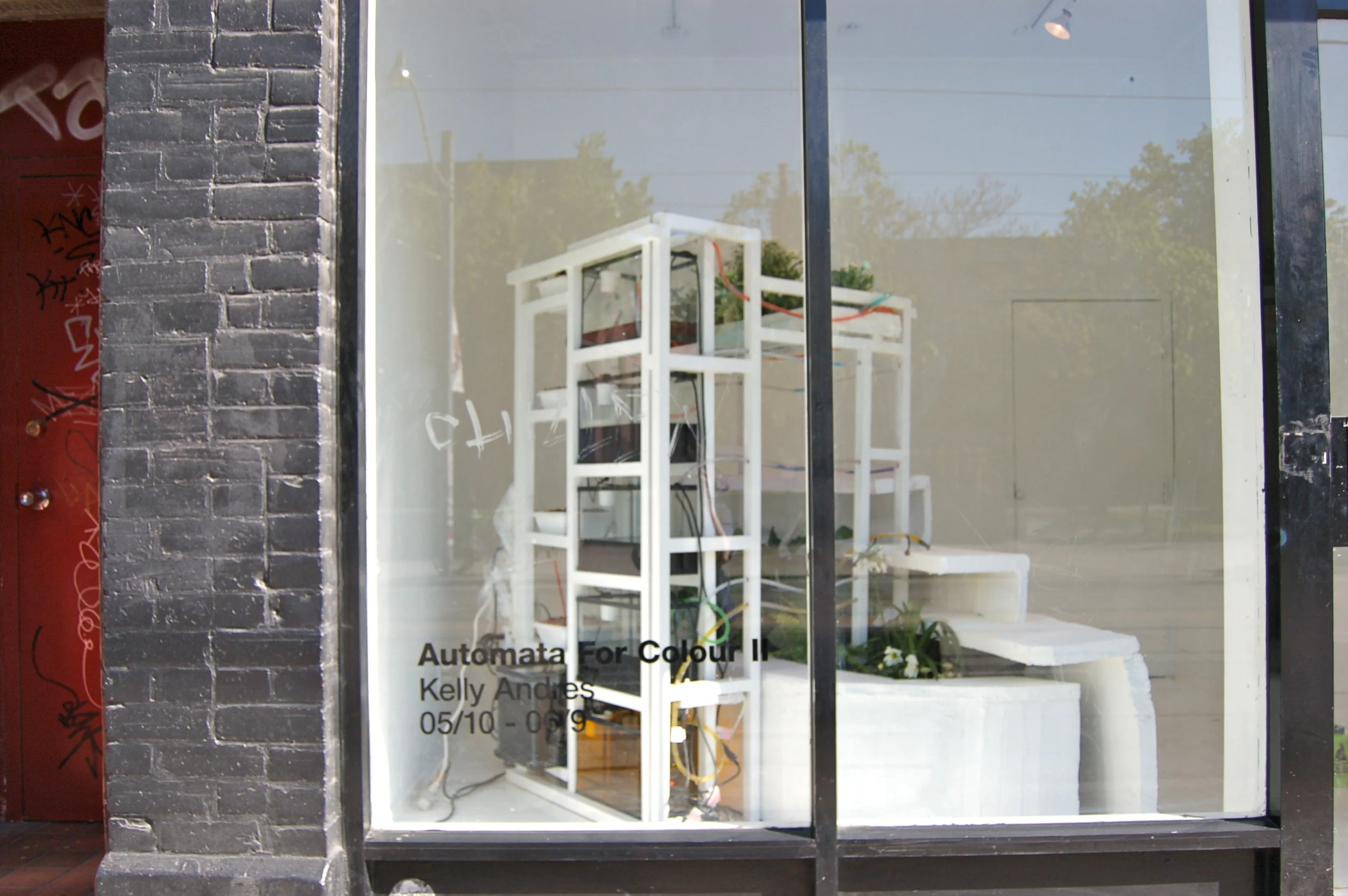
Automata for Colour II (2012)
Whippersnapper Gallery, Toronto, ON
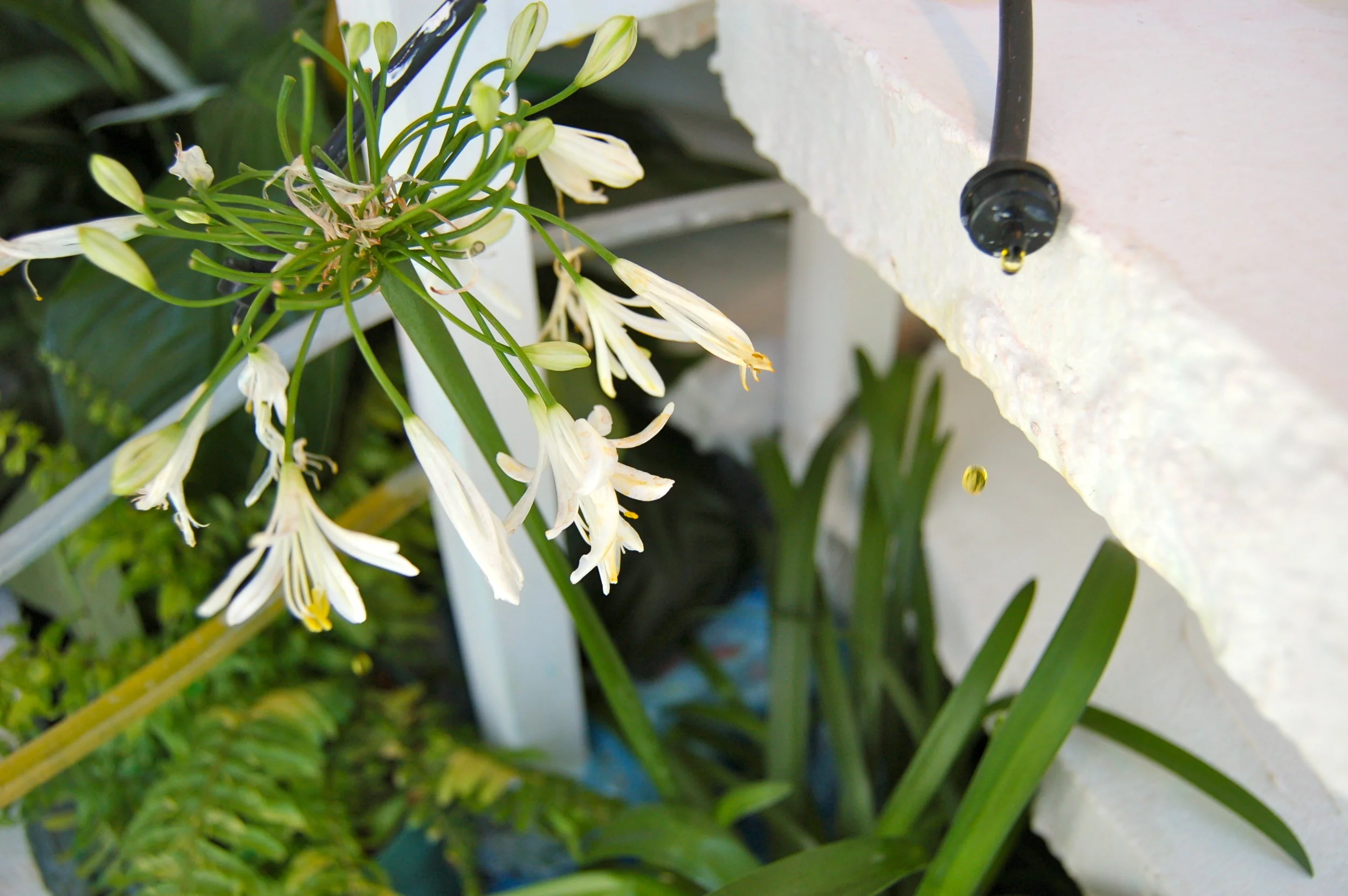
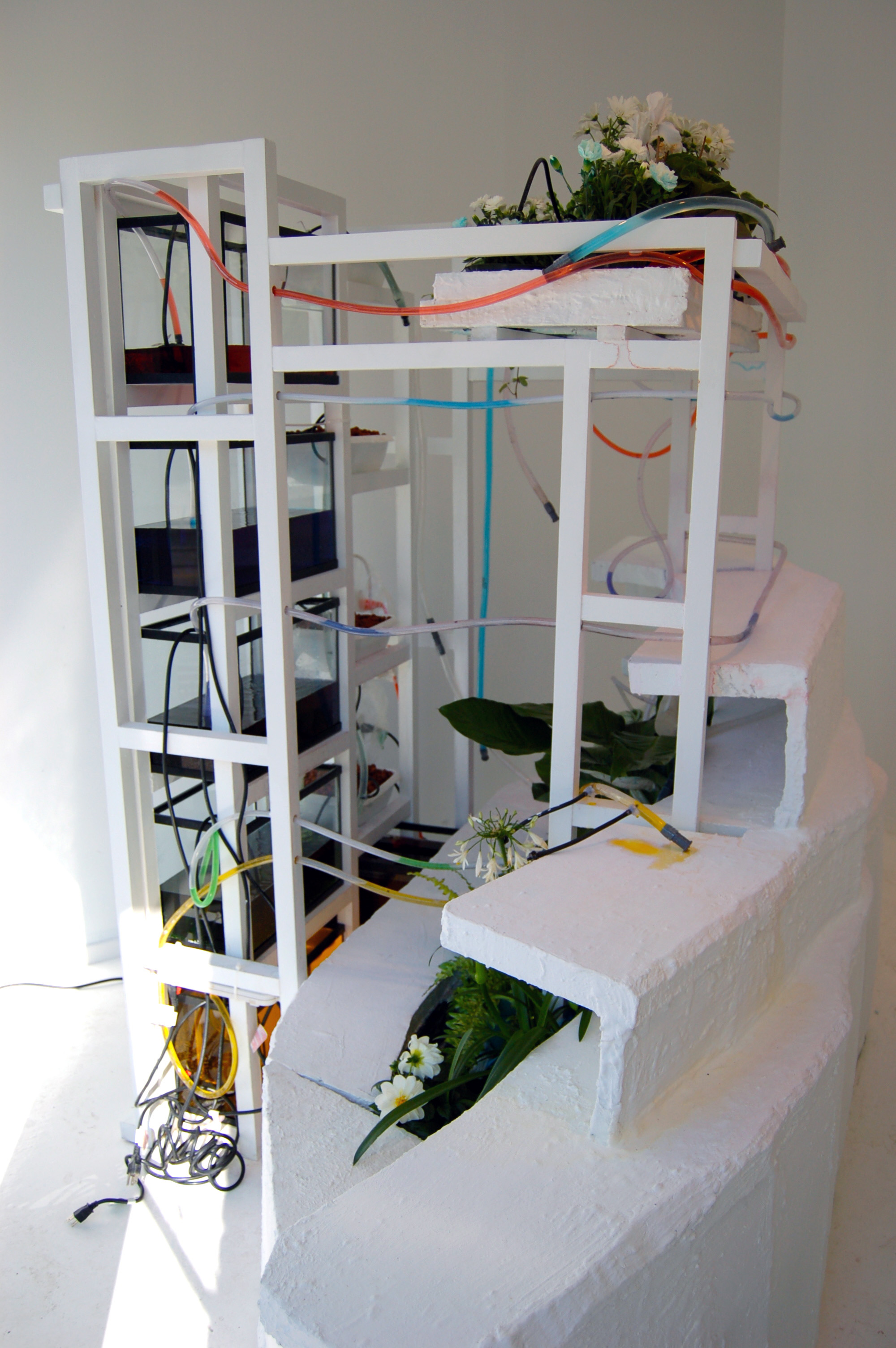
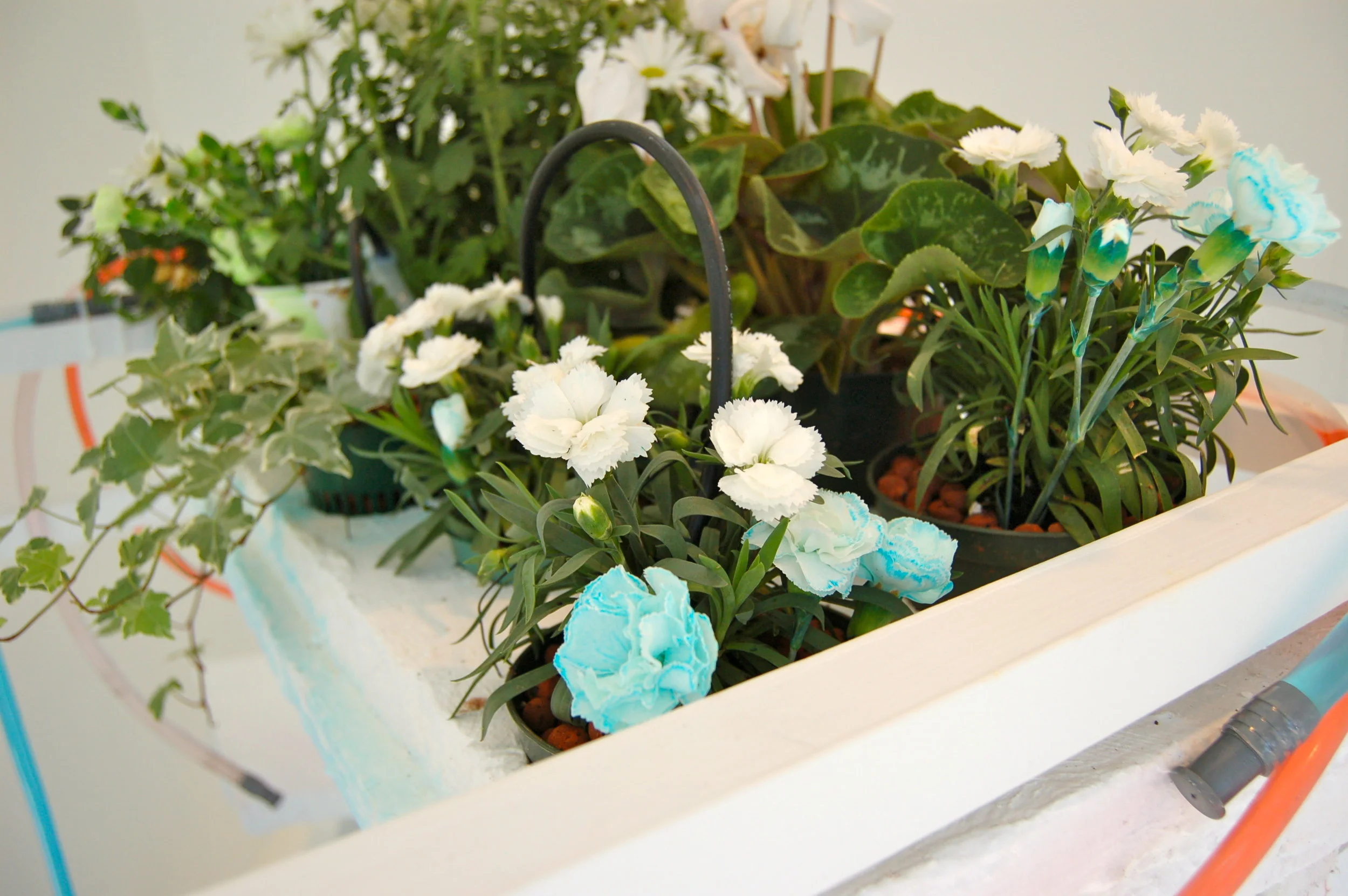
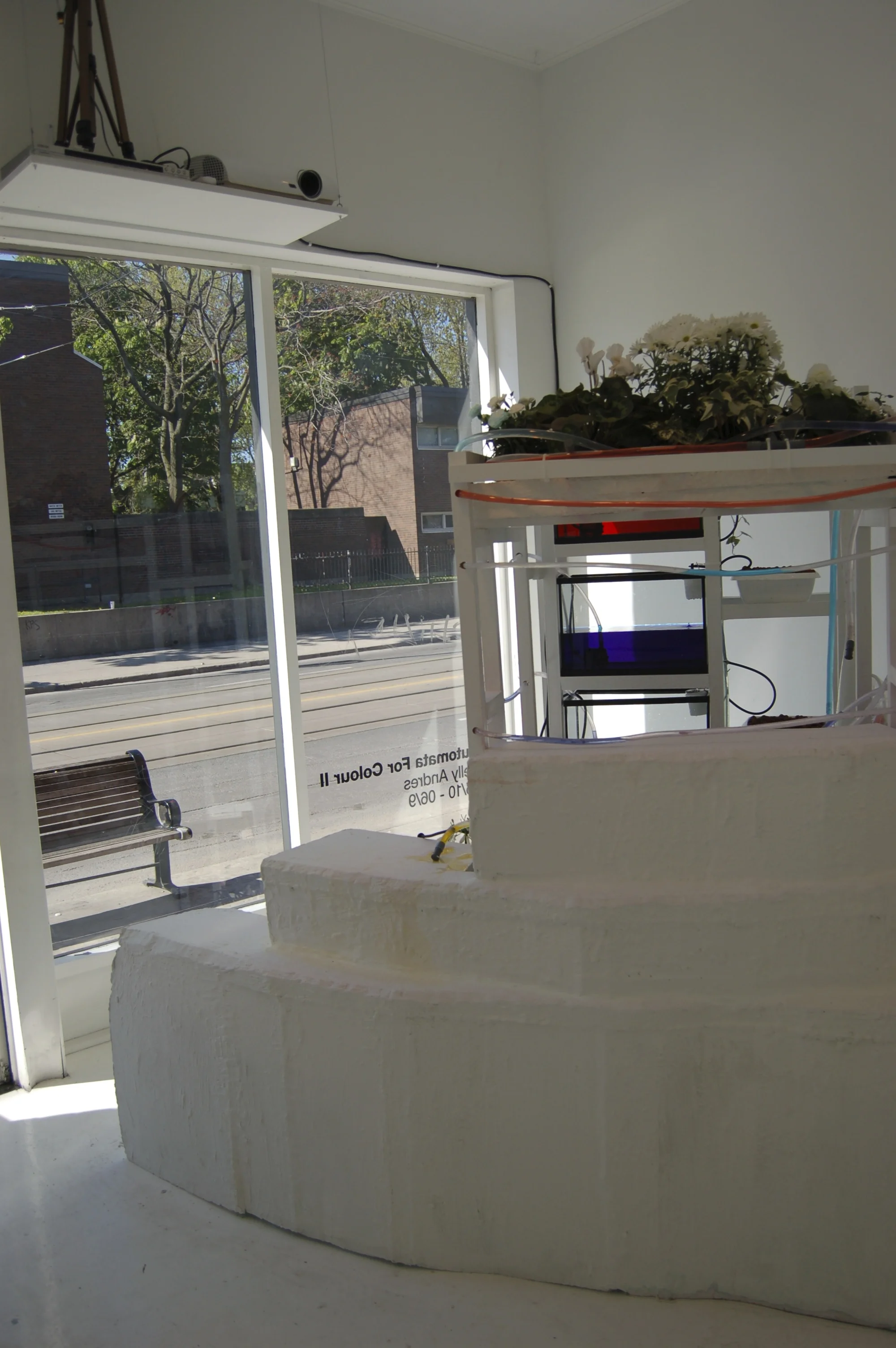
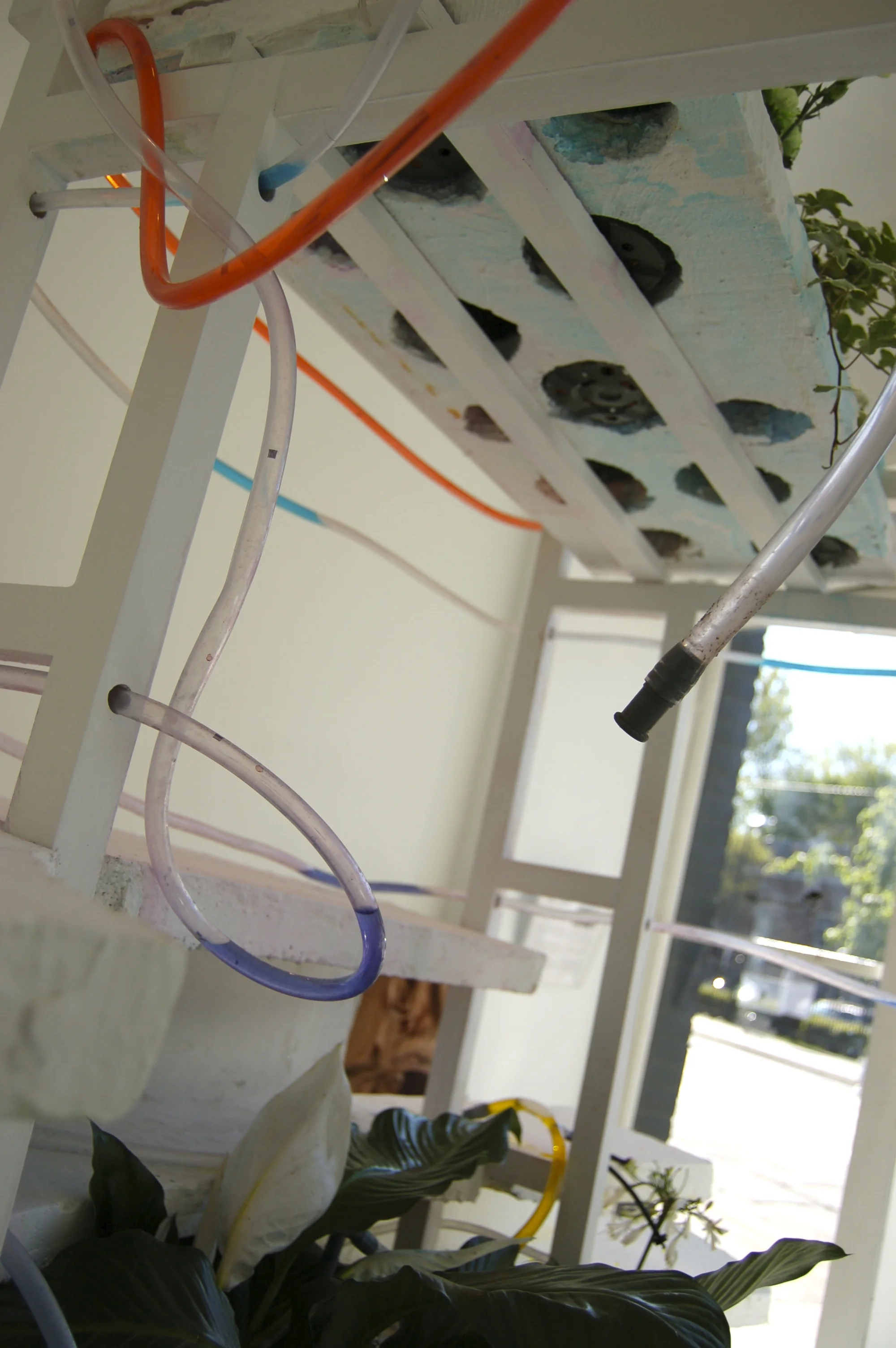
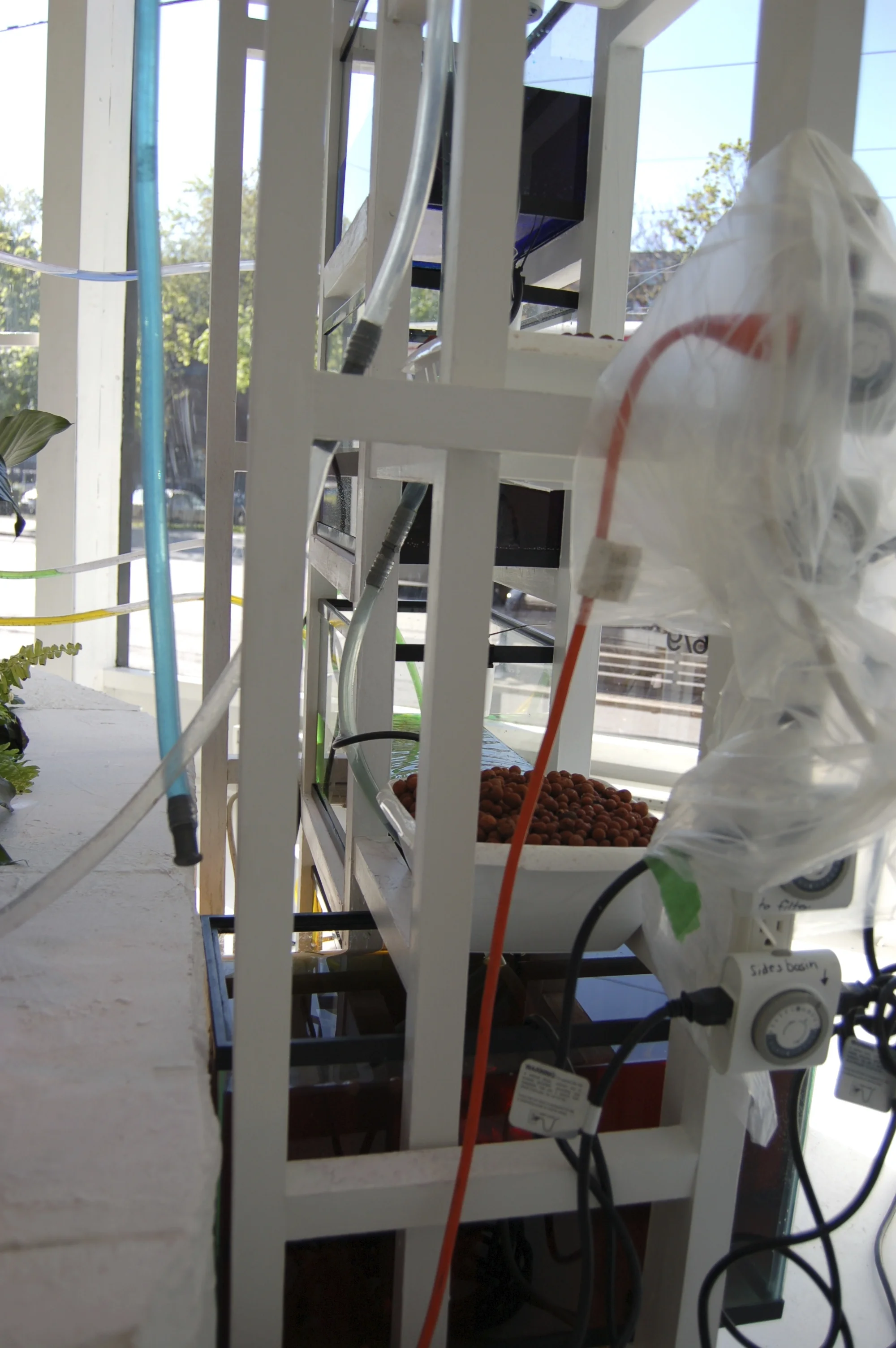
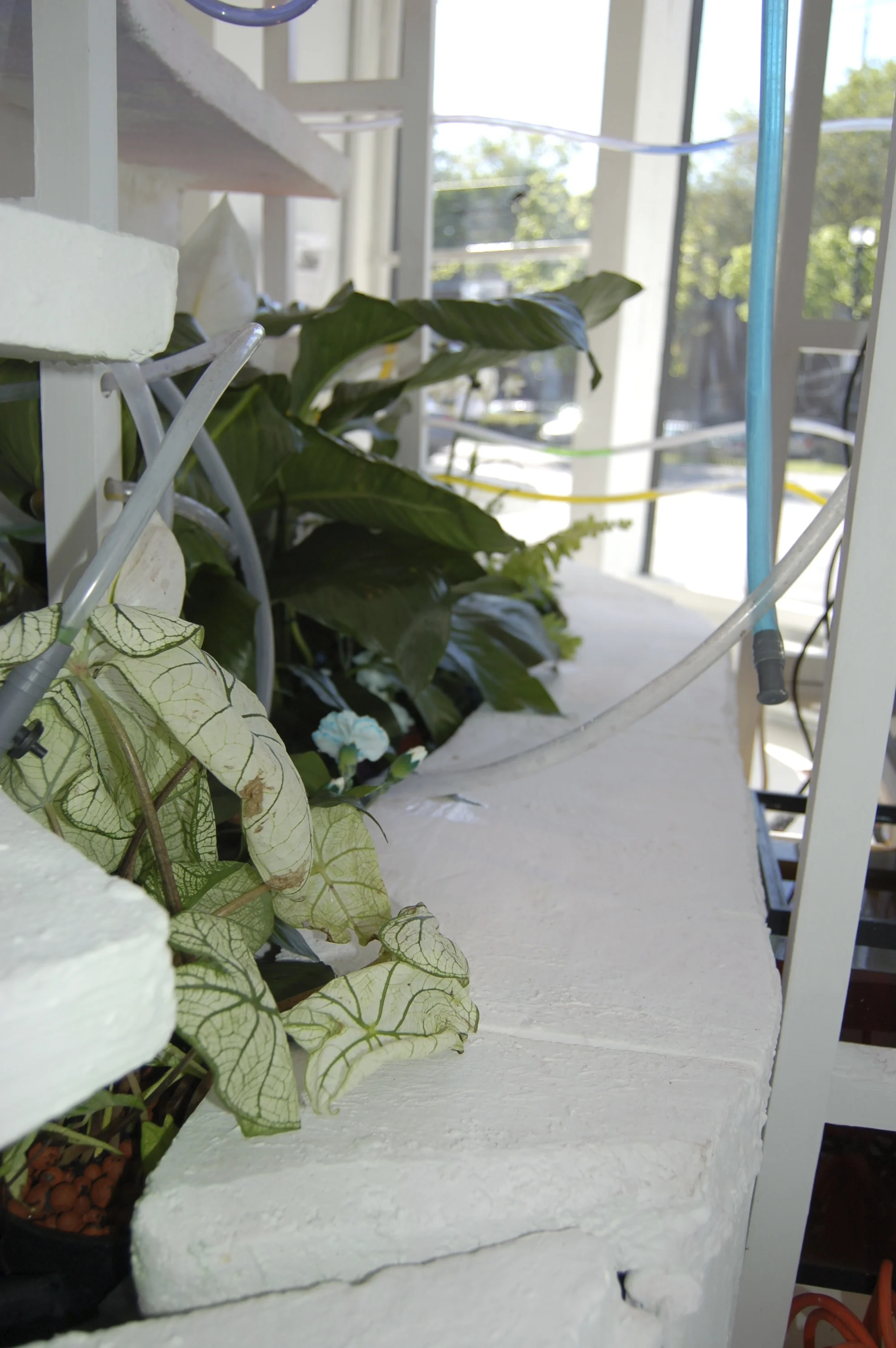
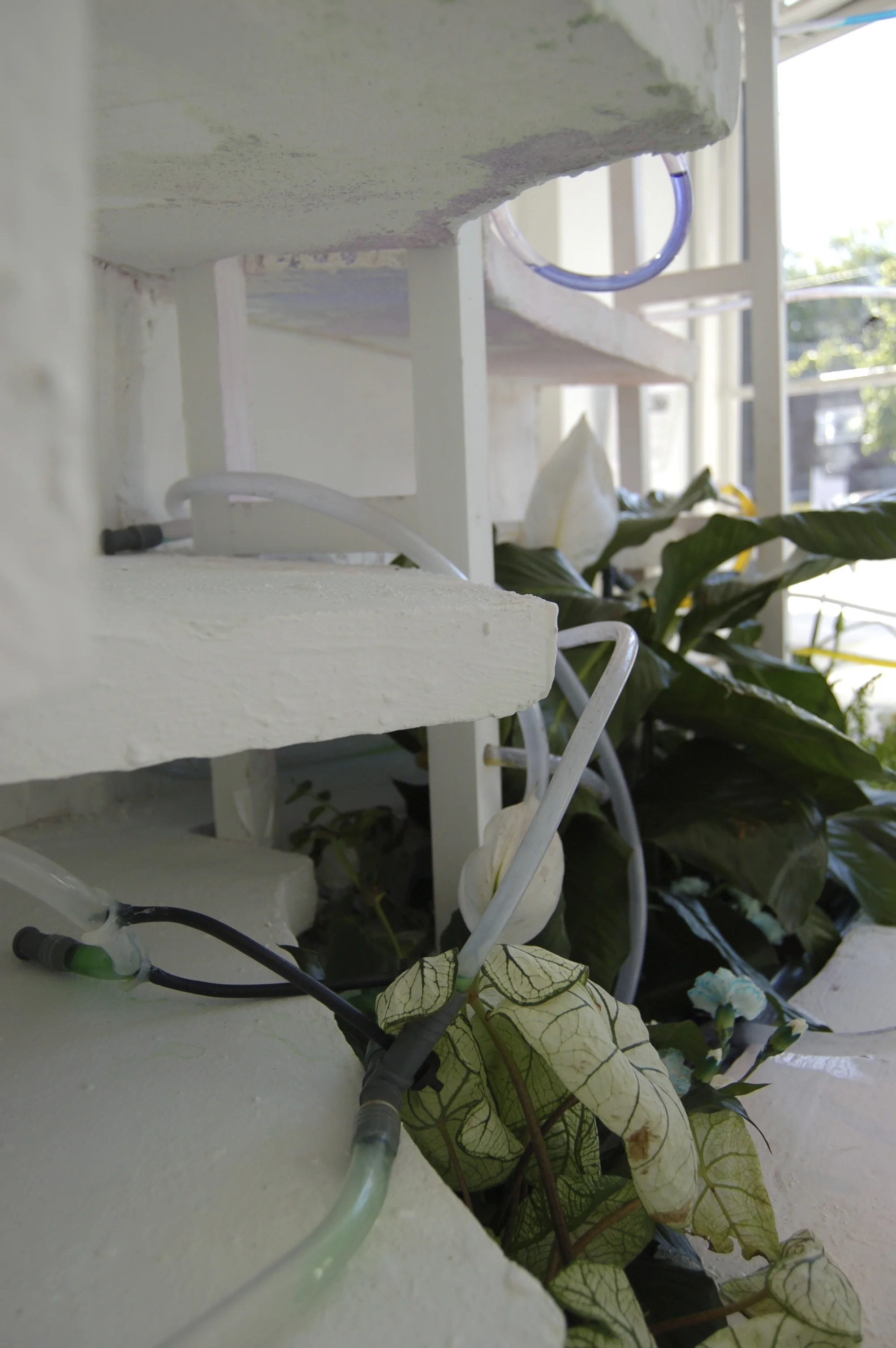
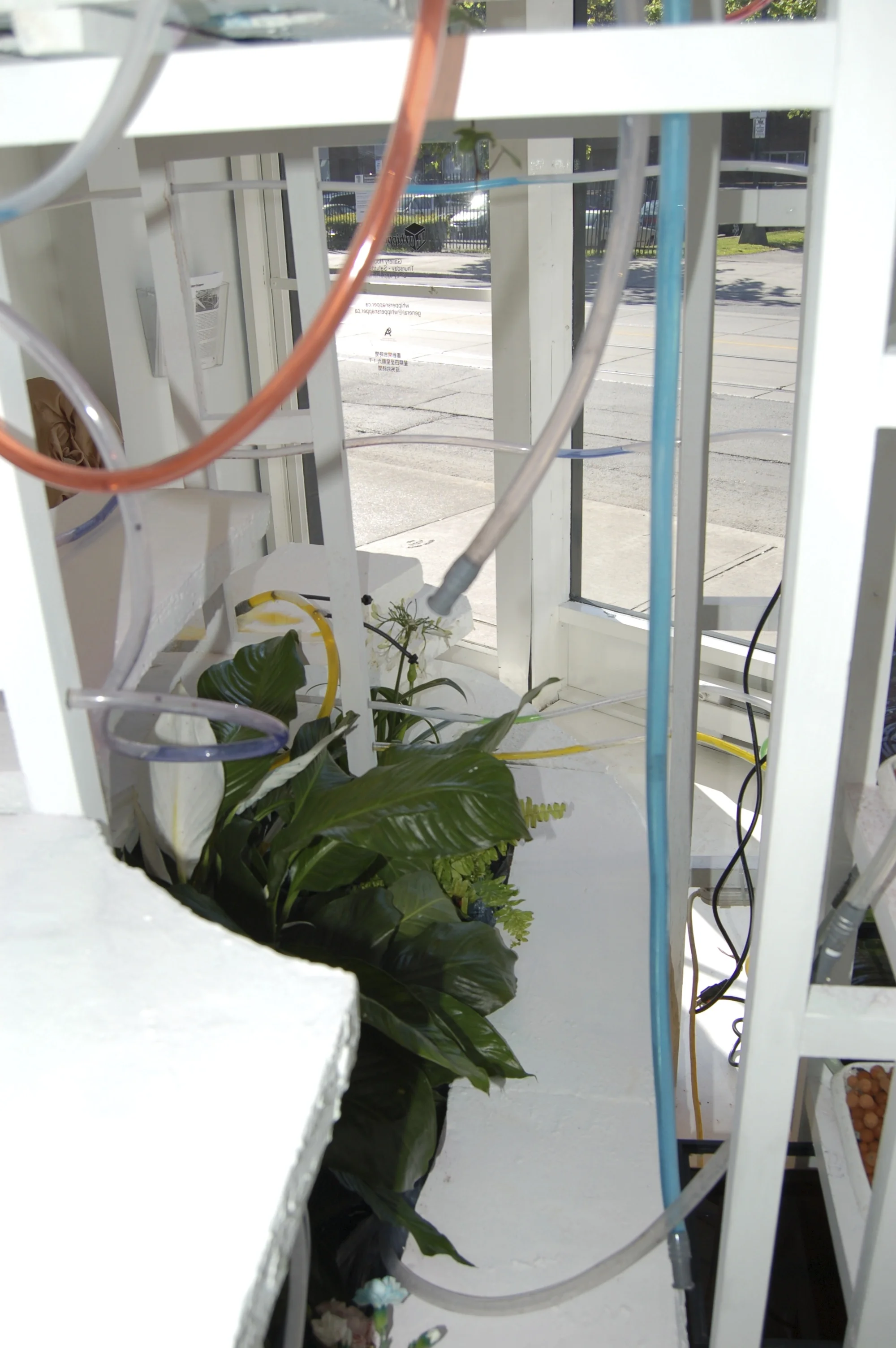
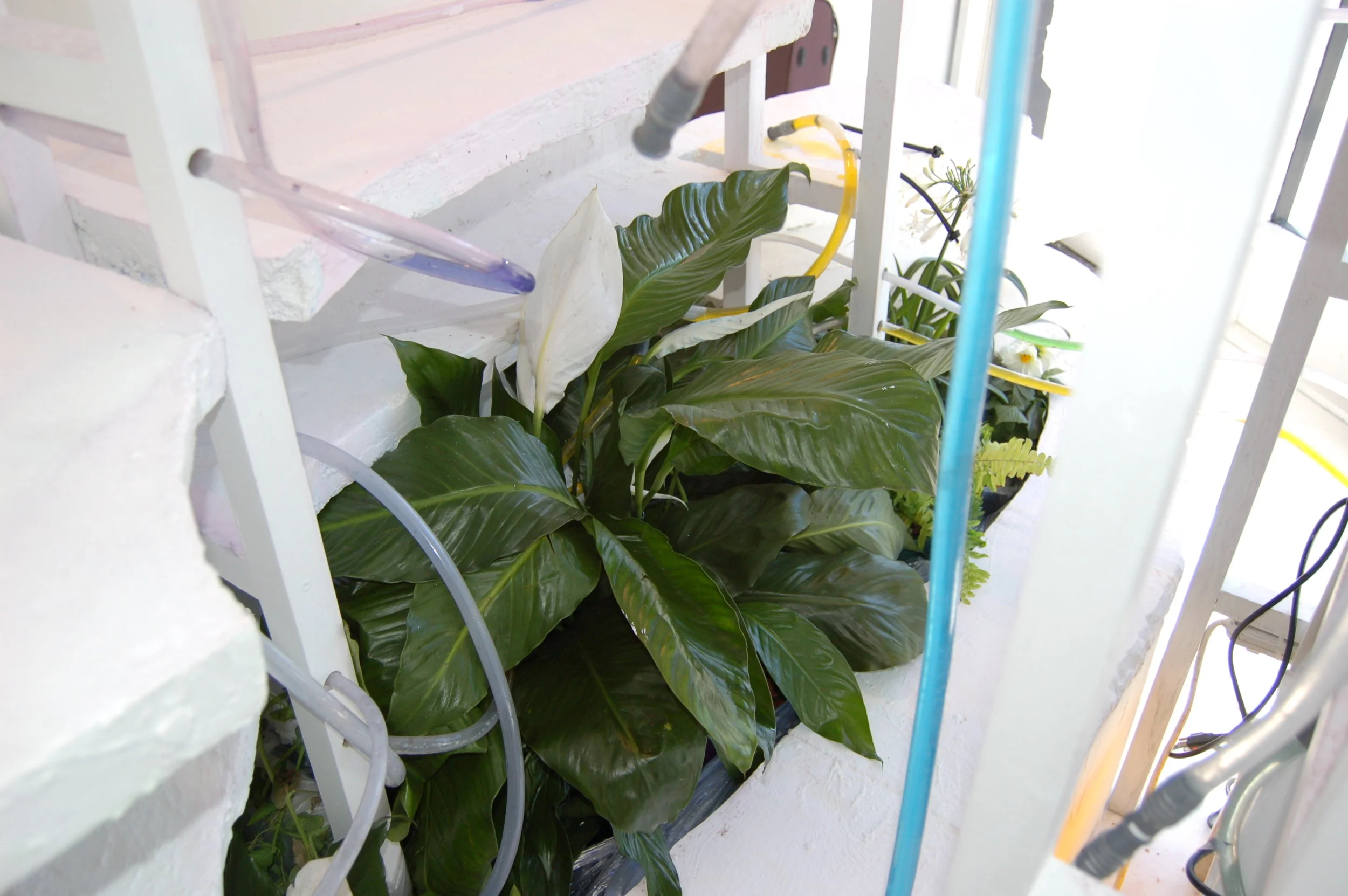
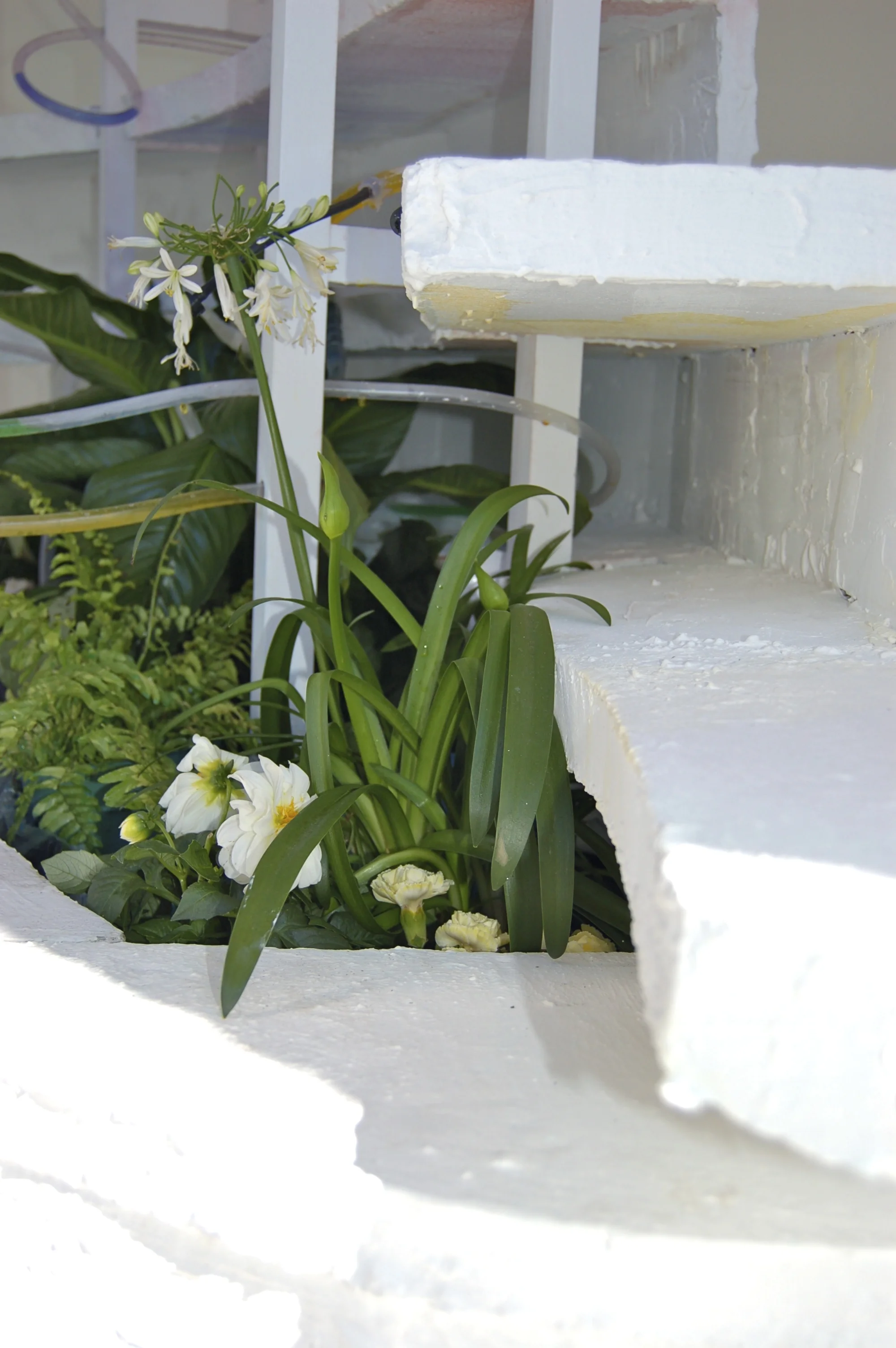
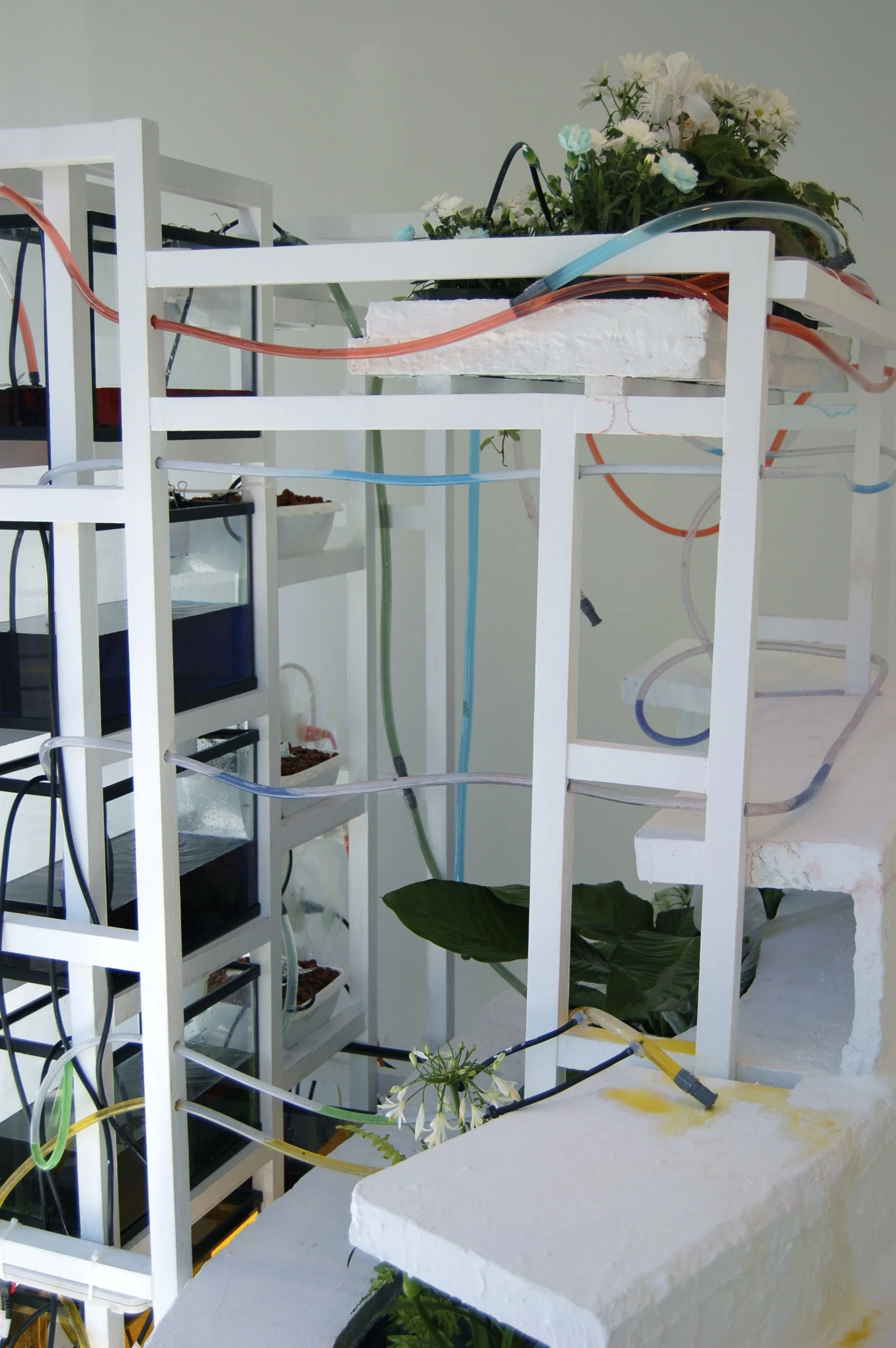
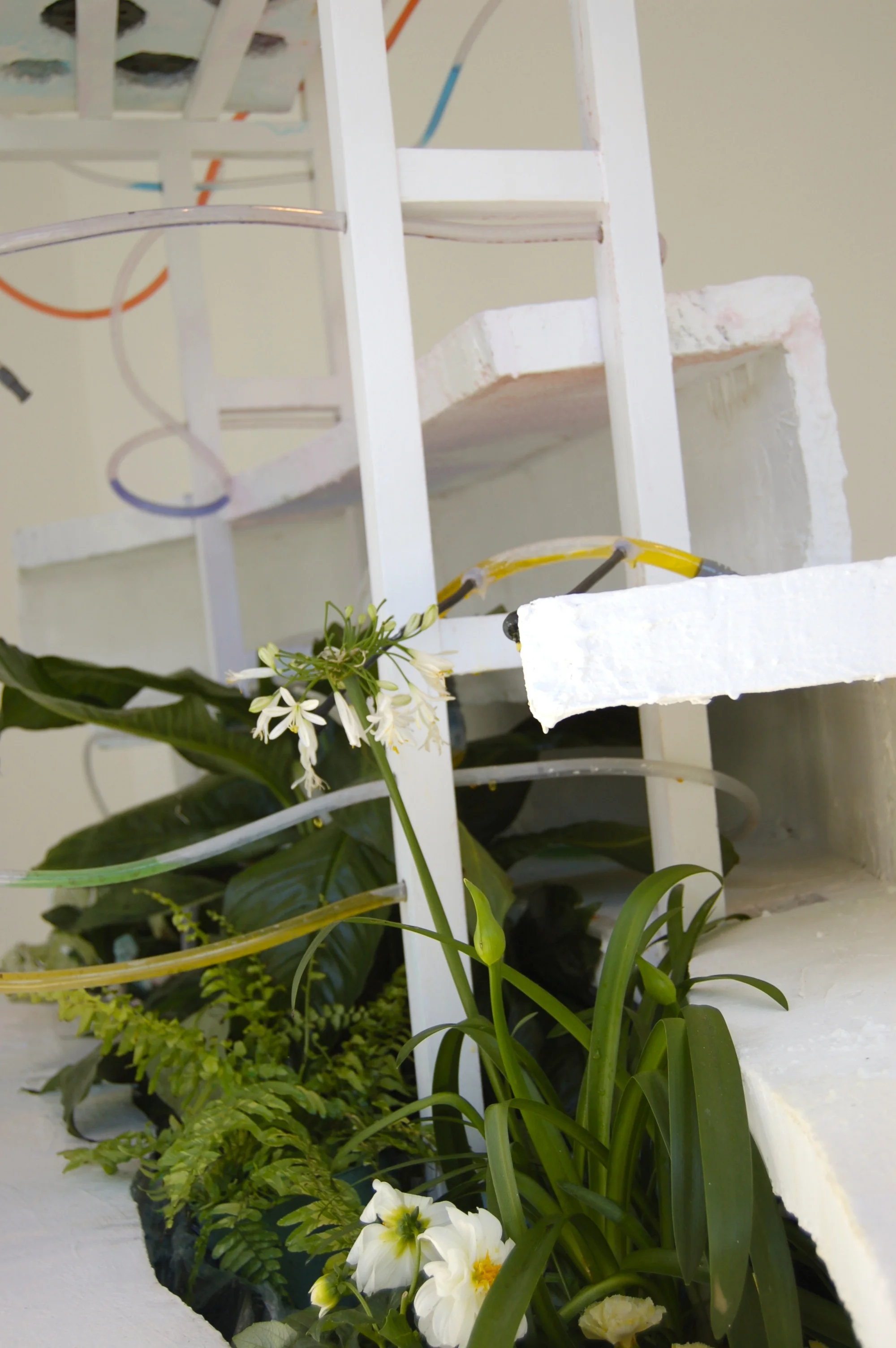
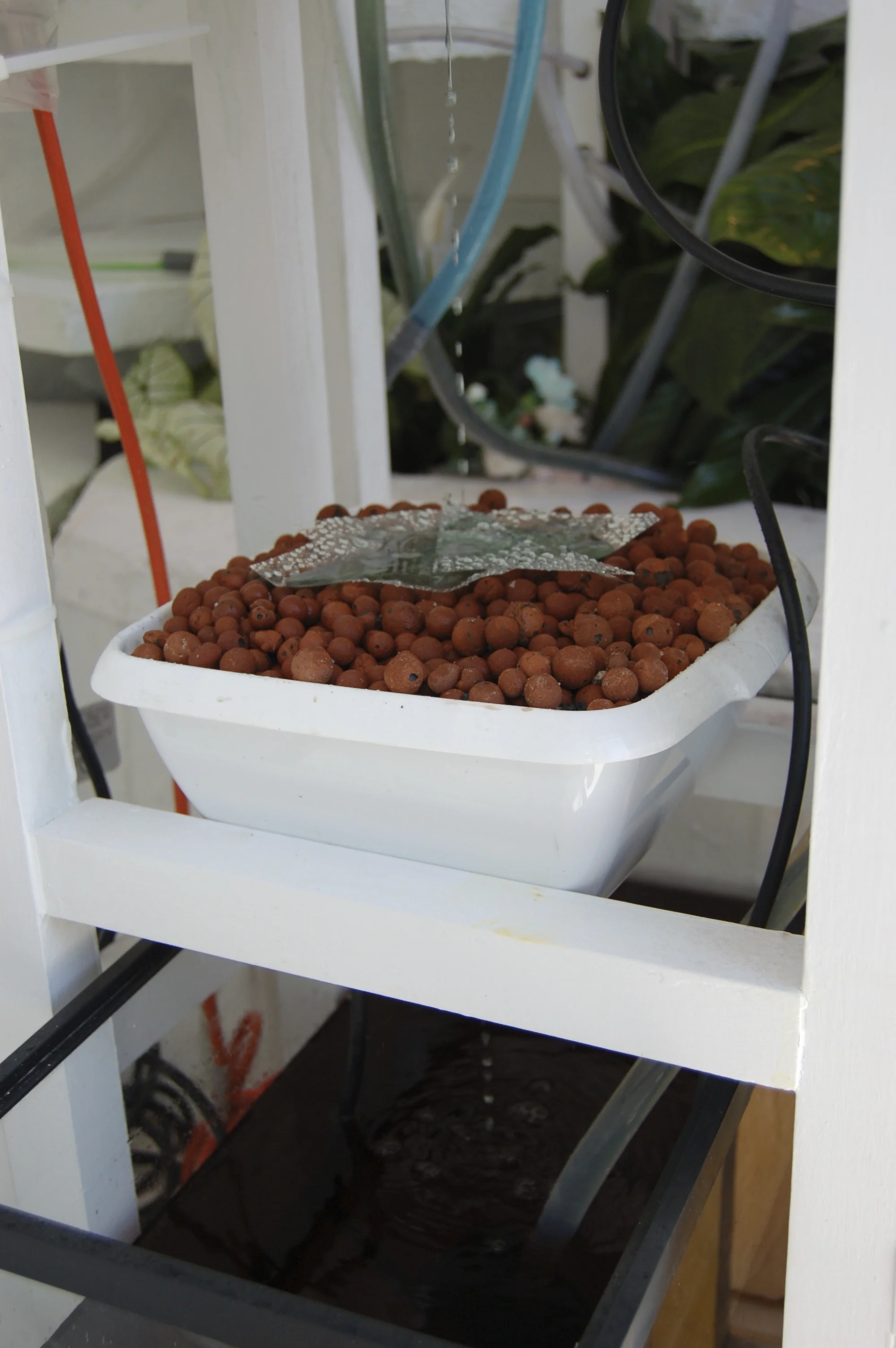
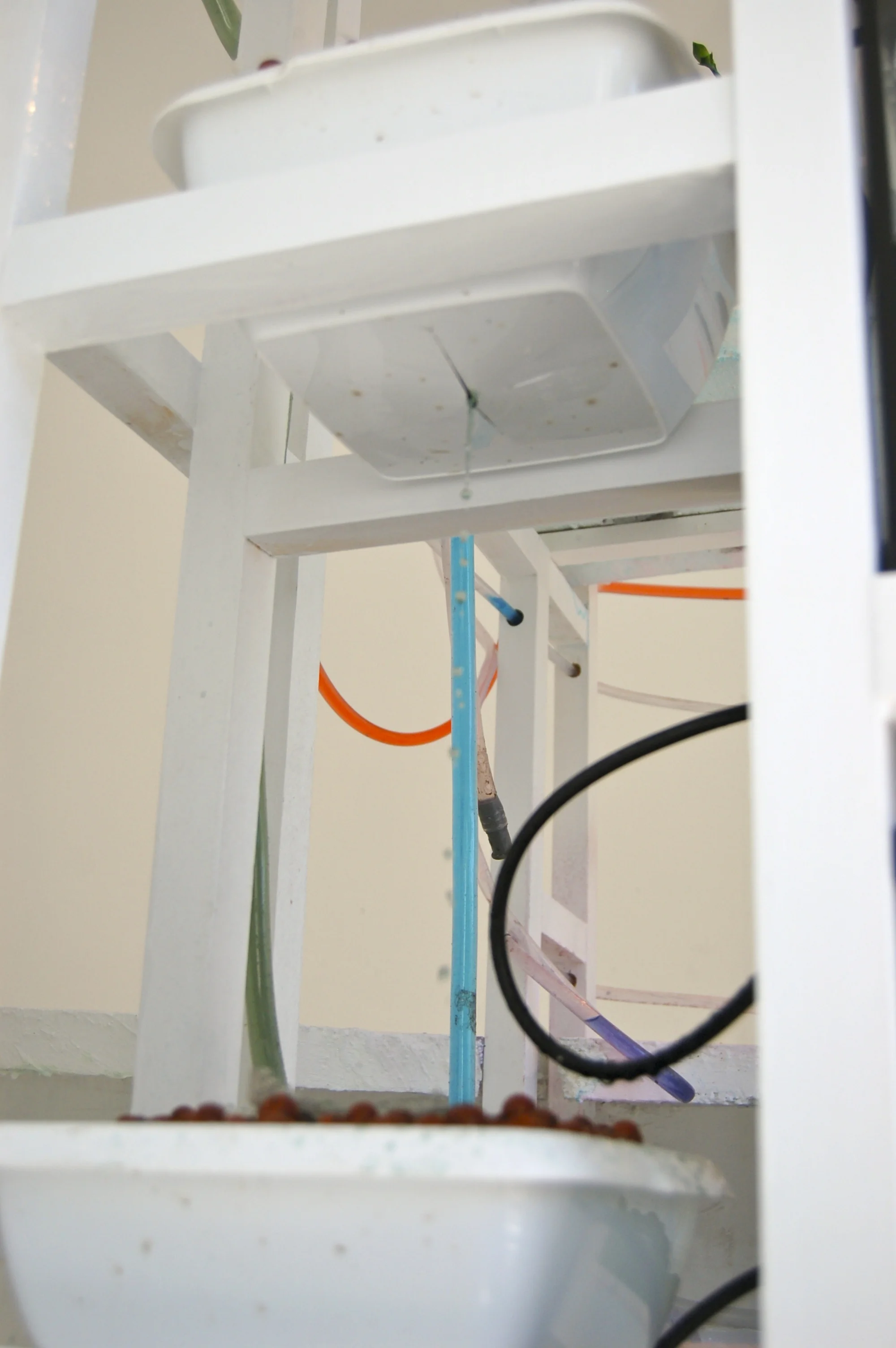
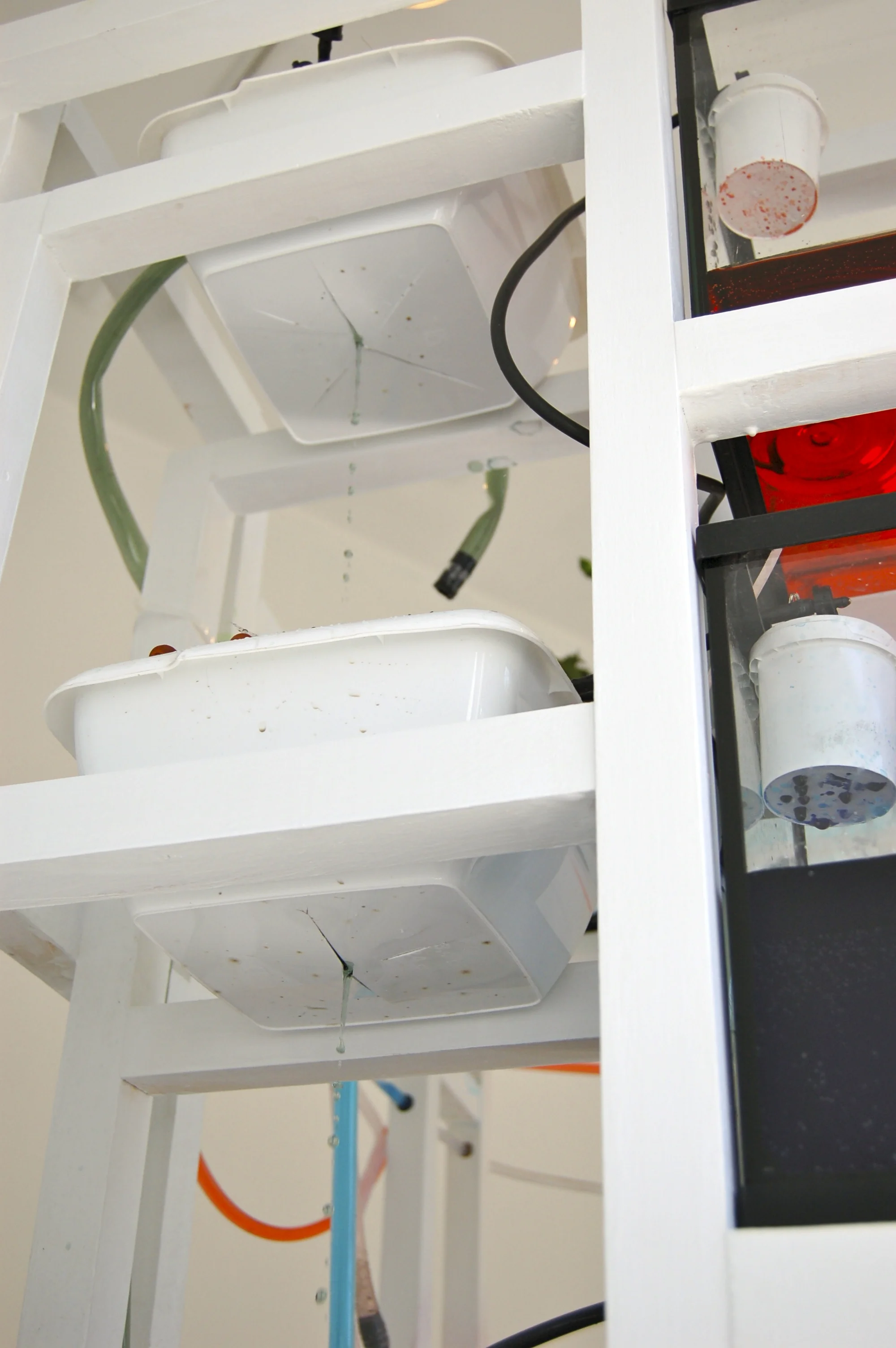
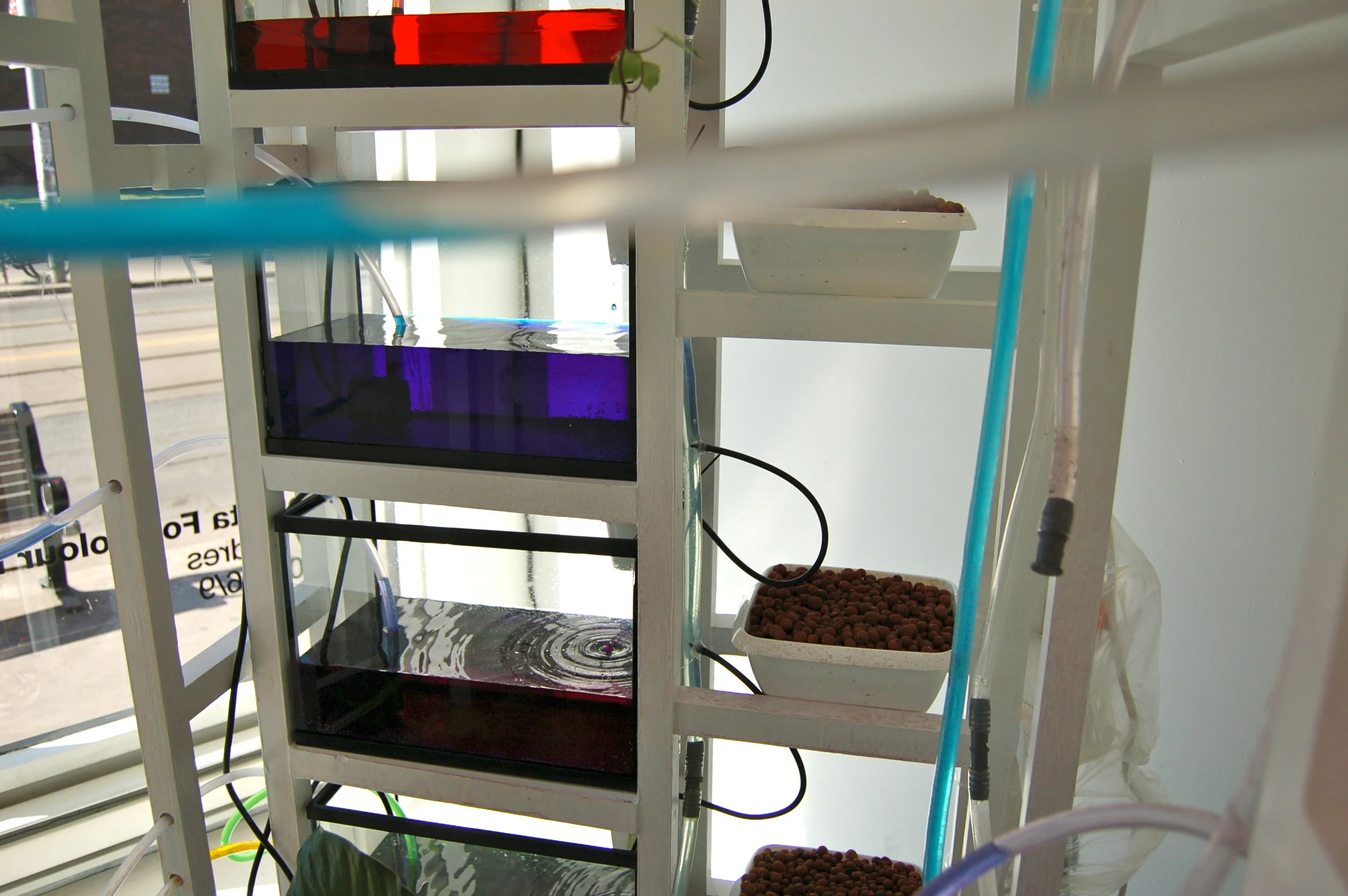
Automata for Colour II is a time-based installation that examines how living systems, material processes, and engineered structures influence one another across cycles of growth, exchange, and decay. The work uses a hydroponic-style architecture of tubing, reservoirs, and plant vessels to circulate coloured water through an array of ferns and ivies. As the plants absorb the dyes, their leaves gradually shift in colour, creating slow, visible transformations that unfold over the duration of the exhibition.
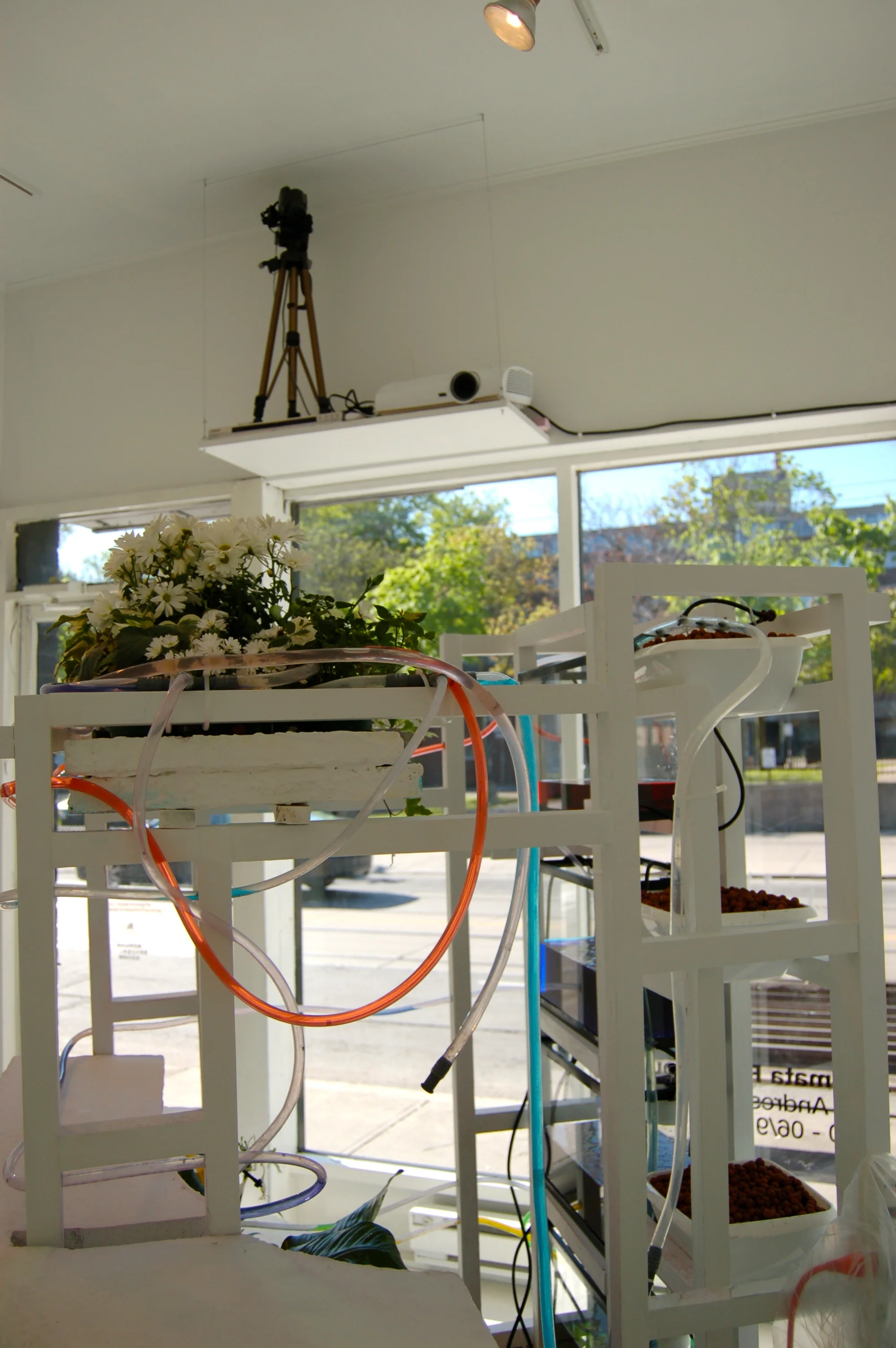
The system is intentionally unstable. Water levels fluctuate, pigments disperse unevenly, and biological changes occur at different rates. These material variations act as a form of data—traces of environmental conditions, chemical flow, and plant metabolism that become visible in the shifting tones of the foliage. Throughout the exhibition, a camera periodically captured still images to document these transitions, producing a parallel record of the system’s life cycle.
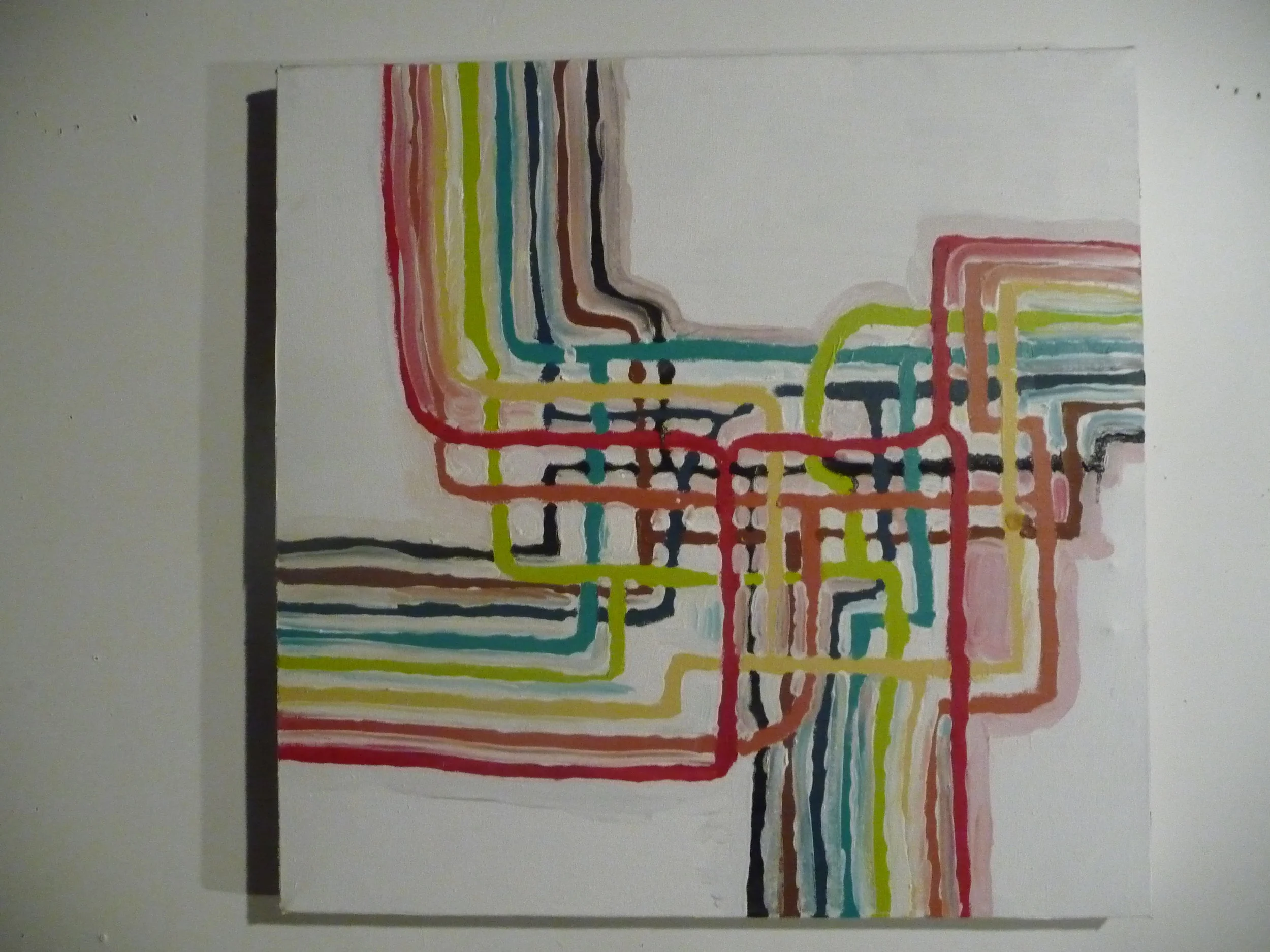
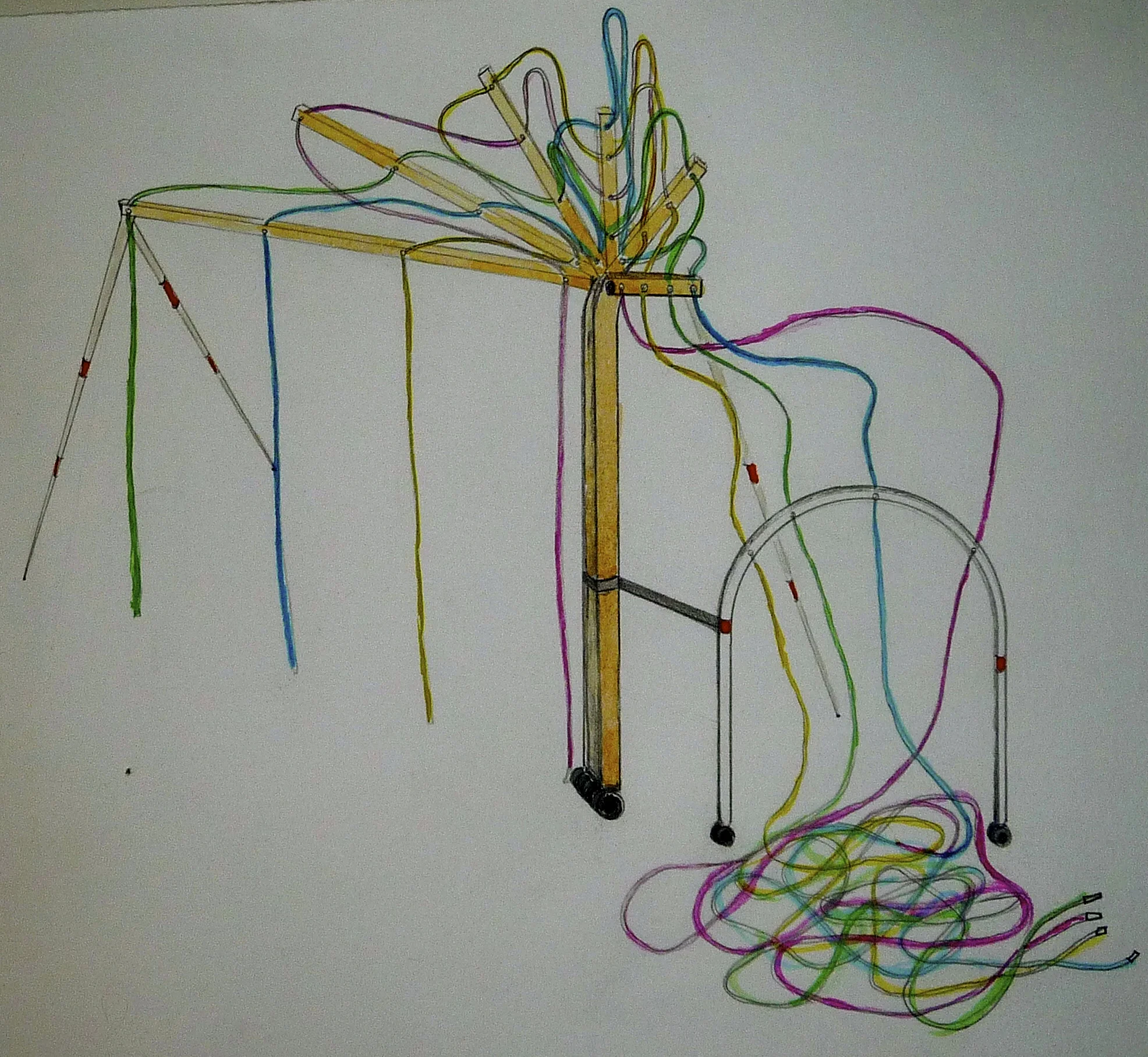
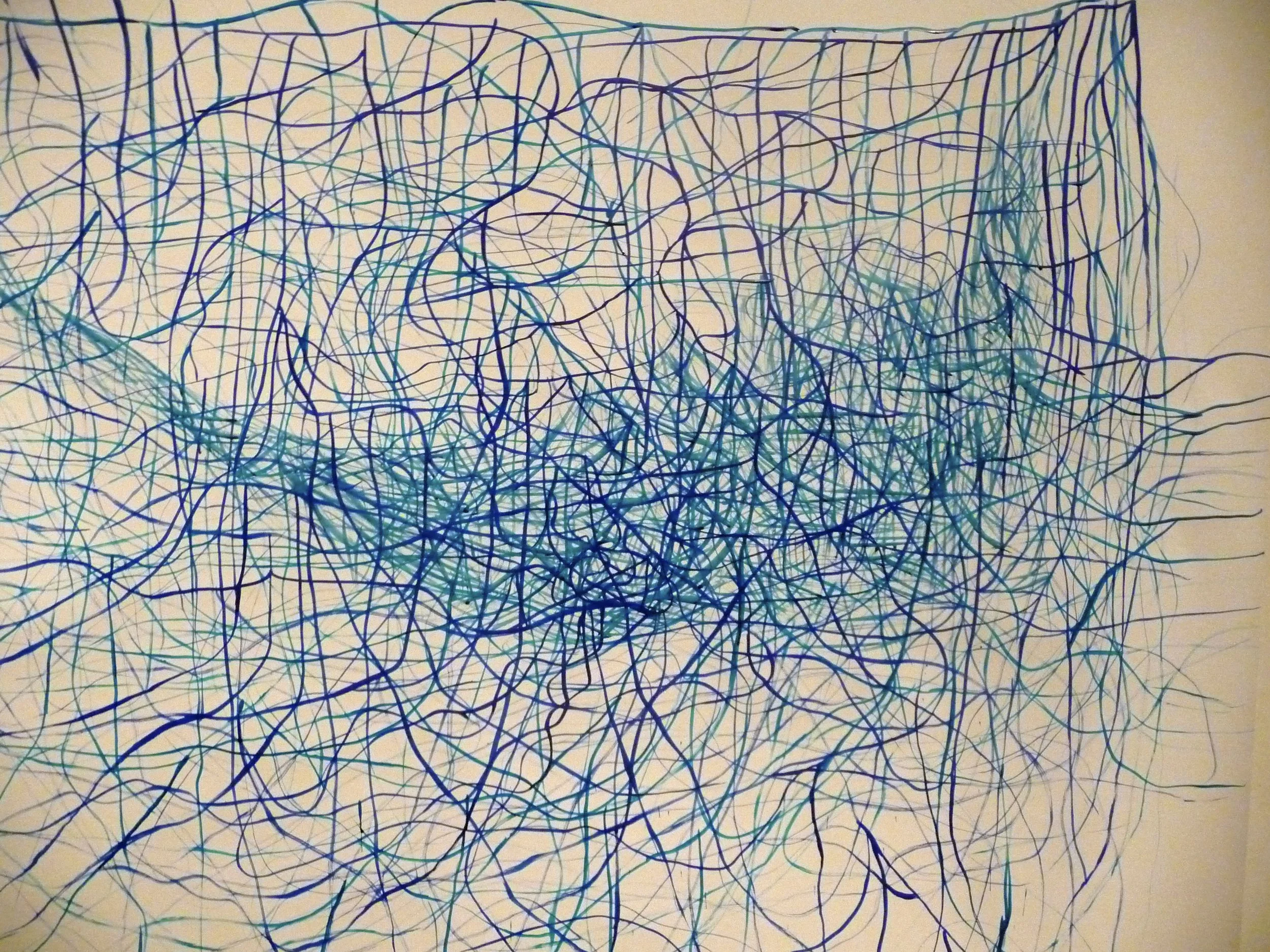
The project draws on the language of computation—circuits, inputs, feedback loops—while grounding the work in plant physiology and material behaviour. Tubing operates like rudimentary logic pathways; plant tissues become storage surfaces that hold and display the movement of colour over time. Rather than modelling biological processes, the installation stages an encounter between organic and constructed forms, asking how different systems register, process, and express change.
Automata for Colour II emphasizes ephemerality and deterioration as integral components of the artwork. As the plants wilt and the dyed water becomes exhausted, the structure reveals its own temporal limits. The installation ultimately becomes a record of its own operations: the coloured leaves, residue, and photographic documentation acting as evidence of the system’s interactions and eventual collapse.
This work sits within a larger body of research exploring how environmental conditions, living organisms, and designed infrastructures can be brought into mutual relation, generating installations that make slow processes perceptible and highlight the interdependence of biological and technological systems.